
How to Build an Online Car Marketplace 2026: Expert Guide
How Do You Build a Scalable and Profitable Online Car Marketplace in 2026?
Building a scalable and profitable online car marketplace in 2026 requires a “digital-first” ecosystem that integrates AI-driven valuations, AR-based inspections, and secure blockchain-based history logs. Success hinges on shifting from a simple directory to a full-service transactional platform that handles financing, insurance, and cross-border logistics while maintaining 99.9% uptime via cloud-native microservices.
The automotive industry is no longer just about metal and rubber; it is about data, trust, and seamless user journeys. As we move through 2026, the traditional “lot-hopping” experience has been replaced by sophisticated web and mobile platforms where a buyer can find, vet, finance, and arrange delivery for a vehicle in under thirty minutes. To compete with established giants and nimble startups, entrepreneurs must focus on high-fidelity data and hyper-personalized user experiences.
What are the Critical Market Trends and Monetization Strategies for Automotive Marketplaces in 2026?
In 2026, the market is defined by a massive surge in P2P transactions and EV-specific niches. Profitable marketplaces utilize “Hybrid Monetization,” combining premium listing fees, transaction commissions, and SaaS-based dealer tools. Success is driven by providing AI-verified transparency, ensuring users feel as secure buying a car online as they do buying a smartphone.
Why is the global demand for peer-to-peer (P2P) car-selling platforms reaching record highs this year?
The rise of peer-to-peer (P2P) platforms in 2026 is driven by the erosion of trust in traditional intermediary markups and the desire for “at-cost” transactions. Modern buyers are looking for the transparency that comes from direct communication with the previous owner. P2P platforms have leveraged advanced verification tech to eliminate the “lemon” risk, making the cost savings of skipping the dealership too significant to ignore.
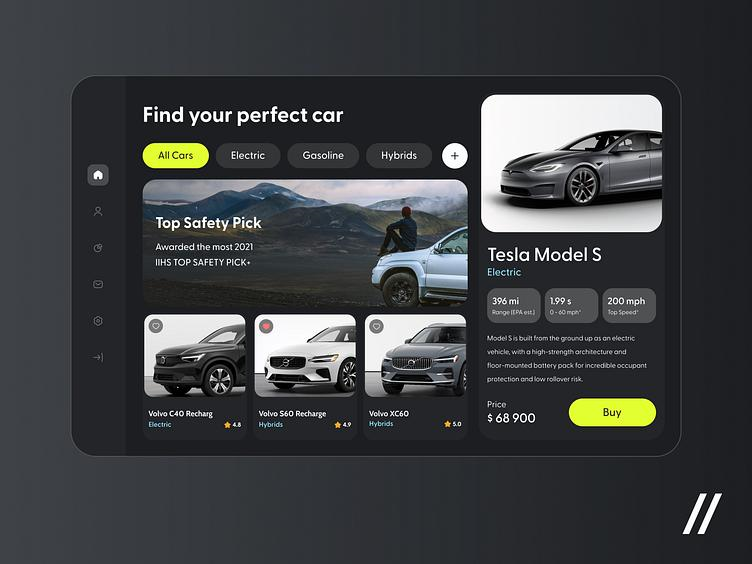
How has the shift in consumer behavior toward “Digital-First” vehicle procurement impacted traditional dealerships?
Traditional dealerships that failed to digitize have faced a “Retail Apocalypse” similar to the mall-to-Amazon shift of the previous decade. In 2026, 74% of buyers prefer to complete at least 90% of the car-buying process online. Dealerships are now forced to use marketplaces as their primary storefronts, shifting their physical locations into “Experience Centers” and delivery hubs rather than high-pressure sales floors.
What role does the rising demand for Electric Vehicles (EVs) play in marketplace niche selection?
EVs are no longer a niche; they are the standard. However, the marketplace for EVs requires specialized data points. A generic marketplace is insufficient. Successful 2026 platforms provide “Battery Health Scores,” charging infrastructure maps, and federal tax credit calculators integrated directly into the listing. Niche EV marketplaces that focus on the second-hand battery market are seeing 2x higher retention rates than generalist platforms.
How are cross-border vehicle sales becoming a significant revenue stream for regional marketplaces?
In 2026, regional borders are becoming porous for automotive trade. Marketplaces are integrating international shipping APIs and automated customs documentation. This allows a buyer in a high-demand region to purchase a vehicle from a surplus region seamlessly. The platform acts as the escrow and logistics coordinator, taking a significant “service fee” that was previously unavailable in local-only models.
What are the most profitable revenue models for an online auto classifieds business in 2026?
The most profitable models transition from passive advertising to active transaction participation. This includes a mix of tiered listing fees for private sellers, subscription “Pro” dashboards for dealers, and backend commissions from financing and insurance partners. Value-added services like remote inspections represent the highest margin growth sector for modern platforms.
| Revenue Stream | Description | Profit Margin | Scalability |
| Premium Listings | Pay-to-play for top search results and high-res slots. | High (80%+) | Easy |
| Transaction Fees | Percentage cut of the final sale price (Escrow). | Medium (5-10%) | High Effort |
| Dealer SaaS | Monthly subscription for inventory management tools. | High (Recurring) | Very High |
| Financing/Insurance | Referral fees from integrated 3rd-party lenders. | High | Automated |
| Inspection Services | On-site mechanical and cosmetic certification. | Medium | Operationally Intensive |
How much should you charge for premium listing fees and “Top-of-Search” featured advertisements?
Market data for 2026 suggests a tiered approach. A “Basic” listing remains free to drive volume, while “Premium” listings, offering 360-degree video and AI-enhanced descriptions, range from $25 to $75. “Top-of-Search” placements, often sold via a real-time bidding (RTB) system for dealers, can generate $5–$10 per thousand impressions (CPM), depending on the vehicle’s MSRP.
How do transaction-based commission models work for end-to-end digital car sales?
In this model, the marketplace acts as the merchant of record. The buyer pays the marketplace, which holds the funds in escrow. Once the vehicle is delivered and the 7-day return window (now a 2026 industry standard) closes, the marketplace releases the funds to the seller, retaining a 2.5% to 5% commission. This model is highly favored by investors due to the high Gross Merchandise Value (GMV) it generates.
What is the average ROI of integrating third-party financing and insurance lead generation?
Integrating FinTech into an auto marketplace is the “Golden Ticket.” Marketplaces in 2026 report an average ROI of 300% on the development cost of these integrations within the first 12 months. By providing a “pre-approval” button directly on the Vehicle Detail Page (VDP), platforms increase conversion rates by 40% and collect a lead fee from banks ranging from $200 to $500 per closed loan.
How can subscription-based “Dealer Pro” dashboards provide recurring SaaS revenue?
For high-volume dealerships, a marketplace is more than a site; it’s an ERP. A “Dealer Pro” dashboard offers bulk listing uploads, AI-driven stock suggestions based on local demand trends, and integrated CRM features. Charging $499–$1,499 per month for these tools provides the platform with predictable, high-margin MRR (Monthly Recurring Revenue) that offsets the volatility of individual sales.
Why are “Value-Added Services” like remote inspections and history reports essential for margin growth?
Information asymmetry is the enemy of the online sale. By offering branded “Marketplace Certified” inspections, where a local mechanic is dispatched to the car’s location, the platform creates a “Trust Moat.” These services are often upsold for $150–$300, with the platform taking a 40% cut of the service fee without owning any physical infrastructure.
How is AI-driven predictive pricing changing the way users value used vehicles on modern platforms?
Predictive pricing utilizes machine learning to analyze millions of historical sales, real-time demand, and even micro-economic shifts to provide a “fair market value” that is updated hourly. This eliminates the “haggling” friction point, allowing sellers to price accurately and buyers to feel confident in their investment immediately.
What data points do machine learning algorithms use to provide real-time “Fair Market Value” assessments?
In 2026, AI goes beyond mileage and year. Algorithms now scrape data on local fuel prices (or charging costs), supply chain delays for specific parts, seasonal demand (e.g., SUVs in winter), and social media sentiment for specific brands. It also factors in the “Digital Twin” history of the car, including its specific maintenance record fetched via blockchain APIs.
How does dynamic pricing help sellers move inventory 30% faster than manual pricing?
Dynamic pricing suggestions act as a “virtual consultant” for the seller. If a vehicle hasn’t received an inquiry in 48 hours, the AI might suggest a 2% price drop based on a competitor’s lower price nearby. This proactive approach ensures that the inventory doesn’t go stale, maintaining a high “Turn Rate” for the marketplace, which is a key metric for SEO and user retention.
What is the Step-by-Step Technical Process to Develop a High-Performance Car Marketplace App?
Developing a 2026-ready marketplace involves a “Mobile-First” approach using cross-platform frameworks like Flutter, supported by a microservices backend on AWS or Google Cloud. The process moves from UI/UX prototyping to API integration for VIN decoding, AR visualization, and secure payment gateways, followed by rigorous load testing for high-traffic scalability.
To build a platform that survives the 2026 competitive landscape, developers must prioritize performance. A 100ms delay in photo loading can lead to a 7% drop in conversions. The architecture must be modular, allowing for the rapid addition of new features like EV charging station finders or biometric login without taking the entire system offline.
Which tech stack is best for building a cross-platform car marketplace in 2026?
The “Winner’s Stack” for 2026 combines flexibility with raw power. High-performance apps require a front-end that feels native on both iOS and Android, and a back-end that can process complex data queries (like “show me all AWD hybrids under $30k within 50 miles”) in milliseconds.
Why is Flutter or React Native the preferred choice for mobile-first automotive applications?
Flutter has emerged as the frontrunner in 2026 due to its “Impeller” rendering engine, which ensures buttery-smooth 120Hz animations for 360-degree car tours. React Native remains a strong contender for its vast ecosystem of libraries. Both allow for a single codebase, which reduces development time by 40% and ensures that feature parity is maintained across all devices, crucial for a consistent brand experience.
What backend architecture (Microservices vs. Monolith) ensures 99.9% uptime for high-traffic portals?
A microservices architecture is non-negotiable for an enterprise-level marketplace. By decoupling the “Search Service,” “Payment Service,” and “User Profile Service,” developers ensure that a glitch in the payment gateway doesn’t take down the ability for users to browse cars. This structure allows for horizontal scaling, meaning the platform can handle 10,000 concurrent users during a Super Bowl ad spike without breaking a sweat.
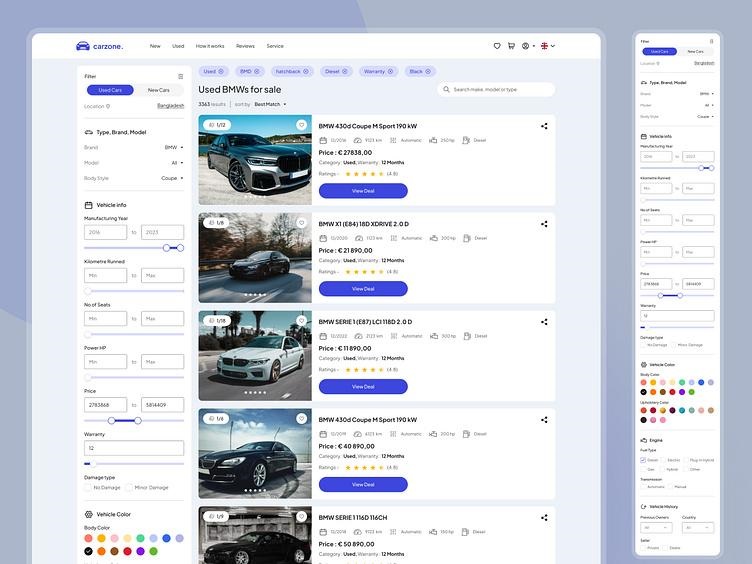
How do Cloud-native solutions like AWS or Google Cloud optimize image hosting for thousands of high-res vehicle photos?
Modern marketplaces use Serverless Image Optimization. When a seller uploads a 20MB photo, a “Lambda” function on Amazon Web Services (AWS) automatically resizes it into multiple formats (WebP, Avif) for different devices. Using a Content Delivery Network (CDN) like CloudFront ensures that a buyer in London and a buyer in Tokyo both see the vehicle images instantly, served from the closest local server.
What are the “Must-Have” features for a modern online vehicle marketplace to stay competitive?
Beyond search and chat, 2026 marketplaces require AR-driven “Virtual Test Drives,” Generative AI assistants for 24/7 lead qualification, and automated VIN decoding. These features bridge the gap between “looking at a screen” and “experiencing the car,” significantly reducing the friction to purchase high-ticket items online.
How does a 360-degree virtual tour and AR-based vehicle inspection integration improve buyer conversion rates?
Augmented Reality (AR) allows a buyer to “place” the car in their own driveway using their smartphone camera. This psychological “ownership” increases conversion rates by nearly 25%. Furthermore, AR overlays during inspections can highlight engine components or tire tread depth, providing a level of detail that static photos simply cannot match, effectively building the “human trust” needed for a digital sale.
What kind of Generative AI chatbots are best for handling initial buyer inquiries and scheduling test drives?
Standard “rule-based” bots are dead. In 2026, marketplaces use LLM-based (Large Language Model) agents that can understand nuance. If a buyer asks, “Will this car fit three car seats in the back?” the AI doesn’t just search keywords; it accesses the vehicle’s spec database and provides a definitive “Yes, but it will be tight.” This level of helpfulness qualifies leads before they ever reach a human seller.
How do you implement a secure and automated VIN (Vehicle Identification Number) decoding system?
Integrating a high-fidelity VIN API is the first step in listing creation. When a seller enters their VIN, the system should automatically populate 90% of the fields: make, model, trim, engine type, and safety features. This not only makes listing a car faster (under 2 minutes) but also prevents “fat-finger” errors or intentional misrepresentation of vehicle specs.
What are the requirements for building an advanced multi-parameter search filter for hybrid and electric specs?
The 2026 buyer is highly technical. Search filters must go beyond “Color” and “Price.” They need to include:
- Battery Degradation Percentage (for used EVs).
- Charging Port Type (CCS, NACS).
- Home Charging Compatibility.
- HOV Lane Access eligibility.
- Real-world range vs. EPA range.
How do real-time push notifications for “Price Drops” increase daily active users (DAU)?
Push notifications are the engine of re-engagement. By using predictive analytics, the system can notify a user not just when a price drops, but when a vehicle they “liked” is likely to sell soon based on the current volume of inquiries. This “Fear of Missing Out” (FOMO) keeps the platform top-of-mind and significantly increases the DAU/MAU ratio.
How do you ensure user trust through advanced verification and security protocols?
Trust is engineered through multi-factor authentication (MFA), blockchain-based history logs, and secure escrow payments. By verifying the identity of the seller and the “identity” of the car (via VIN and Title checks), the marketplace creates a “Safe Zone” where the risk of fraud is mathematically minimized.
What is the most effective way to verify private sellers to prevent fraudulent or “Ghost” listings?
In 2026, AI-powered identity verification (IDV) is standard. Sellers must scan a government ID and perform a “liveness check” (a selfie video). Furthermore, the system cross-references the seller’s name with the vehicle’s title record. If there is a mismatch, the listing is flagged for manual review, virtually eliminating the “Ghost Listing” scams that plagued earlier iterations of Craigslist or Facebook Marketplace.
How can blockchain technology be utilized for immutable vehicle service history and ownership records?
Blockchain provides a “Digital Passport” for the vehicle. Every service at a certified shop, every insurance claim, and every change of ownership is recorded as a block. This prevents “Odometer Rollbacks”, a fraud that still costs consumers billions. A marketplace that integrates with a Blockchain Automotive Data platform can guarantee the history of the car, allowing them to charge a premium for “Verified History” listings.
What are the best practices for implementing secure Escrow payment gateways for high-value transactions?
For a $30,000 transaction, a simple credit card swipe won’t work. Secure marketplaces use specialized Escrow APIs (like Stripe Connect or Escrow.com integrations). The process follows a strict protocol:
- Buyer deposits funds into the secure account.
- Marketplace verifies the deposit.
- Transfer of Title is confirmed (digitally or via courier).
- Buyer confirms receipt of the vehicle.
- Funds are released to the seller.
How Much Does it Cost to Build a Car Marketplace and How Can You Scale Successfully?
A basic MVP for a car marketplace in 2026 starts at $50,000, while a full-featured enterprise solution can exceed $250,000. Scaling requires a strategic focus on “Hyper-Local” density, dominating one city’s inventory before expanding, coupled with aggressive SEO and AI-driven user acquisition strategies.
Development is just the beginning. The real cost lies in “Liquidity”, the balance of enough cars to attract buyers and enough buyers to satisfy sellers. To scale, a platform must invest heavily in marketing and the “Hidden Costs” of security and cloud infrastructure that grow alongside the user base.
What is the estimated breakdown of development costs for a car marketplace in 2026?
Building a marketplace is a marathon, not a sprint. The budget must be allocated across UI/UX design, core development, third-party integrations, and quality assurance. In 2026, a significant portion of the budget is now dedicated to AI and Data Science.
What is the price difference between a Minimum Viable Product (MVP) and a full-featured enterprise solution?
An MVP ($50k–$80k) focuses on the “Happy Path”: user registration, basic search, photo uploads, and a simple chat. It’s designed to test market fit.
An Enterprise Solution ($200k+) includes the “bells and whistles” that drive high-margin growth: AI valuation engines, 360-tours, integrated financing, multi-language support for cross-border trade, and a dedicated “Dealer Pro” SaaS suite.
How do geographic location and developer hourly rates impact the total project budget?
The “Where” matters as much as the “What.”
- North America/Western Europe: $150–$250/hour. High cost, but often provides the best strategic consulting.
- Eastern Europe/India: $40–$80/hour. Excellent “Price-to-Performance” ratio, making them the preferred choice for 2026 startups.
The key is finding a partner who understands the automotive vertical, not just a general coding shop.
What are the hidden costs of post-launch maintenance, API integrations, and server scaling?
Launch is only 40% of the total cost of ownership. Hidden costs include:
- API Fees: VIN decoding, history reports, and map APIs can cost $1,000+ per month as traffic grows.
- Cloud Scaling: As you host more high-res videos, your AWS bill will climb.
- Security Audits: Annual penetration testing to maintain PCI compliance for payments.
- Moderation: AI handles 90%, but you still need a human team for the 10% of complex disputes.
What marketing and SEO strategies are most effective for acquiring buyers and sellers in 2026?
SEO in 2026 is about “Answer Engine Optimization” (AEO) and “Video-First” discovery. Marketplaces must optimize for Google’s “Vehicle Search” rich snippets and leverage short-form video (YouTube Shorts/TikTok) to showcase inventory, while using hyper-local SEO to win specific regional territories.
How do you optimize vehicle listing pages for Google’s “Vehicle Search” rich snippets?
Google now provides a dedicated “Cars for Sale” widget. To appear there, your site must use Schema.org/Car structured data. This tells Google exactly what the price, mileage, and location are in a format it can “read” without crawling the whole page. This results in a 3x higher click-through rate (CTR) compared to standard blue-link results.
What role do video content and YouTube Shorts play in driving organic traffic to car platforms?
Video is the “Trust Currency” of 2026. A 15-second YouTube Short showing a “Cold Start” or the interior tech of a popular model can garner more views than a month of paid search ads. Marketplaces that provide an “Auto-Video Creator”, a tool that turns 10 photos into a narrated video, see a significant boost in organic social traffic.
How can Hyper-Local SEO help your marketplace dominate specific regional or city-based markets?
People buy cars locally. Optimizing for “Used EVs in Austin” or “Trucks for sale in Calgary” is more effective than trying to rank for “Used Cars.” By creating dedicated landing pages for every city and neighborhood, and integrating Google Business Profile data, a marketplace can capture high-intent buyers exactly when they are ready to visit a vehicle.
How Next Olive can help in developing your dream application/project.
Next Olive stands at the intersection of automotive expertise and cutting-edge software engineering. As the landscape of vehicle commerce evolves, having a partner who understands the nuances of VIN architecture, FinTech integration, and AI-driven moderation is the difference between a failed launch and a market leader.
Why choose Next Olive for bespoke automotive software development and digital transformation?
Next Olive doesn’t just write code; they build business ecosystems. Their team understands that a car marketplace is a complex machine with many moving parts, from logistics APIs to user trust modules. They provide a consultative approach that ensures your platform is not just functional but also optimized for the 2026 consumer’s high expectations.
How does Next Olive’s agile development methodology reduce time-to-market for startup founders?
In the 2026 tech race, speed is everything. Next Olive utilizes a “Sprint-Based” agile framework that delivers a functional MVP in weeks, not months. Their modular design philosophy means that while the core marketplace is being built, they can simultaneously develop the mobile app and the dealer dashboard, ensuring a synchronized and rapid market entry.
Conclusion: What is the Future of Online Car Marketplaces Beyond 2026?
The future beyond 2026 points toward Autonomous Vehicle (AV) Fleets and “Car-as-a-Service” (CaaS). Marketplaces will shift from selling ownership to selling “access.” We will see the rise of fractional ownership platforms and “Fleet Marketplaces” where users buy shares in an autonomous taxi fleet.
Furthermore, the integration of the “Metaverse” will allow for even more immersive virtual showrooms, where a buyer can spend an hour “sitting” in a car and exploring its features in a high-fidelity digital world before it ever arrives at their door. The platforms that succeed will be those that prioritize data integrity, user security, and a relentless focus on reducing the time it takes to go from “searching” to “driving.”
Frequently Asked Questions (FAQs)
1. How long does it take to build a car marketplace in 2026?
A standard MVP can be developed in 3 to 4 months. A full-scale enterprise platform with AI integrations and custom features usually takes 8 to 12 months from discovery to launch.
2. Is it better to build a custom platform or use a white-label solution?
While white-label is cheaper ($5k-$15k), a custom platform is essential for 2026. Custom builds allow for unique AI features, better SEO, and the ability to scale without the “per-user” fees that eat into white-label margins.
3. What is the most important feature for user retention?
Real-time “Price Drop” alerts and “New Inventory” notifications based on a user’s specific saved search criteria are the highest drivers of daily active users.
4. How do I handle payments for expensive vehicles?
Never use direct bank transfers. Use a dedicated Escrow service integration that holds the funds until both parties sign off on the digital title transfer.
5. Can I integrate my marketplace with local dealerships?
Yes. In 2026, “Inventory Aggregators” allow you to sync a dealer’s physical inventory with your online platform via real-time XML or JSON feeds, ensuring your site is never out of date.
6. How does AI help in car photo quality?
AI tools can now automatically remove messy backgrounds from user-uploaded photos and replace them with a clean, professional “virtual showroom” backdrop, increasing listing appeal by 40%.
7. Is blockchain necessary for a car marketplace?
While not “mandatory” for a basic site, it is a massive competitive advantage in 2026 for verifying mileage and accident history, which are the two biggest concerns for used car buyers.
8. What is the biggest challenge in starting a car marketplace?
Achieving “Critical Mass.” You need a high volume of listings to attract buyers, and you need buyers to attract sellers. Most successful startups launch in one specific city or niche (like “Classic Porsches”) to build density before expanding.