Custom Blockchain AI App Development Platform 2026
How Does a Custom Blockchain AI App Development Platform Work in 2026?
In 2026, these platforms function as a modular ecosystem where Blockchain provides the trust layer (data integrity and ownership) and AI provides the execution layer (automated insights and generation). They utilize decentralized storage for training data and smart contracts to automate AI-driven transactions without centralized intermediaries.
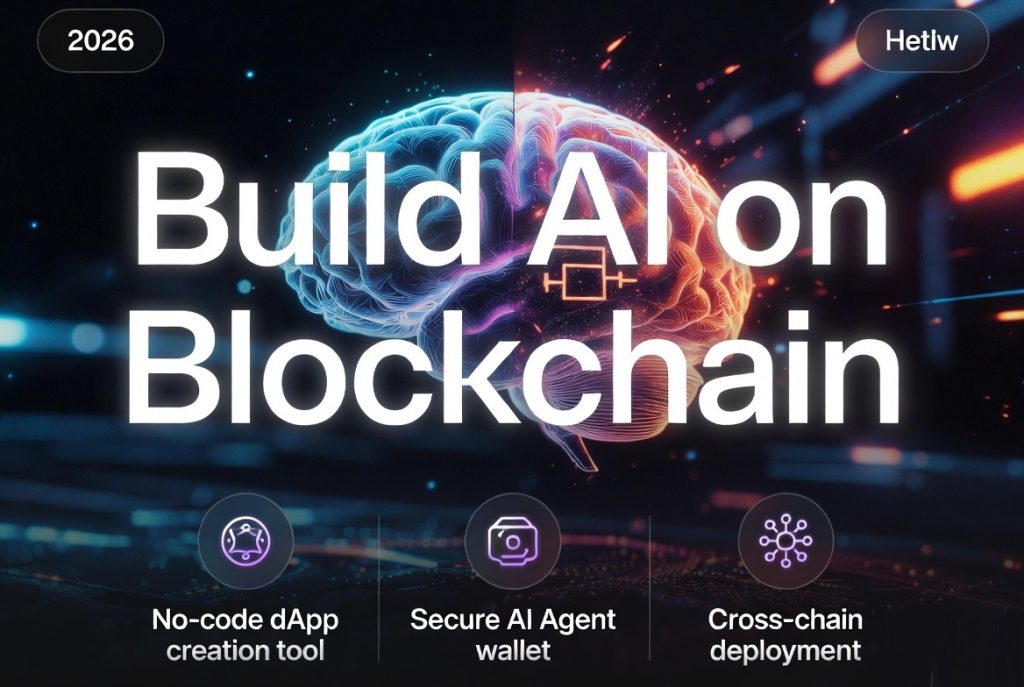
The workflow of a modern custom blockchain AI platform typically follows four integrated phases:
- Decentralized Data Ingestion: Data is sourced from multiple stakeholders or IoT devices. Instead of a central server, this data is often stored on protocols like IPFS or Filecoin, with its cryptographic hash recorded on the blockchain to ensure it hasn’t been tampered with.
- On-Chain Model Governance: Smart contracts define the “rules of engagement.” They manage who can access the AI model, how the model is updated, and how contributors are rewarded in native tokens.
- Hybrid Execution (Off-Chain/On-Chain): Because AI models are computationally “heavy,” most of the actual processing happens off-chain in decentralized GPU clusters (like Render or Akash). Once the AI generates a result, a Zero-Knowledge Proof (ZKP) is sent back to the blockchain to verify the computation was done correctly without revealing the raw data.
- Automated Settlement: The final output triggers a smart contract. For example, if an AI analyzes a supply chain delay, the blockchain automatically releases insurance payments to the affected parties.
What are the primary benefits of combining decentralized ledgers with Generative AI?
Combining blockchain with Generative AI enhances data security, transparency, and automation. It ensures trust in AI outputs, protects sensitive data, and enables decentralized collaboration, making AI systems more reliable, auditable, and resistant to manipulation.
Key Benefits
- Data Integrity
- Blockchain ensures datasets used for AI training are tamper-proof.
- Every data point has a verifiable origin.
- Transparency in AI Decisions
- AI outputs can be logged on-chain.
- Enables audit trails for compliance and accountability.
- Decentralized AI Training
- Multiple participants contribute data and compute power.
- Reduces reliance on centralized tech giants.
- Enhanced Security
- Encryption and distributed storage reduce breach risks.
- No single point of failure.
- Incentivized Ecosystems
- Token economies reward contributors (data providers, validators).
- Encourages ecosystem growth.
- Autonomous Systems
- Smart contracts trigger AI actions automatically.
- Example: fraud detection systems acting in real time.
How blockchain solve the data privacy challenges in AI model training?
Privacy is the primary hurdle for AI. In 2026, platforms use Federated Learning combined with blockchain.
- Encrypted Contributions: Users can contribute their private data to train a global AI model without the data ever leaving their local device.
- Zero-Knowledge Proofs (ZKPs): Blockchain validates that the training data meets quality standards without the platform ever “seeing” the sensitive information.
- Ownership Rights: Data providers retain ownership of their information, receiving micro-payments whenever their data helps the model generate value.
Which industries are leading the adoption of Blockchain-AI hybrid platforms this year?
While adoption is widespread, four sectors have emerged as leaders in 2026:
- Healthcare: For secure, cross-border sharing of genomic data to train diagnostic AI.
- FinTech: Using AI agents for “Autonomous Finance”, where AI manages DeFi portfolios based on real-time on-chain data.
- Supply Chain: Tracking the carbon footprint of products using AI to verify logistics data recorded on a ledger.
- LegalTech: Automating the creation and auditing of “Ricardian Contracts” (legally binding smart contracts).
How do I evaluate the scalability of a custom blockchain app development platform?
Scalability in 2026 is measured by Inference Throughput and Data Availability. A scalable platform must support high-speed AI processing without clogging the main blockchain.
- Modular Architecture: Look for platforms that separate the execution layer (AI) from the settlement layer (Blockchain).
- TPS vs. APS: Don’t just look at Transactions Per Second (TPS); evaluate Actions Per Second (APS), which measures how many AI-driven decisions the system can finalize.
Key Evaluation Criteria
- Transaction Speed (TPS)
- Can the platform handle high-frequency AI operations?
- Latency
- Time taken for transaction confirmation.
- Layer-2 Integration
- Rollups and sidechains reduce mainnet congestion.
- AI Workload Handling
- Support for off-chain computation.
- Interoperability
- Ability to communicate across multiple blockchains.
How to Choose the Best Custom Blockchain AI Development Platform for Your Business?
Choosing the right platform involves balancing security, cost, and interoperability. A business must determine if its AI requires real-time processing (favoring Layer-2 solutions) or high-level security for sensitive data (favoring Zero-Knowledge Rollups) while ensuring the tech stack supports cross-chain integration.
Step-by-Step Selection Process
- Define Business Objectives
- Identify whether AI or blockchain is the primary driver.
- Evaluate Platform Features
- Smart contract capabilities
- AI integration tools
- Developer ecosystem
- Check Scalability Options
- Layer-2 support
- Sharding capabilities
- Security Standards
- Encryption methods
- Audit history
- Cost Considerations
- Gas fees
- Development costs
What are the most popular consensus mechanisms for AI-heavy blockchain projects?
In 2026, traditional Proof of Work (PoW) is obsolete for AI. Instead, specialized mechanisms have taken over:
| Mechanism | Best Use Case | Key Advantage |
| Proof of Learning (PoLe) | AI Model Training | Rewards nodes for performing actual ML computations. |
| Delegated Proof of Stake (DPoS) | High-Speed DApps | Offers the sub-second finality needed for real-time AI agents. |
| Proof of Useful Work (PoUW) | Decentralized GPU Clusters | Directs energy toward solving real-world AI problems rather than puzzles. |
| Proof of Authority (PoA) | Enterprise/Private Chains | High throughput with known, trusted validators. |
Is Layer-2 scaling essential for AI processing on-chain?
Yes. Standard Layer-1 blockchains (like Ethereum Mainnet) are too slow and expensive for the iterative nature of AI. Layer-2 (L2) solutions, particularly ZK-Rollups, are essential because they allow thousands of AI inferences to be “bundled” into a single transaction, reducing costs by up to 98% while maintaining the security of the main chain.
Benefits of Layer-2
- Reduced gas fees
- Faster execution
- Off-chain computation support
How do cross-chain protocols improve AI model accessibility?
AI models shouldn’t be silos. Cross-chain protocols (like CCIP or LayerZero) allow an AI model hosted on one network (e.g., Solana) to interact with assets on another (e.g., Ethereum). This creates a “Global AI Liquidity” pool where intelligence is shared across the entire Web3 ecosystem.
Key Advantages
- Shared datasets across ecosystems
- Improved collaboration
- Reduced data silos
What is the Estimated Cost and Timeline for Developing a Custom Blockchain AI App?
A custom Blockchain AI app in 2026 typically costs between $50,000 and $300,000+ depending on complexity. Development timelines range from 4 months for a Minimum Viable Product (MVP) to over 12 months for a full-scale enterprise-grade decentralized intelligence system.
Cost Breakdown Table
| Component | Estimated Cost Range | Timeline |
|---|---|---|
| UI/UX Design | $5,000 – $20,000 | 2–4 weeks |
| Blockchain Development | $15,000 – $100,000 | 1–4 months |
| AI Model Development | $10,000 – $80,000 | 1–3 months |
| Integration & Testing | $10,000 – $50,000 | 1–2 months |
| Deployment & Maintenance | $5,000 – $30,000/year | Ongoing |
What factors influence the development speed of a decentralized AI application?
- Complexity of the AI Model: Training a custom LLM (Large Language Model) takes significantly longer than integrating an existing API.
- Smart Contract Auditing: AI-driven smart contracts are complex and require rigorous security audits, which can add 4–6 weeks to the timeline.
- Data Curation: Cleaning and “on-chaining” the data used for training is often the most time-consuming phase.
Are there open-source platforms that reduce the cost of custom AI blockchain development?
Absolutely. Utilizing frameworks like Bittensor for decentralized machine learning or Hugging Face integrations for pre-trained models can save tens of thousands of dollars in R&D. Furthermore, using modular SDKs (Software Development Kits) allows developers to “plug and play” blockchain components like wallets and bridges.
How do gas fees affect the long-term ROI of AI DApps?
Gas fees are the “silent killer” of ROI. If an AI agent performs 1,000 micro-transactions a day, even a $0.01 fee per transaction adds up. Developers in 2026 focus on “Gasless Transactions” (where the platform pays the fee) or deploying on Hyper-Scalable L2s to ensure the cost of the AI’s “brainpower” doesn’t exceed the value it generates.
What is the average maintenance cost for a secure blockchain-based AI system?
Maintenance isn’t just about fixing bugs; it’s about Model Drift and Security Monitoring. Expect to budget 15%–25% of the initial development cost annually. This covers:
- Periodic model retraining.
- Smart contract security updates.
- Cloud/Decentralized infrastructure hosting fees.
- API maintenance for cross-chain connectivity.
How Next Olive Can Help in Developing Your Dream Application or Project?
Building at the intersection of AI and Blockchain requires a partner who understands both the “neurons” of machine learning and the “blocks” of decentralized ledgers. Next Olive has established itself as a premier developer in the 2026 landscape by bridging this gap with precision and expertise.
With a deep roster of over 150+ specialized developers, Next Olive doesn’t just write code; they build ecosystems. Their approach to Custom Blockchain AI App Development is defined by three pillars:
- Security-First Architecture: In an era where AI-driven hacks are a reality, Next Olive implements multi-layer encryption and rigorous smart contract auditing to safeguard assets.
- Scalable Performance: By leveraging the latest in Layer-2 scaling and modular blockchain frameworks, they ensure your application can handle millions of users without latency.
- End-to-End Integration: From the initial data strategy to the deployment of decentralized GPU clusters, Next Olive provides a turnkey solution for businesses ready to lead in the decentralized age.
Whether you are a startup looking to disrupt the market with a decentralized AI agent or an enterprise seeking to secure your supply chain with verifiable intelligence, Next Olive provides the technical foundation to turn your vision into a functional, market-ready reality.
Conclusion: The Future of Decentralized Intelligence
The future of AI is decentralized. By 2027, the majority of AI interactions will be verified on-chain to ensure data integrity and prevent centralized bias. Investing in a custom platform now is not just a digital upgrade, it is a strategic move to own your data and your intelligence in a post-centralized world.
The synergy between Blockchain and AI is the defining technological shift of the late 2020s. As we move deeper into 2026, the businesses that succeed will be those that view blockchain not just as a ledger, but as the “ethical guardrail” for Artificial Intelligence. By adopting a custom-built platform, you ensure that your AI is not only smart but also sovereign, secure, and sustainable.
Frequently Asked Questions.
1. What is a Custom Blockchain AI App Development Platform?
A Custom Blockchain AI App Development Platform is a technology framework that combines blockchain infrastructure with artificial intelligence capabilities to build secure, decentralized, and intelligent applications tailored to specific business needs. It enables automation, data transparency, and advanced analytics within a single ecosystem.
2. How does AI enhance blockchain-based applications in 2026?
In 2026, AI enhances blockchain apps by enabling predictive analytics, smart contract automation, fraud detection, and intelligent decision-making. AI models can analyze blockchain data in real time, improving efficiency, security, and personalization across decentralized systems.
3. What industries benefit the most from custom blockchain AI platforms?
Industries such as finance (DeFi), healthcare, supply chain, retail, and cybersecurity benefit significantly. These platforms help improve data integrity, automate operations, enhance transparency, and enable smarter insights through AI-driven analytics.
4. What are the key features of a modern blockchain AI development platform?
Key features include:
- Smart contract automation with AI logic
- Decentralized data storage and processing
- AI model integration and training pipelines
- Real-time analytics and prediction engines
- Enhanced security and fraud detection mechanisms
5. Is it expensive to build a custom blockchain AI application in 2026?
The cost varies depending on complexity, features, and scalability requirements. While initial development can be resource-intensive, modern tools, cloud infrastructure, and pre-built AI/blockchain modules in 2026 have significantly reduced development time and overall costs compared to earlier years.