TDM TheDevMasters AI Learning Platform
Distributed AI platform for TDM TheDevMasters: student performance forecasting, RAG tutoring and deep learning course analytics.
TDM TheDevMasters AI Learning Platform overview
We built and deployed a distributed artificial intelligence platform for TDM TheDevMasters, an Education provider running technical programming and data science courses. The brief was student performance forecasting: identify learners who are likely to struggle before they fail an assessment, answer their technical questions during live study sessions, and show curriculum designers exactly where course content is losing people. We designed a multi-layer cloud network that brings natural language processing models, deep learning networks and large language model features together in one scalable analytics cluster.
The scope covered four operational requirements. Predictive performance tracking processes historical training scores, platform attendance markers and module interaction intervals to raise immediate alerts on student success metrics. Conversational assistant nodes connect an external large language model to the learning panel for real-time guidance on complex technical questions. Linguistic content evaluation reads unstructured text feedback forms to map curriculum areas that need fast updates. Deep learning pattern discovery sweeps multi-year learning logs for correlations that inform course layout. Delivery ran in distinct phases, starting with Terraform-provisioned cloud infrastructure and finishing with private machine learning models running in production.
Challenge in Education analytics
Before we stepped in, TDM TheDevMasters ran on traditional static database schemas and manual administrative tracking routines. User analytics, class progression records and qualitative student feedback loops sat in disconnected functional silos, so nobody had a combined view of how a learner was actually doing. Processing large volumes of data caused significant delays, and the platform had no capability to give students immediate, automated support while they were studying. Instructors learned about at-risk students only after grades were in, and curriculum designers had no evidence linking specific lessons to drop-outs or assessment failures.
The engagement also had to respect the sensitivity of student records. Personal identifiers, access logs and performance histories needed protection at rest and in transit, and any external AI service had to be reached through controlled, audited channels rather than direct calls from the application. TDM needed a single automated ingestion architecture, machine learning frameworks that predict user outcomes, and interactive learning content, all on infrastructure that would not amplify the existing performance problems or cloud spend.
Solution architecture & delivery
The platform is a decoupled microservices system running in an elastic Kubernetes cluster on a hybrid Amazon Web Services and Microsoft Azure foundation. Docker containers hold the Node.js and Python application pods; Terraform provisions the network topologies, security subnets and storage assets without manual steps. Traffic enters through cloud load balancers and AWS WAF, reaches a path-based ingress controller with TLS 1.3 termination, and is routed by an API gateway layer that validates tokens and enforces rate limits before it touches a microservice. Behind that sits an isolated machine learning mesh with three engines: a Scikit-Learn predictive analytics service, a natural language processing node with transformer tokeniser pipelines, and a GPU-accelerated deep learning engine. The data layer combines Apache Kafka event streaming, HNSW vector databases (Milvus and Pinecone) for LLM embeddings, and PostgreSQL primary/replica clusters.
The predictive pipeline starts at the point of interaction. When a student opens a course asset, completes a practice module or submits a code assessment, a telemetry packet is broadcast to Kafka partitioned topics. A stateful stream processing cluster aggregates those events over shifting time windows and refreshes an in-memory feature store every 10 seconds. When an instructor opens the predictive analytics dashboard, a containerised Scikit-Learn inference routine pulls feature histories from the cache, outputs course completion probability and targeted instructional needs, and commits the result to PostgreSQL for historical tracking and comparative reporting.
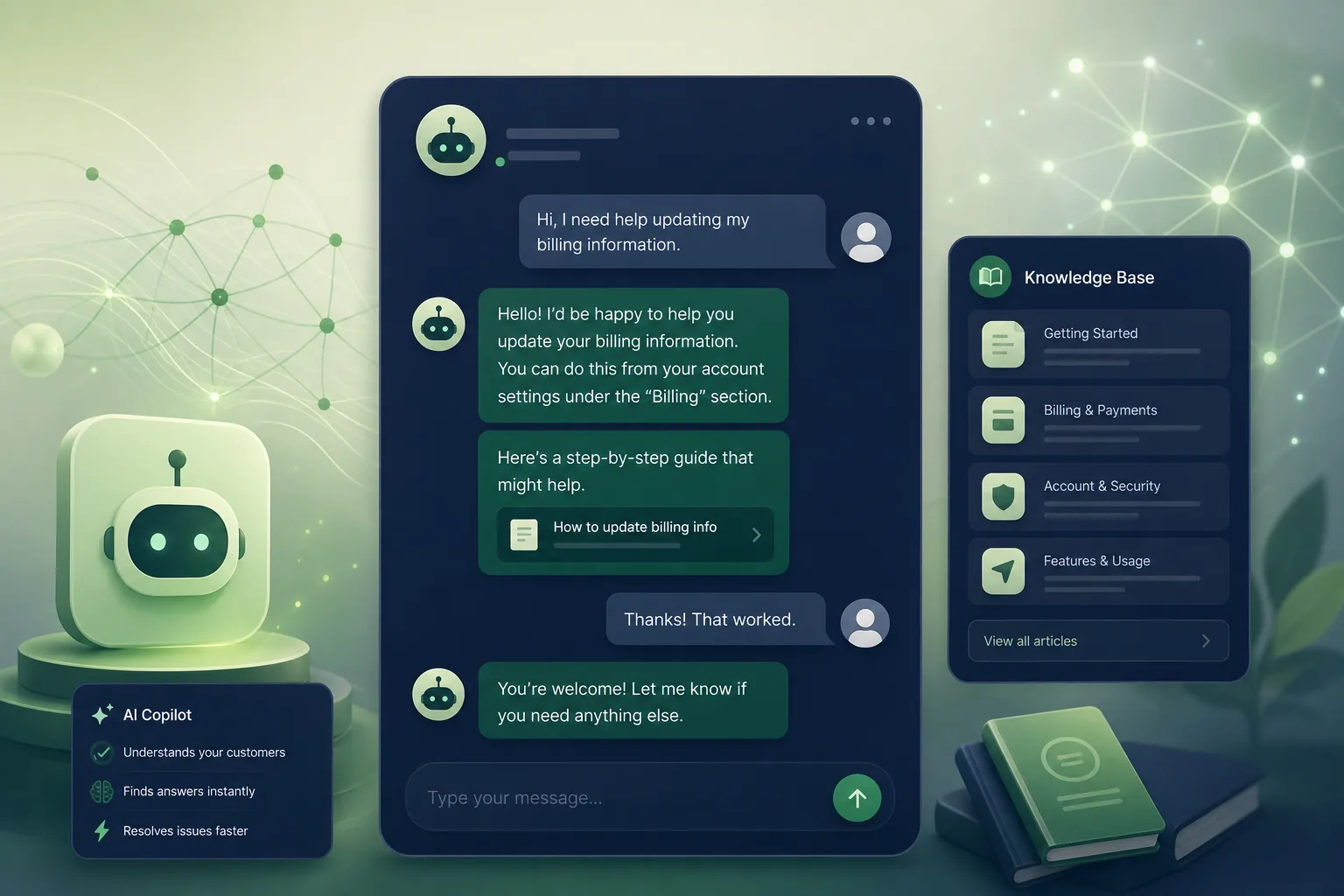
The intelligent tutoring assistant is a Retrieval Augmented Generation loop inside the conversational microservices. A student question is intercepted by a text processing service that cleans the string and converts it to embeddings with a transformer model. An HNSW vector lookup, partitioned by course code and tuned with 16 link connections and a search depth of 64, retrieves the closest course documentation, textbook items and approved curricula in under 50 milliseconds. The assembled contextual prompt travels through a managed outbound proxy with automated retries, strict timeout caps and token usage tracking to the OpenAI ChatGPT Enterprise API, and the answer streams back to the learning panel over server-sent events. Repeated questions are served from an in-memory cache without an external call.
The deep learning tier runs asynchronously on GPU-equipped cloud instances using TensorFlow and PyTorch. It ingests multi-semester matrices of student text reviews, course drop rates, assessment failure distributions and time-on-page metrics, and surfaces relations such as a specific combination of technical terms in a lesson correlating with higher course exit rates. Trained weights are serialised to cloud storage and tracked in a central model catalogue. Security follows a zero-trust baseline: Okta single sign-on with tokens that expire after 15 minutes, Istio mutual TLS between every service via Envoy sidecars, non-root containers with default cluster admin rights removed, AES-256 column-level encryption of emails, legal names and access logs, secrets injected at runtime from a vault with 90-day key rotation, and CrowdStrike Falcon on every node. Operationally, Prometheus scrapes every container at 15-second intervals into Grafana dashboards, Fluentd and Elasticsearch aggregate logs, horizontal pod autoscaling triggers at 70% CPU or 150 concurrent requests per container, database failover completes in under 3 seconds, and rolling deployments launch at most 25% new pods at a time with readiness probes and automatic fallback.
Key features of the TDM TheDevMasters AI Learning Platform
- Predictive performance tracking: Kafka telemetry, stateful feature aggregation and Scikit-Learn inference producing course completion probability alerts for instructors
- RAG tutoring assistant: transformer embeddings, HNSW vector lookup and OpenAI ChatGPT Enterprise responses streamed into the learning panel
- Linguistic feedback evaluation: semantic analysis of unstructured feedback forms, processed in throttled batches of 250 records per container
- Deep learning course optimisation: TensorFlow and PyTorch networks on GPU nodes mapping lesson friction points to drop-out patterns
- Automated drift control: daily population stability index audits, retraining on the last 30 days of data when drift exceeds 0.2, and a validation gate before any model swap
- Zero-trust security: Okta identity, Istio mutual TLS, AES-256 column encryption, runtime secret injection and CrowdStrike Falcon endpoint defence
- Self-healing operations: Prometheus and Grafana telemetry, automated runbooks, horizontal pod autoscaling and multi-region PostgreSQL failover
- Infrastructure as code: Terraform provisioning and declarative Kubernetes manifests kept consistent across development, staging and production
Who this AI model development is for
This blueprint suits Education providers, bootcamps and e-learning platforms that already generate large volumes of learner events but cannot turn them into timely interventions. It fits teams with technical curricula who want a tutoring assistant grounded in their own course material rather than a generic chatbot, and organisations where student data protection makes an audited, private machine learning environment a requirement rather than a preference.
Impact & results
- Replaced disconnected silos of user analytics, progression records and student feedback with a single automated ingestion architecture
- Instructors receive immediate student success alerts from a feature store refreshed every 10 seconds, instead of relying on manual administrative tracking
- Students get contextual tutoring answers during active study sessions, with vector context retrieved in under 50 milliseconds
- Curriculum designers receive structural recommendations derived from deep learning analysis of multi-semester course data
- Self-remediating operations removed traditional manual maintenance tasks, with database failover in under 3 seconds and zero-downtime rollouts
FAQ about the TDM TheDevMasters AI Learning Platform
What problem does the TDM TheDevMasters AI Learning Platform solve?
It replaces the disconnected analytics, progression and feedback silos at TDM TheDevMasters with one automated data pipeline that forecasts student performance, answers technical questions through a ChatGPT-backed tutoring assistant, and shows curriculum designers where course content causes drop-outs.
Which technologies power the TDM TheDevMasters AI Learning Platform?
Python with Scikit-Learn for predictive inference, TensorFlow and PyTorch for deep learning, Apache Kafka for event streaming, PostgreSQL for relational storage, Milvus and Pinecone vector databases, the OpenAI ChatGPT Enterprise API, and Kubernetes with Docker and Terraform on AWS and Microsoft Azure, secured with Okta and CrowdStrike Falcon and monitored with Prometheus and Grafana.
How does the predictive analytics module prevent data drift?
An automated monitoring pipeline runs population stability index audits every 24 hours against the baseline training sets. When the drift score crosses 0.2, an isolated worker retrains on the last 30 days of performance data, and the new model replaces the live one only after it beats the current model on a static validation dataset.
How is sensitive student data protected?
High-risk columns such as emails, legal names and access logs are encrypted with AES-256 at the application layer before they reach disk. Decryption keys live in an isolated vault, are mounted into container memory only when validated services boot, rotate every 90 days, and every decryption call writes a permanent audit event recording the user account, container ID and timestamp.
TDM TheDevMasters AI Learning Platform product screens
Build your next Education product with Next Olive
Share your requirements — we will propose scope, timeline and stack within one business day.