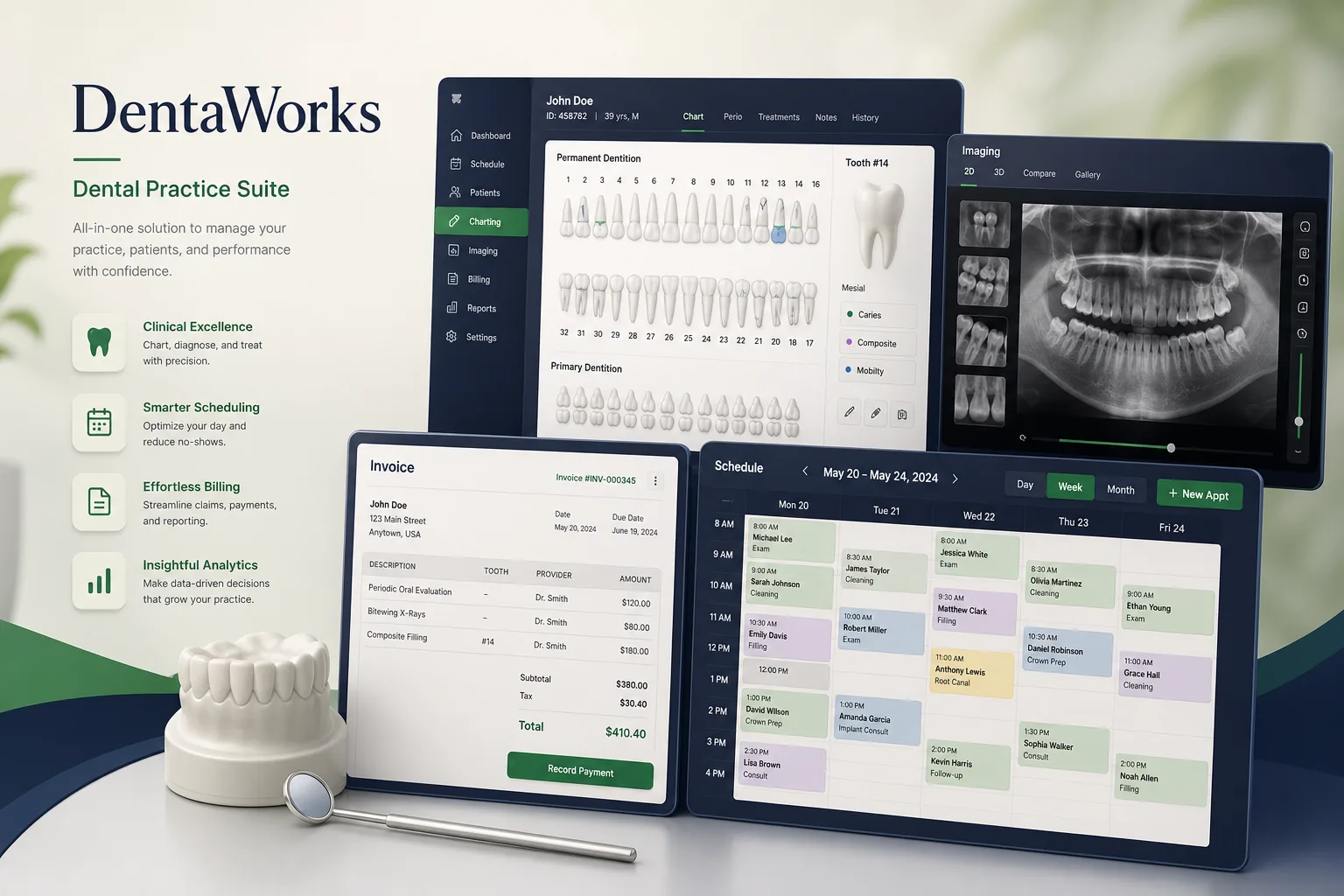
Remold Dental Care with Next Olive advanced App Solutions
Architectural Transformation: Remold Dental Care with Next Olive Advanced App Solutions
Project Overview & Scope
We developed the CareStack infrastructure to transform dental practice operations from a fragmented, legacy environment into a highly available, cloud-native microservices ecosystem. This deployment establishes multi-tenant database isolation, automates patient interactions, and integrates real-time secure communication channels directly into a centralized application layer.
+-----------------------------------------------------------------------------------+
| CLIENT LAYER |
| Web Browser (SPA) / Mobile Application (iOS/Android) |
+----------------------------------------+------------------------------------------+
| HTTPS / TLS 1.3
v
+-----------------------------------------------------------------------------------+
| NETWORK INGRESS |
| Anycast DNS -> Cloud API Gateway |
+----------------------------------------+------------------------------------------+
| Internal Routing
v
+-----------------------------------------------------------------------------------+
| APPLICATION ORCHESTRATION |
| +---------------------------------------------------------------------------+ |
| | Kubernetes Pod Isolation (Private Subnets) | |
| | | |
| | +--------------------+ +--------------------+ +--------------------+ | |
| | | Scheduling Engine | | Payment Service | | Notification Engine| | |
| | +---------+----------+ +---------+----------+ +---------+----------+ | |
| +------------|-----------------------|-----------------------|--------------+ |
+----------------|-----------------------|-----------------------|------------------+
| | |
v v v
+--------------------------------+ +---------------------+ +------------------------+
| DATA PERSISTENCE | | PAYMENT GATEWAY | | TELECOMMUNICATIONS BUS |
| Multi-Tenant Database Clusters | | Tokenized Handshake | | External SMS Gateways |
+--------------------------------+ +---------------------+ +------------------------+
Our engineering team inherited a legacy dental software layout that depended heavily on localized, on-premise servers, manual data entry workflows, and uncoordinated client communications. This outdated environment limited operational growth, exposed sensitive dental records to local hardware failure risks, and created administrative bottlenecks during peak booking hours. The primary objective of this project was to completely re-platform these operations into CareStack, a unified, cloud-based dental practice management software designed to streamline workflow scheduling, payment processing, and patient communication pipelines.
The scope of work encompassed rebuilding the core dental application architecture from scratch using a modern microservices framework. We focused on decoupling individual practice workflows, ensuring that high-demand actions like calendar synchronization or payment capturing run on dedicated compute resources. Our engineering team took charge of designing the network perimeter, drafting immutable infrastructure configurations, establishing secure data pipelines for personal health records, and deploying real-time automation scripts to eliminate manual dental office tasks.
To achieve these core engineering objectives, we designed the migration and deployment methodology around zero-downtime operational principles. Every component within CareStack had to remain highly available across multiple geographic zones to allow dental clinics to access records at any hour of the day. The final platform deployment provides an extensive set of capabilities that completely replaces legacy scheduling systems, localized physical payment terminals, and manual reminder protocols with an automated, secure, and compliant cloud framework.
System Architecture & Deployed Features
Our architecture relies on a highly decoupled microservices layout orchestrated via containerized clusters across redundant cloud regions to run the CareStack suite. We partitioned the scheduling, payment processing, notification, and data persistence layers into isolated runtime environments managed through Infrastructure as Code deployment workflows.
+-----------------------------------------------------------------------+
| APPLICATION INGRESS |
| TLS 1.3 Termination & Web Application Firewall |
+----------------------------------+------------------------------------+
|
v
+-----------------------------------------------------------------------+
| CLOUD API GATEWAY |
| Rate Limiting, Routing, & Okta Token Validation |
+----------------------------------+------------------------------------+
|
v
+-----------------------------------------------------------------------+
| COMPUTE CLUSTER (KUBERNETES) |
| +--------------------++--------------------+ Palestine---------------+ |
| | Scheduling Pods || Payment Pods | Notification Pods | |
| | (Optimistic Locks) || (PCI-DSS Scopes) | (Asynchronous Workers)| |
| +---------+----------++---------+----------+-----------+-----------+ |
+------------|---------------------|----------------------|-------------+
| | |
v v v
+-----------------------++--------------------+ +-----------------------+
| DATA LAYERS (Redis) || EXTERNAL BANK APIS | | TELECOM CHANNELS |
| Distributed Cache || Tokenized Gateway | | Distributed Queues |
+-----------------------++--------------------+ +-----------------------+
The underlying network topology is built within private virtual clouds that block direct public access to internal microservices. We deployed an advanced application ingress routing layer coupled with an enterprise web application firewall to shield backend microservices from common vulnerability attacks. Traffic entering the network is immediately inspected, cleansed, and distributed across active server sets using intelligent round-robin balancing algorithms. This network boundary isolates computing environments into public, private, and isolated data subnets, ensuring that application code never communicates with database backends without passing explicit security checkpoints.
By segregating workloads, we ensure that a sudden burst of patient traffic on the public booking portal does not slow down internal clinical chart software or backend payment processing channels. This microservices design permits each independent component to be updated, patched, or scaled without forcing an outage on other parts of the dental practice platform. We run these containerized services inside a managed Kubernetes framework where node health is monitored continuously by automated cloud controllers.
Scalable Multi-Tenant Scheduling and Appointment Engine Architecture
We built the online appointment engine using an asynchronous state machine architecture that eliminates double-bookings through optimistic locking mechanisms at the database isolation level. The scheduling component communicates via event-driven pub-sub topics to synchronize practitioner calendars, patient records, and front-desk dashboards simultaneously.
The online appointment engine processes real-time modifications across multiple time zones, allowing patients to look up live dental availability from any web platform. When a patient initiates a scheduling request, our application opens a short-lived memory reservation that marks the chosen slot as pending within a global cache layer. This state machine prevents conflicting reservations while the patient fills out necessary intake forms and verifies insurance information. The appointment service processes the data using the following steps:
- The client application sends a query request for open slots through the API gateway.
- The scheduling microservice reads from a localized cache pool to return available slots in less than fifty milliseconds.
- Once a slot is selected, an optimistic locking query checks the transactional database to confirm the row remains unchanged.
- The system updates the slot state to reserved and broadcasts a state change event across the central message broker.
- Internal administrative panels update their active views instantly via established WebSocket connections.
By isolating calendar data structures into individual practice tenants, we ensure that large dental organizations with dozens of branches can run intense operational lookups without causing resource contention for smaller clinics. The system evaluates calendar availability using worker pools that parse complex provider schedules, vacation blocks, and room utilization rules. This advanced processing ensures that dental practices maintain a fully optimized workflow while providing patients with an effortless interface to secure treatment sessions.
Secure Tokenized Payment Processing Infrastructure and API Gateway Integration
Our payment processing architecture uses a stateless API gateway layer that routes transaction requests to external financial clearinghouses while completely bypassing local persistence fields. This setup relies on secure webhook listeners, tokenized payment pathways, and localized encryption keys to isolate credit card workflows from administrative databases.
To process financial transactions without exposing dental practices to heavy compliance auditing issues, we engineered an integrated payment system that never records raw cardholder data within our internal application servers. When a user submits billing details, the front-end user interface initiates a direct handshake with an external payment broker, exchanging credit card details for an opaque, single-use token. This token is subsequently handed off to our backend payment service, which communicates securely with financial clearing networks using the following structured routine:
[Patient UI] ----(1. Send Raw Card Data)-----> [External Payment Broker]
[Patient UI] <---(2. Return Opaque Token)----- [External Payment Broker]
[Patient UI] ----(3. Submit Tokenized Order)--> [Cloud API Gateway]
|
(Forward Payload)
v
[Payment Microservice]
|
(4. Authorize Charge)
v
[Financial Clearing Net]
- The payment service validates the incoming payload signature at the API gateway level to confirm authenticity.
- The application initiates a secure cryptographic connection to the payment network using verified certificates.
- The tokenized reference is passed along with the requested transaction amount to complete the financial ledger update.
- The clearinghouse issues an immediate transaction response payload containing authorization IDs and settlement markers.
- Our payment microservice receives this webhook response, logs an obfuscated entry in the ledger, and signals the billing service to mark the patient invoice as settled.
This structure limits our operational perimeter from touching sensitive data fields, protecting our infrastructure from card data theft attempts. The backend system uses distributed lock workflows to guarantee that payment actions are executed exactly once per invoice request, successfully preventing duplicate charges during momentary network drops.
Automated Notification Pipelines and Asynchronous Message Broker Systems
We engineered the text reminder system as an asynchronous messaging engine that handles high-throughput message bursts using distributed message queues and external telecommunication gateways. The pipeline uses real-time processing workers to poll upcoming appointments, build localized payloads, and log delivery statuses automatically.
The automated notification pipeline eliminates the operational overhead of manually calling patients to confirm their upcoming dental visits. We configured a cron scheduler service that triggers automated background workers at regular intervals to scan the transactional databases for appointments requiring immediate notification. Once identified, these records are collected, parsed, and converted into structured message payloads containing unique confirmation hashes. The system manages these notification actions via isolated messaging queues:
+-----------------------------------------------------------------------+
| CRON SCHEDULER SERVICE |
| Periodic Scans for Upstream Appointment Records |
+----------------------------------+------------------------------------+
|
v
+-----------------------------------------------------------------------+
| DISTRIBUTED MESSAGING QUEUES |
| +--------------------+--------------------+--------------------+ |
| | High-Priority SMS | Standard Reminders | System Invoices | |
| +---------+----------+---------+----------+---------+----------+ |
+------------|--------------------|--------------------|----------------+
v v v
+-----------------------------------------------------------------------+
| WORKER PROCESSING POOLS |
| Payload Structuring & Dynamic Local Tracking |
+----------------------------------+------------------------------------+
|
v
+-----------------------------------------------------------------------+
| EXTERNAL TELECOM SERVICE INTEGRATIONS |
| Carrier Gateways, Receipt Logging, & Status Updates |
+-----------------------------------------------------------------------+
- High-Priority Queue: Dedicated exclusively to urgent, real-time actions like two-factor authentication codes and instant appointment cancellations.
- Standard Reminder Queue: Handles scheduled daily notification pushes, patient satisfaction surveys, and general clinical office announcements.
- Billing and Invoice Queue: Manages electronic payment notifications, digital balance statements, and financial receipt distributions.
These decoupled queues isolate traffic spike strains, ensuring that a large batch of morning reminder texts never delays a security authorization code. The worker nodes read messages from these queues, handle the communication with global telecommunication carriers, and track delivery receipts. If a network carrier drops a request, our worker framework uses exponential back-off policies to safely retry the transmission without crashing the background process.
Comprehensive Technology Stack Matrix
We selected a modern, cloud-native infrastructure matrix to host the CareStack dental practice management ecosystem, relying on fully managed container platforms and structured infrastructure definitions. The selected tools emphasize declarative configuration, zero-trust network boundaries, decoupled message brokers, and strict continuous deployment automation.
| Operational Layer | Technologies and Frameworks Used | Deployed Configuration/Role |
| Cloud Infrastructure Infrastructure | AWS, Azure | Multi-region virtual private clouds hosting isolated subnets across multiple availability zones. |
| Container Orchestration Platform | Kubernetes, Docker | Orchestrates microservice pods with horizontal autoscaling configurations and automated self-healing policies. |
| Identity Management Framework | Okta | Coordinates centralized identity control, OAuth2 single sign-on flows, and granular role-based permissions. |
| Endpoint Security Layer | CrowdStrike | Provides real-time host protection, behavior monitoring, and continuous vulnerability scanning across all server layers. |
| Infrastructure Deployment | Terraform | Dictates infrastructure blueprints via declarative files to ensure uniform staging and production spaces. |
| Data Storage and Caching | PostgreSQL, Redis | Manages multi-tenant patient ledgers using isolated schemas along with an in-memory cache layer for scheduling optimization. |
| Asynchronous Messaging Broker | RabbitMQ, Amazon SQS | Manages inter-service communications, appointment state changes, and outbound notification worker queues. |
| Application Runtime Environment | Node.js, Go | Powers stateless backend microservices designed for low-memory footprints and high-concurrency event handling. |
| Edge Ingress Routing | NGINX Ingress Controller | Manages external traffic routing, path-based load distribution, and TLS 1.3 cryptographic termination points. |
| Continuous Integration Engine | GitLab CI/CD | Runs automated linting, unit compilation checkups, container image packaging, and secure artifact scanning. |
| Platform Monitoring Suite | Prometheus, Grafana | Tracks active telemetry performance, cluster memory allocation metrics, and latency alerts across the infrastructure. |
Compliance, Security, & Operational Standards
We hardcoded a zero-trust architecture directly into the CareStack code repository, incorporating strict regulatory baselines, granular data access controls, and persistent telemetry monitors. Every workload runs within isolated virtual private networks backed by real-time threat detection tools and centralized identity provider configurations.
Our operational framework treats security as a foundational building block that dictates how data travels between different service components. We configured enterprise threat detection platforms across every virtual machine node to provide persistent runtime inspection capabilities and look for malicious memory patterns or unauthorized process executions. This design is augmented by automated configuration management scripts that evaluate system states against established cloud benchmarks every hour. Any unauthorized modification to an infrastructure rule triggers an automated rollback to the last verified version saved in our secure version control system.
We completely isolated the debugging, staging, and production workspaces into unique administrative domains to block data exposure risks during development activities. Developers use mock data sets during testing runs, ensuring that live patient folders remain completely untouched outside the production cloud enclave. This architectural isolation is paired with immutable audit trails that capture every administrative configuration modification, container update, and structural database adjustment across our corporate operational history.
Cryptographic Controls and Direct Data Encryption Pipelines
Our data protection model relies on advanced cryptographic protocols that secure dental patient records both during network transmission and while resting inside persistent storage blocks. We enforce column-level encryption for personal identifiers, manage cryptographic keys through automated key rotation services, and isolate storage volumes inside private subnets.
To meet the rigid security demands of the modern healthcare sector, we implemented a layered encryption policy that protects files regardless of where they reside within our infrastructure. All public network connections hitting our ingress controllers must establish a secure connection using modern cryptographic handshakes, blocking weak cipher suites and older protocol configurations. Once data reaches our backend microservices, individual fields containing patient personal details are processed using localized cryptographic libraries before being committed to physical storage sectors. The data lifecycle operates under the following rules:
- All data packets traversing internal application networks are encrypted using transport layer security protocols.
- Physical disk drives housing patient clinical folders are protected using storage layer hardware encryption standards.
- Cryptographic keys are managed within hardware security modules that enforce daily access control policies.
- Individual columns containing medical history details use unique salt parameters to prevent structural deciphering.
- Backup snapshots generated for disaster recovery actions are encrypted with unique keys before being uploaded to offsite storage vaults.
This multi-tiered key architecture protects patient data from physical infrastructure theft or accidental leakage caused by database export misconfigurations. The key management system updates operational keys automatically without causing record access locks, maintaining uninterrupted system availability for dental practitioners during maintenance shifts.
Identity and Access Management Frameworks with Multi-Factor Validation
We deployed a centralized identity solution that uses federated access protocols, role-based controls, and mandatory multi-factor validation rules across all system portals. The framework parses authentication tokens at the API gateway layer, validating user access rights before executing database queries or processing patient transactions.
Our identity strategy operates on the principle of least privilege, which means that individual application roles are limited to the exact actions required to perform their daily duties. A dental receptionist account is configured with permission tokens restricted to scheduling and patient contact fields, completely blocking access to clinical dental charts or financial payment adjustments. When a user requests entry into the CareStack system, our API gateway redirects the query to an isolated authentication layer that handles credential evaluation, device posture checks, and multi-factor validation challenges. The operational workflow handles permissions as follows:
[User Request]
|
v
[API Gateway] ----(Evaluate Bearer Token)----> [Okta Identity Layer]
| |
| <--------(Return Scoped JWT Permissions)--------+
v
[Authorize Microservice Router]
|
+----> Match Scope: 'appointments:write' -> Execute Database Query
|
+----> Reject Scope: 'billing:delete' -> Return HTTP 403 Forbidden
- The user provides login factors, which are checked against verified access files within our secure identity directory.
- Upon validation, the identity engine returns a short-lived JSON Web Token containing explicitly scoped permission markers.
- The client browser includes this cryptographically signed token within the header fields of all subsequent API calls.
- Microservice routers parse these scopes locally, blocking actions instantly if the token lacks the correct administrative level.
- Every authorization evaluation is logged to an immutable security file that tracks user identifiers, IP addresses, and requested resource endpoints.
Tokens expire automatically after fifteen minutes of inactivity, requiring user clients to run silent refresh handshakes using secure rotation parameters. This approach ensures that stolen session states become completely useless to an attacker within a minimal timeframe, keeping practice environments highly defended against active session hijacking attempts.
Technical Capabilities & Operational Framework
We structured our operational framework on an automated self-healing model that leverages multi-region failover triggers, horizontal pod autoscaling, and real-time health checks. The platform dynamically adjusts computing resources based on live traffic variations while streaming diagnostic logs into a centralized monitoring dashboard.
+-----------------------------------------------------------------------+
| LIVE PERFORMANCE METRICS |
| CPU/Memory Usage, Response Times, & Error Rates |
+----------------------------------+------------------------------------+
|
v
+-----------------------------------------------------------------------+
| METRIC COLLECTOR PIPELINE |
| Continuous Evaluation Against Predefined Thresholds |
+----------------------------------+------------------------------------+
|
(Threshold Exceeded)
v
+-----------------------------------------------------------------------+
| AUTOMATED ORCHESTRATION LAYER |
| +--------------------+--------------------+--------------------+ |
| | Spin Up New Pods | Allocate Memory | Trigger Alerts |
| +--------------------+--------------------+--------------------+ |
+-----------------------------------------------------------------------+
Our infrastructure monitors system health by running automated inspection routines inside every active application container every ten seconds. If an independent pod experiences a fatal memory leak or fails to answer basic ping tests, the host cluster controller destroys the unresponsive node and boots an identical copy instantly. This container recycling technique cleans out hanging database connections and frees system resources without interrupting user interactions. To protect against large-scale cloud data center outages, we configured our infrastructure definitions to run mirror applications across isolated geographic regions. A master health monitor tracks regional availability, ready to reroute edge traffic to alternate data centers within seconds if an entire cloud zone goes dark.
To manage the heavy computing swings that happen when dental clinics open their doors in the morning, our application framework relies on dynamic scaling engines that monitor real-time resource indicators. We configured explicit scaling parameters across our application clusters:
- Horizontal Pod Autoscaling: Deploys supplementary container workers when aggregate CPU utilization crosses sixty percent over a three-minute window.
- Cluster Node Scaling: Instructs the base infrastructure layer to register more physical machines when the existing host hardware runs out of container allocation slots.
- Scale-Down Optimization: Reduces active container footprints during low-use night shifts to prevent waste and save operational computing expenses.
Diagnostic logs generated by our code are structured as clean JSON strings and pushed into an internal log analytics data lake. We build central visualization dashboards that combine system error rates, API response durations, and query queues into single-screen views. This comprehensive visibility allows our engineering team to inspect software performance issues, verify application health, and correct latent code blocks before they impact the dental practice workflow.
Leveraging Next Olive Technical Expertise for Complex Infrastructures
We deliver complex cloud architectures by building decoupled, automated, and secure software ecosystems that remove legacy technical debt and accelerate infrastructural scale. Our engineering workflows rely on strict structural planning, immutable deployment pipelines, and advanced defensive security layers to maintain operational availability under intense workloads.
When modern businesses work with us, they gain a dedicated engineering partner that prioritizes system durability, technical depth, and strict structural code standards. We deliberately avoid brittle software patches and unrecorded infrastructure updates, building every layout inside version-controlled configuration systems that can be rebuilt from scratch with a single script execution. Our development methodology is rooted in real-world testing, ensuring that security components, multi-tenant boundaries, and communication queues are hardened against active network failures long before entering a live production system. We excel at dismantling monolithic legacy systems, organizing messy database architectures, and launching modern cloud platforms that conform to the highest global operational expectations.
Our team provides the deep engineering oversight necessary to navigate complex compliance audits, intricate data migrations, and high-concurrency software designs. We ensure that your underlying IT systems operate as an accelerator for your organizational goals rather than a source of persistent maintenance headaches. Connect with our principal system engineers today to eliminate your technical debt and establish a highly secure operational environment.
Secure Your Technical Architecture Review
Are you ready to optimize your system architecture, harden your cloud security perimeter, and eliminate operational performance bottlenecks? Contact our engineering group today to schedule a comprehensive infrastructure architecture review, where our principal architects will analyze your deployment layout, audit your compliance baselines, and provide a concrete technical roadmap for modernization.
Technical Deep-Dive FAQs
How does CareStack prevent appointment conflicts across multiple concurrent user sessions?
We prevent calendar booking conflicts by enforcing optimistic locking rules inside our PostgreSQL database management layer while managing short-lived active states through an in-memory Redis cluster. When a scheduling workflow begins, the application verifies that the row’s version counter matches the value captured at the start of the user session. If another front-desk agent saves a modification to that identical slot during the interim processing window, the system rejects the second transaction, rolls back the changes, and prompts the client screen to reload the updated calendar configuration.
What mechanism isolates multi-tenant dental practice data within the shared cloud infrastructure?
Our architecture provides multi-tenant isolation using logical schema segregation at the database layer, coupled with runtime token verification at the API gateway level. Every query entering the system is forced through a data access wrapper that appends a verified tenant identification key extracted from the user’s validated identity token. This prevents any possibility of cross-tenant data bleeding, as the database engine filters out rows belonging to alternate clinic identifiers before returning result fields to the application layer.
How are credit card transactions processed securely without exposing payment data to local servers?
We isolate credit card workflows from local servers by deploying direct iframe injections and secure JavaScript SDK bridges that communicate exclusively with our payment provider’s PCI-DSS compliant network. Raw cardholder account numbers are captured directly on the processor’s servers, returning an alphanumeric payment token to our application backend. Our microservices handle this token to execute subsequent financial settlements and settlement ledger updates, ensuring our core application servers never process, capture, or store sensitive financial cardholder data.
What protocol manages the scheduling and distribution of automated text reminders to patients?
Our text reminder engine utilizes an asynchronous distribution model powered by RabbitMQ message brokers paired with Node.js worker pools. A cron-based polling microservice identifies upcoming appointments requiring notification and builds lightweight JSON message descriptors that are dropped onto localized messaging exchanges. Isolated background workers consume these message entries, translate payloads into carrier-specific API formats, and manage communication with external telecommunication systems while tracking real-time delivery confirmations.
How does the platform maintain continuous availability during a complete cloud zone outage?
We maintain application availability by deploying our Kubernetes clusters across multiple geographic availability zones using an Anycast DNS routing system. If a localized power failure or network disaster takes down an entire cloud data center, the external health checker modifies the ingress routing tables to send all incoming public traffic to surviving zones. Our database instances run active-passive replication workflows, allowing an alternate node to take over primary operations within seconds of a primary zone failure detection.
Which methods protect patient records and personal health information when stored at rest?
Patient records are secured at rest using industry-standard AES-256 cryptographic algorithms hardcoded directly into our storage deployment files. We apply this encryption to all application databases, transactional ledgers, logging systems, and off-site disaster recovery backups. The underlying encryption keys are stored within dedicated cloud hardware security modules that enforce daily key rotation schedules and require explicit service principal permissions to read or decrypt protected volumes.
How are system updates deployed to the CareStack application without causing operational downtime?
We execute platform updates using rolling deployment strategies managed directly by our Kubernetes orchestrators and automated GitLab CI/CD pipelines. When a new microservice container image is released, the orchestration engine provisions a single updated container and checks its active readiness probes before shutting down an older instance. This incremental update process continues across the entire cluster layout, ensuring that adequate system capacity is preserved throughout the release phase without dropping active patient connections.
What role does the API gateway play in blocking unauthorized requests before they hit backend microservices?
The API gateway acts as our network perimeter fence, handling incoming TLS 1.3 cryptographic termination, rate limiting, and initial token validation actions. If an incoming web request lacks a properly signed cryptographic access token or exceeds our strict traffic volume limits, the gateway drops the connection immediately and returns an appropriate error code. This prevents unauthenticated traffic or automated denial-of-service attempts from consuming valuable compute resources inside our private application subnets.
How are infrastructure configurations tracked, validated, and rolled out across production environments?
Every piece of our infrastructure is declared via structured Terraform configuration files stored inside a secure version control repository. When an engineer modifies a network layout or adds a cluster node, the change must pass automated linting tests and a peer architecture review process. Once approved, our deployment pipeline verifies the changes inside an isolated staging environment before applying the structural configuration to production, eliminating manual command-line configuration errors.