
Build an AI-Ready Data Architecture: 2026 Expert Guide
What Is the Best 2026 Hybrid Cloud Migration Strategy for Scalable, Secure, and Cost-Efficient IT Infrastructure?
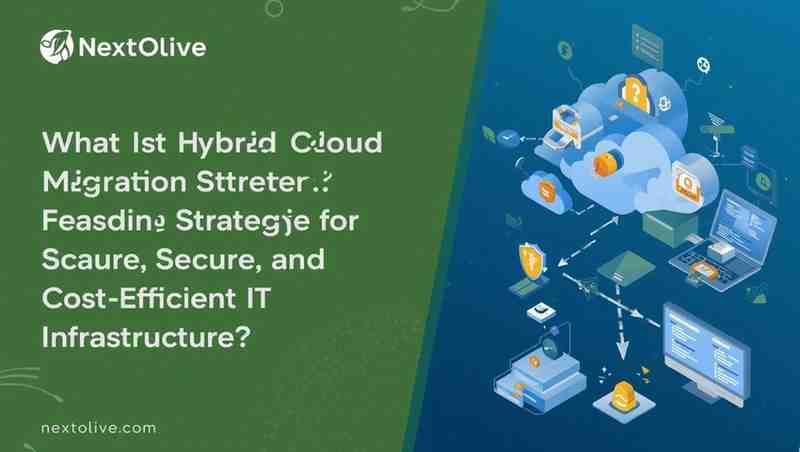
The best 2026 hybrid cloud migration strategy is the “AI-Driven Intelligent Workload Placement” model. It involves using AI to audit your current infrastructure, containerizing legacy applications, and implementing a “data fabric” architecture that treats public cloud (AWS/Azure) and private infrastructure as a single, unified environment, prioritizing data gravity and sovereignty.
In 2026, the “cloud-first” dogma has matured into a pragmatic “cloud-smart” approach. The most effective strategy is no longer about moving everything to the public cloud but about orchestrating workloads dynamically between on-premise private clouds and hyperscalers like AWS, Azure, and Google Cloud. This strategy relies heavily on automation and AI-driven observability to decide where data lives—balancing the need for low-latency processing against the cost of data egress and regulatory compliance.
To execute this, businesses are abandoning “lift and shift” migrations. Instead, they are adopting a Data Fabric architecture. According to SAP experts, a business data fabric brings heterogeneous sources into a consistent state, making it easier to combine legacy and modern data. This allows AI models to access trusted data without replicating it across expensive silos. Furthermore, the rise of Generative AI (GenAI) in 2026 demands that this strategy include a “semantic layer”, a translation layer that helps AI understand business context like “net revenue” versus “gross revenue”.
Why Are Businesses Moving to Hybrid Cloud in 2026 and What Benefits Can You Expect?
Businesses are moving to hybrid cloud in 2026 to optimize the high costs of GenAI computing, mitigate vendor lock-in, and meet strict data sovereignty laws. They expect a 30-50% reduction in operational costs through intelligent workload placement and the ability to run AI models securely on private data.
The urgency driving hybrid adoption in 2026 is distinct from the cost-saving measures of previous years. Today, it is driven by Generative AI (GenAI). Training and running Large Language Models (LLMs) is expensive and data-intensive. Public cloud egress fees can create budget volatility, making it financially risky to process terabytes of log data solely in the public cloud. Hybrid models allow enterprises to keep raw data on-premise for preprocessing (reducing egress fees) while bursting to the cloud for GPU-powered training.
Another major driver is Data Sovereignty. With global regulations tightening, particularly in the EU and specific markets like India (DPDPA) and Switzerland, companies cannot afford to have certain data cross international borders. Hybrid cloud offers the “best of both worlds”: keeping sensitive financial or health records in a private, auditable on-premise vault while utilizing cloud innovation for less-sensitive applications.
The benefits extend beyond compliance. A study cited by Infoblox suggests that intelligent workload distribution can reduce operating costs by up to 50%. Furthermore, hybrid architectures solve the “cloud exit” problem. If a public cloud provider raises prices or changes its SLA, a hybrid architecture enables easier repatriation of workloads to private infrastructure, giving the business leverage.
What Problems Does Hybrid Cloud Solve for Modern Enterprises?
How does hybrid cloud improve flexibility across workloads?
It enables cloud bursting. During peak seasons (e.g., retail holidays), a company can run the core database on secure private servers while automatically “bursting” the web front-end and analytics workloads to the public cloud. This prevents on-premises hardware from sitting idle for most of the year while still handling traffic spikes.
Why is vendor lock-in reduced with hybrid models?
By maintaining a consistent architecture (often via Kubernetes), applications become cloud-agnostic. If a business relies on a specific proprietary API from AWS (like S3 or Lambda), moving away is hard. Hybrid models prioritize open-source technologies and containerization, allowing workloads to shift between Azure, AWS, or on-premise without rewriting code, thus keeping cloud providers competitive on pricing .
How does hybrid cloud support legacy system integration?
Most enterprises run mainframes or legacy ERP systems (like SAP) that are too brittle to migrate. Hybrid cloud places a “modernization wrapper” around these systems. The legacy system stays on-premise, but APIs and integration layers expose its data to modern AI analytics tools running in the cloud, extending the life of legacy investments.
What Are the Key Benefits of Hybrid Cloud Migration in 2026?
How does hybrid cloud reduce operational costs?
Through FinOps optimization. Public cloud is OpEx (pay-as-you-go), but for 24/7 steady-state workloads, owning hardware (CapEx) is cheaper. Hybrid allows you to keep “always-on” databases on-premise while using cloud spot instances for experimentation and batch processing, avoiding the high cost of constant cloud usage.
What security advantages does hybrid cloud provide?
It allows a Zero Trust architecture to be enforced physically and logically. Highly regulated data (PII, HIPAA) can be isolated on a private cloud that is not connected to the internet, while less sensitive web services run publicly. This “air gap” capability is impossible in a pure public cloud environment.
How does hybrid cloud enhance scalability and performance?
It solves the latency problem. For applications like IoT or real-time fraud detection, milliseconds matter. Processing data in a remote cloud data center 500 miles away is slower than processing it at the edge or on-premises. Hybrid cloud keeps compute resources close to the data source for high performance while scaling out to the cloud for storage and archival.
Is Hybrid Cloud Better Than Multi-Cloud or Public Cloud Alone?
Yes, for most regulated or cost-conscious enterprises. Public cloud alone lacks control; multi-cloud adds complexity without integration. Hybrid cloud is superior when you have legacy systems or high data gravity, as it allows seamless orchestration between owned assets and rented resources.
What are the differences between hybrid and multi-cloud?
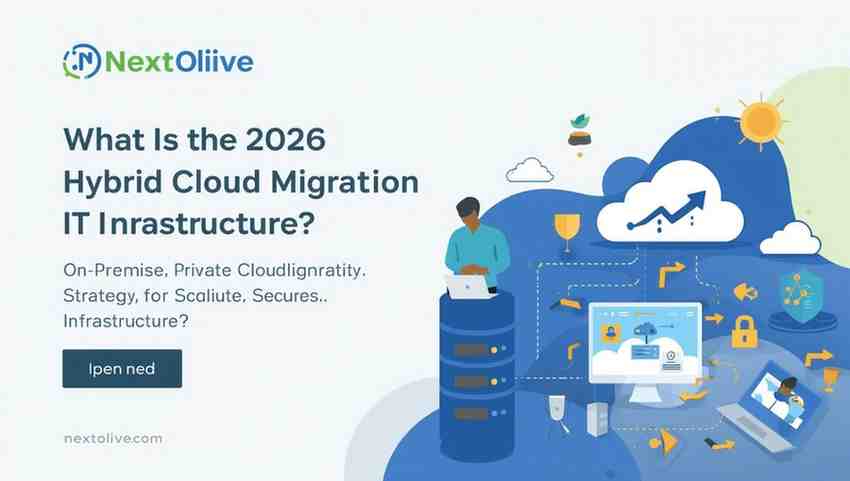
While often confused, they serve different purposes. Hybrid cloud implies a mix of public and private (on-prem) infrastructure, usually integrated via a management plane. Multi-cloud implies using two or more public clouds (e.g., AWS and Azure) without necessarily having a private component.
| Feature | Hybrid Cloud | Multi-Cloud | Public Cloud Alone |
|---|---|---|---|
| Composition | Private + Public (e.g., Azure + On-Prem) | 2+ Public Clouds (e.g., AWS + GCP) | Single Provider (e.g., AWS Only) |
| Best For | Legacy integration & data sovereignty | Best-of-breed services & redundancy | Startups & serverless apps |
| Security Control | High (Physical control possible) | Medium (Relies on provider config) | Low to Medium |
| Complexity | High (Networking/Identity sync) | Very High (Tool sprawl/cost tracking) | Low |
| Vendor Lock-In | Low (Portable workloads) | Very Low (Leverage competition) | High (Proprietary APIs) |
When should you choose a hybrid over a public cloud?
Choose a hybrid when you have data gravity. If your data is terabytes or petabytes in size, moving it to the public cloud every time for processing is cost-prohibitive due to egress fees. It is cheaper to bring the compute to the data (hybrid) than the data to the compute (public). Also, choose hybrid if your industry requires audited physical access logs (e.g., defense, banking).
What industries benefit most from hybrid cloud?
- Healthcare: Keeping Electronic Health Records (EHR) on-prem for HIPAA compliance while using cloud AI for diagnostics.
- Finance: Running trading algorithms on-prem for microsecond latency while using the cloud for risk analytics.
- Retail/E-commerce: Keeping POS (Point of Sale) systems on-prem for reliability during internet outages while using the cloud for inventory forecasting.
- Manufacturing: Processing IoT sensor data at the edge (factory floor) before sending aggregates to the cloud.
How Do You Build a Successful Hybrid Cloud Migration Strategy Step by Step in 2026?
Building a successful strategy requires a 6-step iterative process:
1) AI-assisted discovery
2) Defining “as-a-service” KPI
3) Implementing Infrastructure-as-Code (IaC)
4) Containerization (Kubernetes)
5) Zero-trust security mesh
6) Continuous FinOps monitoring.
In 2026, a successful migration is not a project; it is a continuous evolution. The old “waterfall” migration is dead. Instead, enterprises must adopt a product mindset for their infrastructure.
The process begins with AI-assisted discovery. Before moving a single byte, tools scan the IT landscape to map dependencies. It is critical to identify “talkative” applications; if two apps communicate constantly, splitting them across a slow WAN link will break performance. These pairs must stay together (either both on-prem or both in the cloud).
Next, the architecture must be API-driven. Manual configuration is a relic of 2020. In 2026, every server, firewall rule, and database is defined as code (IaC) using tools like Terraform or Ansible. This allows the hybrid environment to be version-controlled, tested, and replicated instantly. Without IaC, the operational complexity of hybrid cloud leads to “configuration drift,” a primary cause of security breaches.
Finally, success hinges on Observability. You cannot manage what you cannot see. A unified dashboard must trace a single user request as it travels from the public cloud load balancer, through a VPN tunnel, to an on-premise database, and back. If your monitoring tools cannot stitch together logs across these two environments, you will suffer from “alert fatigue” and slow incident response.
What Are the Essential Steps in Hybrid Cloud Migration Planning?
How do you assess your current IT infrastructure?
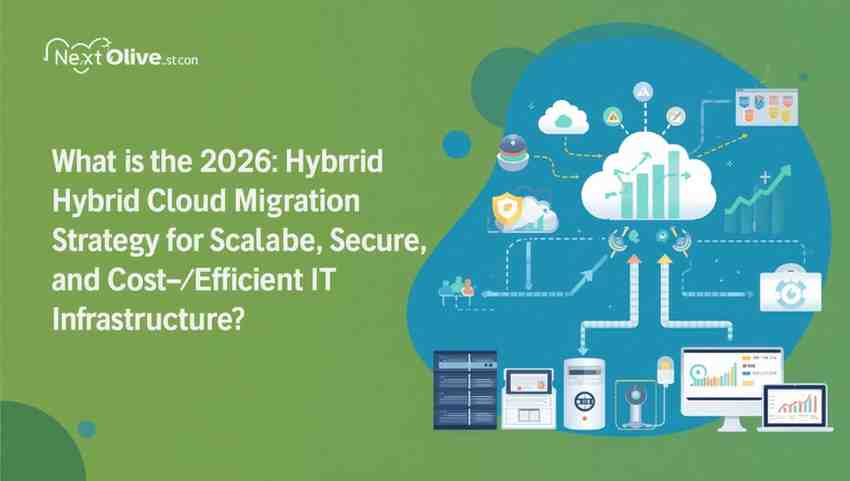
Start with a dependency mapping. You need to identify not just what servers you have, but how they talk to each other. Tools can generate traffic flow maps. The goal is to identify “stovepipes”, applications that are tightly coupled. If Application A makes 10,000 calls per second to Database B, splitting them across a hybrid link will cause latency failures.
What workloads should you migrate first?
Don’t start with the crown jewels. Start with stateless or development workloads.
- Pilot: Disaster Recovery (DR) backups. Replicate your backups to the public cloud first. This tests connectivity without risk.
- Wave 2: Dev/Test environments. Let developers spin up cloud instances for testing.
- Wave 3: Web servers and front-ends (easy to scale).
- Wave 4: Stateful databases (only after mastering networking and latency). Avoid migrating legacy mainframes or high-frequency trading apps until the end, as they often require repatriation.
How do you define clear migration goals and KPIs?
Define “Don’t Break the Bank” metrics. Most migrations fail because of cost overruns.
- KPI 1: Unit Economics. “What is the cost per transaction?” (e.g., $0.01 per API call).
- KPI 2: Mean Time to Recovery (MTTR). Can you fail over to the cloud in under 5 minutes?
- KPI 3: Egress Efficiency. Are you spending more to get data out of the cloud than to store it?
What Tools and Technologies Are Required for Hybrid Cloud Migration?
Which cloud platforms are best for hybrid environments?
The “Big Three” offer robust but distinct stacks:
- Microsoft Azure: Best for enterprises heavily invested in Windows Server, Active Directory, and SQL Server. Azure Arc allows managing on-prem servers as if they were in Azure.
- AWS (Outposts): Best for broad service availability. AWS Outposts is a rack of AWS servers that lives in your data center, giving you the same API as the public cloud.
- Google Cloud (GKE Enterprise): Best for containerized workloads and AI/ML. Google excels at open-source integration and multi-cloud management.
What role do containers and Kubernetes play?
Containers are the lingua franca of hybrid cloud. By packaging an app with its dependencies into a container, it runs identically on a developer’s laptop, an on-premise server, or the public cloud. Kubernetes (K8s) is the operating system that manages these containers. It abstracts away the underlying hardware, allowing you to “burst” containers to the cloud when on-premise resources are full.
How do automation and AI improve migration efficiency?
AI is now used for anomaly detection and cost forecasting. AI tools analyze usage patterns to predict if a workload will be cheaper on-prem or in the cloud next month. Furthermore, AI agents assist in refactoring code. Instead of developers manually rewriting SQL queries for a cloud database, AI engines auto-convert them, accelerating the “re-platforming” phase.
How Do You Ensure Security and Compliance During Migration?
Security in hybrid cloud relies on “Zero Trust” and a unified identity plane. You must standardize on a single identity source (e.g., Azure AD or Okta), enforce consistent role-based access control (RBAC) across cloud and on-prem, and encrypt all traffic in transit via dedicated lines (Direct Connect/ExpressRoute).
What are the top security risks in hybrid cloud?
The “Human” and the “Gap.” The top risk is misconfiguration, leaving a cloud storage bucket open to the public because an admin was used to on-prem firewalls. The second risk is Identity Fragmentation. If a user leaves the company, their access must be revoked instantly from both the on-prem Active Directory and the cloud IAM. If these are not synced in real-time, you create orphaned accounts that are backdoors for attackers.
How do you implement zero-trust architecture?
“Trust nothing, verify everything.” In a hybrid model, you cannot trust traffic just because it comes from inside the corporate network.
- Micro-segmentation: Break the data center into tiny logical zones. Even if a hacker compromises a web server, they cannot talk to the database server without a specific “micro-token.”
- Just-in-Time (JIT) Access: Admins should not have permanent root access. They request elevated privileges for a specific task (e.g., 1 hour), and the system auto-revokes it.
- Data Grounding: For AI systems, implement Row-Level Security (RLS) in your databases. This ensures that even if an AI agent is querying data, it only sees the rows relevant to the specific user making the request, preventing data leakage.
How Next Olive Can Help in Developing Your Dream Application/Project Using Hybrid Cloud?
Next Olive bridges the gap between complex cloud infrastructure and business goals. By leveraging AI-driven migration frameworks and a “Security-First” architecture, Next Olive ensures your applications are cloud-native, cost-optimized, and future-proof against the demands of Generative AI.
Building a “dream application” in 2026 requires more than just code; it requires an infrastructure that breathes with your business. Next Olive specializes in converting complex hybrid architectures into competitive advantages. While many vendors push for “all-in” public cloud, Next Olive takes a vendor-agnostic, pragmatic approach, ensuring your legacy investments are not wasted, and your data remains sovereign.
Why Choose Next Olive for Hybrid Cloud Migration and Development?
Next Olive employs a 6-Step Hybrid Maturity Framework:
- AI-Assisted Discovery: We don’t guess; we use AI agents to map your exact data gravity and dependencies.
- Financial Modeling (FinOps): We provide a “TCO war room” to compare 3-year costs of on-prem vs. cloud vs. hybrid, ensuring no budget surprises.
- Containerization (K8s First): We modernize legacy apps into containers, making them portable. If AWS raises prices tomorrow, your app can move to Azure or back on-prem seamlessly.
- Secure Cloud Networking: Implementation of dedicated connections (ExpressRoute/Direct Connect) to eliminate latency and secure data transit.
- GenAI Enablement: We build the “semantic layer” required for your data to be readable by LLMs, turning your private data into a competitive AI asset without exposing it to public training sets.
- 24/7 Sovereign Operations: Ongoing management with a focus on data residency laws, ensuring your app complies with DPDPA, GDPR, and local regulations.
Conclusion: Is Hybrid Cloud Migration the Right Strategy for Your Business in 2026?
The hybrid cloud is no longer a luxury for enterprise-level organizations; it is a necessity for those looking to compete in the era of AI. If your business requires a blend of high-performance localized computing, ironclad security, and the infinite scalability of public cloud resources, the answer is a resounding “Yes.”
The journey to a hybrid future requires careful planning, a focus on containerization, and a robust security framework. By starting with small, modular migrations and partnering with experts who understand the intersection of legacy stability and modern innovation, your business can build an infrastructure that is not only efficient today but ready for the challenges of tomorrow.
Frequently Asked Questions
What is the difference between Hybrid Cloud and Multi-Cloud?
A: Hybrid Cloud combines private (on-prem) and public cloud (e.g., Azure). Multi-cloud uses two or more public clouds (e.g., AWS + Google Cloud) but may not involve any on-prem hardware. Hybrid is about location; multi-cloud is about providers.
Q2: Is a hybrid cloud more expensive than a public cloud?
Not necessarily. While it requires upfront CapEx for hardware, it saves OpEx over time. For steady-state workloads (24/7 servers), hybrid is cheaper. For spiky workloads (testing, seasonal traffic), public cloud is cheaper. Hybrid optimizes for both.
Q3: How does hybrid cloud improve disaster recovery?
It allows active-active failover. You can run your primary app on-prem and a scaled-down version in the cloud. If your data center loses power, traffic routes to the cloud instantly (low RTO), and because the data is synchronized, you lose minimal time (low RPO).
Q4: Can I run AI models in a hybrid cloud?
Absolutely. This is a leading use case in 2026. You can keep your training data on-prem (to keep it private) but “burst” to the public cloud to access expensive NVIDIA GPUs for the actual model training. Once trained, the model can be brought back on-prem for inference.
Q5: What is “Data Gravity” and why does it matter?
Data Gravity is the concept that large datasets are hard to move. If you have 10 Petabytes of video data, it is physically difficult and expensive to upload it to the cloud. Hybrid cloud acknowledges this by suggesting you move the compute to the data, rather than the other way around.