April 7, 2026 .Net

Transforming Fleet Management with Innovative App Development

Transforming Fleet Management with Innovative App Development: A Comprehensive Technical Architecture Showcase

Project Overview and Scope

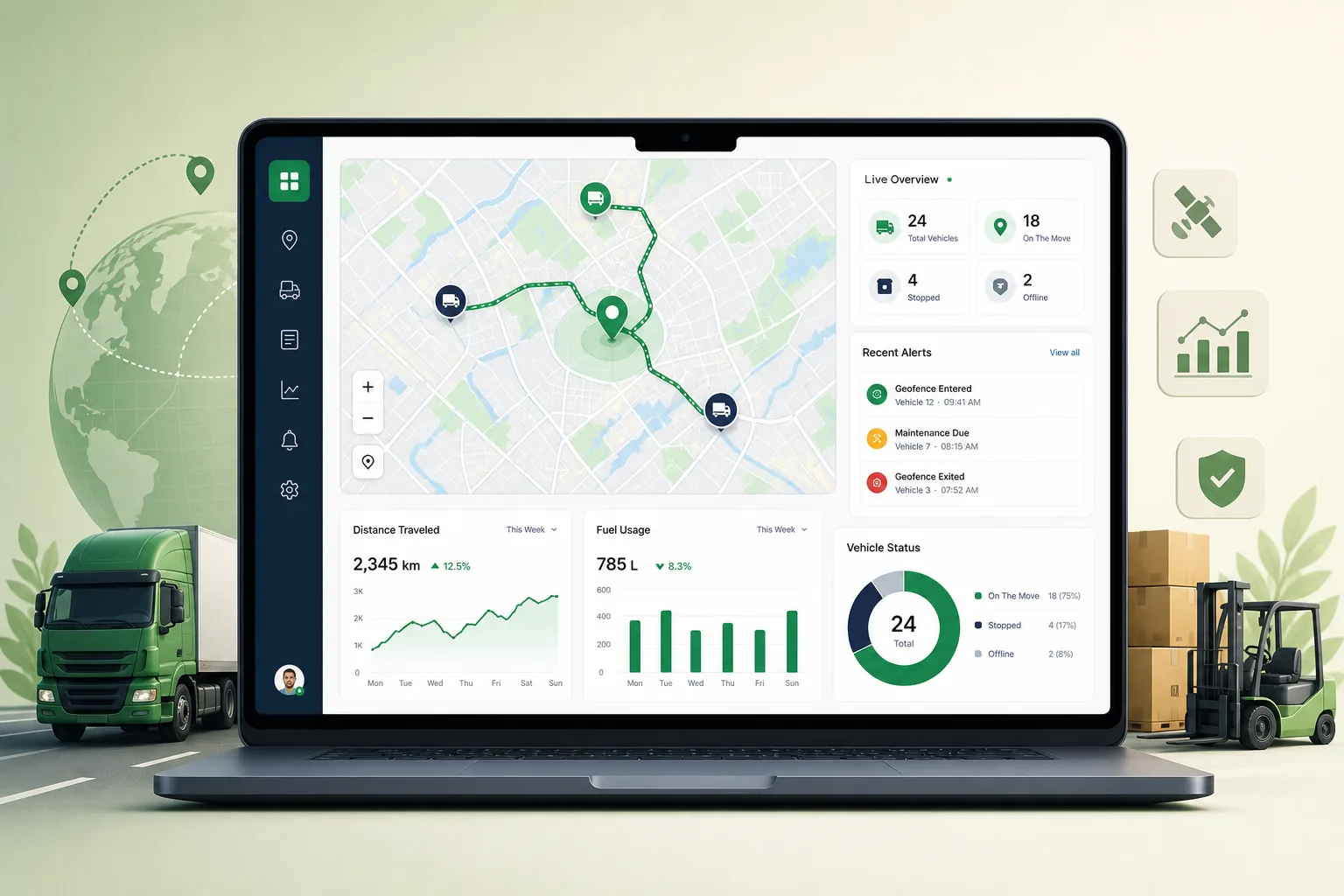
We engineered a highly scalable, real-time fleet management architecture for EzyHaul to replace legacy tracking limitations with an event-driven telemetry platform. Our team migrated distributed components into a unified containerized system that coordinates cross-border truck tracking, active driver scheduling, and live route optimization using high-throughput cloud resources.

Our primary mandate was to design, develop, and deploy a completely modern software infrastructure comprising an administrative web application platform and a multi-platform driver tracking mobile application. The inherited technology landscape across the logistics network presented severe operational bottlenecks, including highly fragmented data states, unoptimized network payloads, and substantial architectural latency. By re-engineering the system from the ground up, we aimed to deliver an enterprise-grade solution that guarantees real-time fleet visibility, strict data security, and uninterrupted operational synchronization under high compute loads.

The project scope covered the entire engineering lifecycle, beginning with the baseline audit of existing communication protocols and extending through the complete setup of cloud environments. We focused heavily on building a resilient real-time tracking engine capable of processing constant GPS coordinates from thousands of active fleet vehicles simultaneously. Additionally, the system needed to integrate deep driver management mechanisms, automated supply chain optimization modules, and an intuitive, low-latency user interface tailored for fast-paced logistics environments.

Our development strategy emphasized absolute decoupling of system features to prevent cascading failures across the platform. We designed the administrative web infrastructure and the mobile edge clients as separate, isolated modules connected via secure API gateways and managed event streaming channels. This meticulous structural planning ensured that heavy calculations, such as multi-point route updates and fuel consumption indexing, run independently without blocking core ingest workflows or slowing down device synchronization.

Inherited Technical Environment and System Constraints

We uncovered critical architectural bottlenecks where standard API polling configurations overloaded relational databases, creating severe web-dashboard latency during high-traffic operational windows. The legacy logistics setup relied on disconnected data storage areas and batch processing updates that delayed vehicle coordination changes by several minutes, leading to frequent errors in route scheduling.

The original framework lacked a centralized event broker, forcing the web interface to repeatedly poll the main database tables to discover vehicle location updates. As the fleet grew, this polling mechanism caused massive lock contentions on the database indexes, stalling write operations and dropping connection packets from mobile driver applications. Furthermore, the driver tracking system struggled with inconsistent cellular coverage along remote transit paths, resulting in permanent data loss whenever a mobile app lost internet access.

The client also faced severe challenges regarding mobile device battery consumption and unoptimized payload sizes. The mobile client previously transmitted raw, uncompressed text blocks containing tracking coordinates at erratic intervals, which rapidly exhausted device batteries and generated excessive network expenses. Our team recognized that resolving these infrastructure challenges required shifting away from monolithic database dependencies and introducing an offline-first mobile architecture paired with an event-driven message queuing pipeline.

Core Deployment Objectives and Engineering Milestones

We established exact milestones for containerizing the application services, automating infrastructure provisioning, and hardcoding strict operational boundaries to ensure fault-tolerant, continuous telemetry ingestion. Our core engineering objective focused on deploying a production platform capable of maintaining sub-second tracking visibility while upholding a highly available service configuration across all system layers.

To achieve these architectural goals, we divided the engineering plan into distinct execution phases:

  • Phase One: Provisioning isolated multi-region cloud networks using automated code scripts, setting up secure virtual private clouds, and establishing strict access control boundaries.
  • Phase Two: Constructing the event-driven ingestion pipeline by deploying high-throughput message brokers and in-memory key-value caching groups to handle incoming telemetry streams.
  • Phase Three: Developing the decoupled backend microservices, building the geospatial computation modules, and creating the core database schemas with specialized indexing.
  • Phase Four: Engineering the cross-platform mobile application featuring local data persistence and building the web application dashboard with live WebSocket interfaces.
  • Phase Five: Implementing automated container security monitoring tools, setting up centralized log routers, and running comprehensive end-to-end failover tests.

Our target criteria for deployment success required that the message streaming pipeline process incoming geospatial updates with zero data loss, even if a core compute node failed. We also required that the web interface display location changes across the fleet map within half a second of the packet hitting our cloud load balancers. These strict engineering standards guided every design decision throughout the development lifecycle.

System Architecture and Deployed Features

We deployed a distributed, microservices-driven framework utilizing decoupled event pipelines to isolate telemetry processing from driver administration services. The architecture implements an API gateway layer to filter incoming traffic, route message payloads to dedicated message brokers, and synchronize persistent data states across all endpoints.

[Driver Mobile Client] & [Web Dashboard Interface]
                         │
                         ▼
               [Elastic API Gateway]
                         │
        ┌────────────────┴────────────────┐
        ▼                                 ▼
[Apache Kafka Ingest]           [Application Workloads]
        │                                 │
        ▼                                 ▼
[Real-Time Tracking Engine]     [Driver & Supply Chain Services]
        │                                 │
        ├─────────────────────────────────┤
        ▼                                 ▼
 [Redis Cache Cluster]           [PostgreSQL / PostGIS]

The core system architecture relies on an asynchronous design pattern where incoming telemetry traffic is separated from the primary transactional database. When a mobile client transmits a coordinate update, the data packet first reaches our elastic API gateway, which checks authentication tokens and passes the validated payload directly to our streaming data brokers. This approach ensures that a sudden influx of vehicle location updates cannot exhaust the processing loops assigned to administrative tasks like driver registration or compliance reporting.

Our application workloads run inside optimized, isolated software containers managed by an automated orchestration engine that scales individual services based on live resource demands. The system splits functions into distinct operational microservices, including a tracking ingest worker, an asset management worker, a routing optimization planner, and a notifications worker. This modular configuration allows us to update individual components without bringing down the entire platform, improving system maintainability and eliminating single points of failure.

Real-Time Telemetry and Geospatial Vehicle Tracking Ingestion

We built a high-throughput geospatial ingestion pipeline that captures continuous GPS coordinates from truck edge devices and driver mobile apps via secured lightweight network protocols. This sub-system processes spatial telemetry data packets sequentially, validates payload parameters, and updates an in-memory caching cluster for instant access.

The ingest engine uses light, persistent network sockets that keep connection overhead low for mobile devices operating on unstable networks. When a device sends a packet, the ingest worker extracts the vehicle identifier, geographic coordinates, current velocity, and timestamp values. The worker verifies the format of the incoming payload against a strict structural schema, dropping corrupted or malformed entries immediately to protect downstream consumers from errors.

Once validated, the telemetry data is sent directly to partitioned message topics where messages are ordered chronologically by vehicle identifier. A group of specialized geospatial consumers reads from these topics, running spatial calculations to determine if a vehicle has crossed any defined geo-fence boundaries. Simultaneously, the latest coordinate pair for each vehicle is written to an in-memory database cluster, allowing the web dashboard to fetch asset positions instantly without running slow, repetitive disk-read operations on the primary database.

Comprehensive Driver Management and Dynamic State Machinery

Our engineering team developed an isolated driver management microservice governed by an internal state machine to track schedules, performance data, and safety compliance rules. The service utilizes non-blocking execution paths to process driver shift submissions, hours-of-service updates, and document verification states without impacting real-time tracking operations.

The driver service stores all user profiles, historical logs, and certification metadata inside a secure database layer optimized for fast transactional queries. We designed a clear lifecycle state machine that tracks driver availability through various phases, such as Off-Duty, Pre-Trip Inspection, Active Driving, Mandatory Rest, and Post-Trip Review. When a driver interacts with the mobile app to change their status, the application submits a state transition request that is validated against structural compliance boundaries before updating the central repository.

To support compliance audits, the sub-system continuously logs active driving periods and automatically flags any schedule configurations that breach regional safety regulations. Driver performance metrics, such as sudden braking events or prolonged engine idling, are captured through the telemetry pipeline and tied directly to the driver profile records. This structured approach provides operators with a historical view of fleet safety parameters while keeping the primary data storage layer organized and free from index corruption.

Supply Chain Optimization and Route Calculation Engines

We integrated an open-source routing engine with custom mathematical logic to provide automated route planning, accurate fuel consumption projections, and proactive vehicle maintenance windows. The framework processes historical sensor information alongside live traffic data to determine optimal routes and schedule service events before failures occur.

The route optimization engine calculates complex distance matrices by parsing geographic data layers stored in our spatial database extensions. When a logistics manager assigns a delivery run on the web portal, the engine automatically calculates the fastest and most efficient path based on vehicle weight capacities, roadway restrictions, and real-time transit bottlenecks. These generated route templates are saved as vector geometries, enabling the system to track real-time deviations if a vehicle leaves its intended path.

[Raw Vehicle Telemetry] ──► [In-Memory Evaluation] ──► [Spatial Indexing (PostGIS)]
                                                               │
                                                               ▼
[Maintenance Trigger] ◄── [Rule Engine Analysis] ◄─── [Route Deviations / RPM Log]

The fuel tracking component connects directly to the engine sensor logs sent through the telemetry pipeline, analyzing trends across vehicle speed, engine RPM, and stop durations. By matching fuel consumption records against specific transit paths, the system generates detailed efficiency reports that isolate high-cost routing patterns. Furthermore, our predictive maintenance module tracks total mileage accumulations and engine runtimes, automatically triggering service alarms when an asset approaches its operational threshold to minimize unexpected roadside delays.

Unified Web and Mobile Synchronization Layer

We engineered a bidirectional synchronization framework that bridges the mobile app with the web infrastructure using persistent transport layer connections and event brokers. This setup ensures that fleet operations teams viewing the web portal observe the exact vehicle coordinates and job statuses updated by drivers on the road.

The cross-platform mobile application contains a dedicated network synchronization worker that handles all upstream and downstream data transfers. If a truck enters a location with no cellular signal, the local synchronization worker redirects all outgoing telemetry updates into an internal, encrypted database embedded within the mobile device. The application continues to collect and stamp location data locally, preventing any data loss during long transit runs through remote areas.

When the device detects a stable network connection, the synchronization worker establishes a secure session and transmits the saved records in compressed batches. On the receiving end, the cloud API gateway accepts the batch, validates the internal timeline of the packets, and feeds them into the streaming pipeline for processing. This offline-first approach guarantees complete data integrity while shielding the driver from interface errors or application crashes caused by fluctuating network environments.

Comprehensive Technology Stack Matrix

We designed a comprehensive technology stack matrix defining the explicit operational layers, software frameworks, and specific configuration assignments used throughout this deployment. This structured matrix ensures absolute consistency across development, staging, and production networks while allowing engineering teams to audit system dependencies rapidly.

Our engineering team selected these technologies to build a highly decoupled, non-blocking platform capable of maintaining continuous operations under variable transaction loads. Every layer is provisioned through automated code templates, ensuring that the entire environment can be rebuilt in an alternate cloud region within minutes if a major disaster occurs. The matrix below outlines the specific technical assignments chosen for the fleet management deployment:

Operational LayerTechnologies and Frameworks UsedDeployed Configuration / Role
Infrastructure as CodeTerraformMulti-region environment orchestration, VPC definitions, subnetting, and cloud resource pinning.
Container OrchestrationKubernetes, DockerElastic container management with custom scaling policies based on CPU utilization and queue depths.
Edge Ingress & GatewayAWS API Gateway, NGINXCentralized API traffic routing, rate limiting, and transport layer security termination for client devices.
Ingestion & Event StreamingApache KafkaDistributed event log processing with partitioned topics for real-time truck telemetry streams.
Real-Time CachingRedis ClusterIn-memory distributed caching for instant vehicle location storage and active driver session states.
Primary Persistence LayerPostgreSQL with PostGIS extensionsRelational transactional engine managing driver records, schedules, and complex geospatial query processing.
Identity & Access SecurityOkta, OAuth 2.0, OpenID ConnectCentralized identity control, multi-factor authentication, and role-based token issuance for web and mobile clients.
Endpoint & Runtime ProtectionCrowdStrike FalconAutomated container security scanning, behavior monitoring, and continuous threat mitigation at the node level.
Monitoring & ObservabilityPrometheus, Grafana, OpenTelemetryEnd-to-end distributed tracing, log aggregation, and real-time operational dashboarding for infrastructure health.
Mobile Application FrameworkReact NativeCross-platform runtime executing background location tracking and asynchronous local state sync.
Web Application FrontendReact, Redux ToolkitEnterprise web single-page application utilizing reactive state updates via web socket channels.

Compliance, Security, and Operational Standards

Our architects hardcoded enterprise compliance profiles directly into the infrastructure configuration scripts to safeguard transport network data against intercept vectors or unauthenticated access. We established a zero-trust architecture combining continuous endpoint evaluation, cryptographic storage protocols, and compartmentalized administrative spaces to guarantee complete data confidentiality.

The security framework treats every network segment outside an isolated microservice container as un-trusted. All communication paths across our cloud layout require mutual authentication and explicit permission checking before data changes are committed to disk. We constructed strict firewall perimeters around our data storage systems, completely blocking direct public internet entry and allowing access only via verified internal network proxies.

To ensure our design meets global security and compliance guidelines, our engineers integrated automated configuration scanners directly into the deployment pipelines. These tools inspect every code change for potential security flaws, out-of-date library dependencies, or privilege assignment errors before code reaches production servers. This programmatic enforcement of security guidelines ensures the entire system remains resilient against targeted cyber threats while providing full audit trails for compliance validation.

Cryptographic Protocols and Data Protection At Rest and In Transit

We implemented comprehensive cryptographic protection utilizing strong encryption algorithms for all data transitioning across network lines or residing inside persistent block storage layers. The deployment applies automated key rotation mechanisms alongside secure transport configurations to render captured network packets unreadable by unauthorized actors.

All network connections initiated by administrative web browsers or mobile driver devices use secure transport layer links that enforce modern cryptographic handshakes. Our API gateways drop older connection protocols automatically, preventing downgrade attacks that attempt to exploit outdated security standards. Within the cloud network, data traffic moving between backend services is encrypted using short-lived certificate credentials that are refreshed automatically by our internal cluster controllers.

For data at rest, we activated full disk encryption across all database instances, distributed cache nodes, and message broker storage volumes using unique cryptographic keys. These keys are managed within a dedicated cloud security module that enforces strict separation of duties between infrastructure administrators and software workflows. If a physical storage device or database snapshot is copied without permission, the underlying data remains fully scrambled and completely protected from exposure.

Identity Management, Authentication, and Granular Access Controls

We unified system access vectors by integrating an enterprise identity provider to control authorization boundaries for all fleet operators, drivers, and engineering personnel. The framework applies detailed role-based access controls to prevent cross-tenant data leaks and restrict admin functionality to verified system operators.

When a user logs into either the web dashboard or the mobile tracking application, the system routes the request to our identity provider to execute multi-factor authentication checks. Upon successful verification, the system issues a short-lived, cryptographically signed security token containing the user’s specific access rights and organizational boundary markers. Our application gateways inspect this token on every single API call, validating the cryptographic signature and checking permissions before passing the request to the underlying services.

[User Login Request] ──► [Identity Provider (Okta)] ──► [Issue Short-Lived JWT]
                                                               │
                                                               ▼
[Execute Microservice] ◄── [Validate Scope & Signature] ◄── [API Gateway Check]

We organized access rights using a granular permissions directory to ensure users can only access data required for their specific roles. For instance, a driver’s token allows them to write coordinates to their assigned tracking endpoint and read their own schedule entries, but blocks them from viewing fleet-wide financial records or alternate driver profiles. Conversely, a logistics planner’s token grants access to route creation features for their specific region, while blocking modifications to core system security settings reserved for global administrators.

Technical Capabilities and Operational Framework

We built a self-healing operational framework designed to maintain uninterrupted service continuity through automated failover strategies, proactive resource scaling, and real-time telemetry alerting systems. The system continuously evaluates platform compute components, detects sub-optimal performance variables, and reallocates container workloads across distinct physical availability zones automatically.

Our operational framework focuses on minimizing human intervention during infrastructure failures or sudden usage spikes. We configured automated monitoring processes that execute deep health checks against every running application container every few seconds. If a service becomes unresponsive due to a memory exception or underlying hardware fault, the orchestrator terminates the broken instance and spins up a fresh container on a healthy host node within seconds.

To safeguard data entry points against regional cloud disruptions, our entire infrastructure layout is deployed symmetrically across multiple physical data centers. Network traffic management systems monitor the status of these locations in real time, automatically routing user requests away from an affected zone if a fiber line cut or power failure occurs. This active-active configuration ensures that the fleet tracking platform remains online and accessible around the clock.

Automated High-Availability, Scaling Policies, and Disaster Recovery

Our infrastructure design incorporates a redundant architecture spread across multiple geographic cloud zones to eliminate single points of failure within the fleet application stack. We configured horizontal scaling triggers that launch additional compute instances when ingestion queue lengths or processing resource utilization cross set thresholds.

The horizontal container scaling engine uses customized rules that monitor both compute metrics and application performance trends. If the processing nodes assigned to fleet tracking ingest experience a sustained spike in network traffic, the system automatically allocates more containers to spread the load. Once the traffic volume subsides, the orchestrator scales down the extra instances to prevent unnecessary resource usage, keeping operational configurations optimized.

Our disaster recovery plan relies on continuous data replication between the active primary database and a hot standby database located in a completely separate cloud region. Relational write operations are safely mirrored to this standby node, ensuring that the secondary database matches the primary data state within milliseconds. We also run automated batch processes that export encrypted backups of our primary storage systems to independent, write-once object storage containers every hour, protecting the business from accidental data deletion or widespread platform corruption.

Distributed Observability, Structured Logging, and Telemetry Alerting

We integrated an open-source observability framework that collects system metrics, application logs, and request traces into a centralized analytics platform for immediate engineering visualization. The pipeline parses application activity into structured formats, allowing automated alert rules to notify operations teams about unexpected performance degradation.

Every microservice deployed within our architecture includes a tracing agent that attaches a unique correlation identifier to incoming data transactions. As a request moves from the mobile application through the API gateway, into the event streaming broker, and down to the persistent database, its path is recorded sequentially. This detailed tracing capability allows our engineering teams to isolate the exact cause of any API slowness or processing exceptions across our distributed services.

[Mobile/Web Action] ──► [Attach Correlation ID] ──► [Track via API Gateway]
                                                            │
                                                            ▼
[Grafana Dashboard Alert] ◄── [Prometheus Aggregation] ◄── [Log Ingestion Worker]

Application log files are output as structured json data streams, which are captured by log routers and forwarded to a secure, centralized storage group. We set up real-time analysis tools that scan these incoming log files for error signatures and performance drops. If the system detects a rise in failed API responses or notes that ingestion processing queues are backing up, it immediately routes alert notifications to our on-call engineers via automated messaging integrations, allowing us to resolve issues before they impact the end user.

Leveraging Next Olive Technical Expertise for Complex Infrastructures

We possess the specialized engineering capabilities required to architect, secure, and maintain complex cloud infrastructures that resolve technical debt and enable long-term operational scale. Our systematic design methodology ensures that high-throughput event platforms, strict data security configurations, and self-healing systems are seamlessly woven into your core business applications.

At Next Olive Technologies, we focus on eliminating the architectural friction that often stalls growth within large-scale logistics and enterprise computing environments. Our engineering approach treats infrastructure as code, ensuring that every firewall setting, container scaling rule, and data replication pipeline is fully documented and easily auditable. We understand how to untangle complex monolithic systems, transform disjointed data sources into real-time streaming networks, and deploy robust cross-platform software that performs reliably under heavy operational conditions.

Our work on this enterprise fleet management project illustrates our commitment to technical excellence and architectural discipline. We design systems that last, building clean boundaries between services, hardcoding strict encryption protocols, and providing comprehensive visibility across your entire technology stack. Whether your organization requires an event-driven telemetry platform, a zero-trust security configuration, or a scalable mobile application layer, our team can deliver a custom architecture tailored to your precise performance goals. We invite you to contact our engineering department today to book a comprehensive infrastructure architecture review and learn how we can optimize your platform design.

Technical Deep-Dive FAQs

This technical deep-dive section provides direct answers to complex architectural queries concerning the specific software configurations, security patterns, and telemetry processing frameworks utilized in our deployments. We have outlined these answers to demonstrate the exact engineering methodologies applied to solve modern distributed computing and infrastructure tracking challenges.

How does the platform guarantee sequential telemetry processing for thousands of concurrent truck devices?

We resolve sequential processing challenges by using distributed event partitions where vehicle identifiers serve as the primary routing keys within the data broker pipeline. This configuration guarantees that all telemetry packets originating from a specific truck land on the same processing node, avoiding race conditions entirely.

By using the unique vehicle identification number as the message routing key, our streaming data brokers ensure that updates from any individual truck are appended to a single, isolated queue partition. The consumer applications assigned to read that partition extract and process these messages in the exact order they were transmitted by the edge device. This architectural approach completely prevents out-of-order data bugs, ensuring that vehicle tracking lines, speed changes, and geo-fence alerts are calculated using a reliable chronological timeline.

What specific fallback mechanisms exist when a mobile tracking device enters an offline cellular zone?

The mobile application activates a localized SQLite caching layer that stores structured telemetry coordinates sequentially whenever the active internet connection drops. Once cellular connectivity is re-established, an automated synchronization background thread pushes the cached tracking packets to the ingestion gateway using transactional batching protocols.

The mobile application contains a local connection monitor that constantly checks network socket stability. When the device loses its cellular link, the app pauses upstream transmissions and writes incoming tracking records into a secure local data store on the device. When a stable network connection returns, the application initiates a secure sync process that uploads the stored data points in optimized packages, ensuring no gaps appear in the historical tracking logs.

How are geospatial operations optimized to prevent database lockups during live geo-fence evaluations?

We use spatial indexing structures within a specialized database extension to accelerate coordinate queries and isolate live calculations from the primary tracking table. Active tracking points are first evaluated within an in-memory caching cluster before triggering heavy spatial calculations on the persistent relational engine.

To prevent heavy spatial queries from locking the database tables during high-traffic windows, we apply geographic indexing tools that organize map data into compact geometric grids. When a vehicle coordinates update arrives, the system runs a fast boundary check against the in-memory cache to see if the truck has crossed any active coordinates. If a fence boundary is reached, a separate background worker handles the complex spatial calculation without blocking the main database write channels.

What method is used to synchronize data between the mobile tracking application and the web platform?

Data synchronization is managed via persistent bidirectional WebSocket connections handled by an API gateway that publishes state events to a shared event plane. This architecture allows immediate distribution of telemetry or status changes to all connected web dashboards without relying on resource-heavy polling routines.

The administrative web portal establishes a persistent, long-lived data socket connection to our API gateway upon user authentication. When a driver submits a status change or an ingest worker updates a truck position, the event is published to an internal message directory. The directory immediately pushes the updated data payload through the open network socket to all active web interfaces monitoring that specific vehicle, keeping dashboards updated in real time.

How does the system handle horizontal scaling during unexpected peaks in network message traffic?

The platform monitors container resource consumption and ingestion queue latency to trigger automated horizontal pod autoscaling rules within our container cluster environment. When processing lag exceeds predefined limits, additional application instances launch across multiple physical infrastructure regions within seconds to absorb the load.

Our container orchestration platform uses metrics agents that watch memory use, CPU loads, and processing delays across our message partitions. If incoming telemetry traffic rises sharply, causing queue delays to exceed a half-second threshold, the orchestrator deploys extra container pods to assist with the workload. Once the traffic volume decreases and resource usage drops below our target levels, the extra pods are scaled down to optimize compute costs.

In what manner is role-based access control enforced across the various microservice boundaries?

We enforce granular authorization by issuing cryptographically signed identity tokens containing verified user scopes and resource permissions at the API gateway layer. Every distinct microservice validates these incoming token signatures independently to ensure the calling entity possesses explicit access rights for that specific data path.

When a client makes an API request, they must include a secure authorization token issued by our central identity provider. The receiving microservice extracts this token, verifies its cryptographic signature using public key sets, and checks the user permissions list embedded within the token payload. If the token lacks the specific permission required for that action, the service rejects the call at the network edge, preventing unauthorized access across our infrastructure.

How does the system ensure zero data loss during a critical primary database failure?

We maintain a hot standby database node that receives synchronous transaction log streams from the primary instance across an isolated, high-speed network layout. If the primary database experiences a catastrophic hardware failure, an automated health checking system executes a failover routing sequence to promote the standby instance.

Our primary database architecture uses a high-availability design where every transaction write must be committed to both the local disk and a separate standby node before it is marked complete. Automated cluster managers continually check the health of the primary node using short heartbeat signals. If the primary instance goes offline, the manager redirects database traffic to the standby node, keeping the platform operational without losing any data.

How are container vulnerabilities and runtime execution threats mitigated inside the production network?

We deploy an advanced endpoint security agent across every container host node to provide continuous behavioral scanning and automated real-time threat prevention. This layer monitors running processes, detects unusual system file modifications, and isolates compromised container spaces instantly before malicious traffic can spread across internal networks.

Our deployment pipelines use automated security scanners to check container images for known software flaws and configuration errors before they are pushed to production. Once running, runtime monitoring tools watch container behaviors, looking for unauthorized file access, unexpected shell executions, or unusual internal network connections. If any suspicious activity is detected, the security tools isolate the affected container instantly, alerting our security response team to investigate.

What parameters govern the predictive maintenance calculations for fleet vehicles?

The predictive maintenance module processes telemetry data points including active engine runtimes, accumulated mileage updates, and real-time sensor diagnostic trouble codes. These parameters are matched against configured asset rule bases to generate maintenance alerts before components reach expected degradation thresholds.

The maintenance microservice runs an automated rules engine that monitors incoming vehicle diagnostic logs, mileage reports, and historical engine runtimes. When a truck approaches a pre-set usage limit or triggers a specific sensor error flag, the system creates a maintenance task ticket. This alert is sent directly to the administrative dashboard, allowing operations teams to schedule repairs before an asset breaks down on the road.

How is API gateway rate limiting configured to prevent distributed denial of service conditions?

We apply token bucket rate-limiting algorithms at the API gateway level, assigning distinct request ceilings based on authenticated client profiles. Driver mobile connections are constrained to narrow transmission limits suited for telemetry payloads, while fleet operators are allocated higher limits to accommodate dense dashboard interactions.

Our API gateway counts incoming requests from individual user accounts and source network addresses using fast in-memory tracking logs. If an unauthenticated device or compromised mobile app floods the system with traffic that exceeds our safety limits, the gateway drops the extra requests and returns an error code. This rate-limiting approach keeps our core computing resources protected from automated attacks, ensuring the platform remains responsive for valid users.


Richard

Active in the last 15m