
Best ERP Software Development Company | Custom ERP Solutions
Custom ERP Development Services Tailored to Your Business
We create custom ERP systems for businesses that have tried other solutions and ended up frustrated. As an ERP software development company, we often help when workflows are disorganized, data is scattered across different locations, and off-the-shelf tools are unreliable. Our focus is not on flashy dashboards or big promises; we design systems that perform well even on tough days, during audits, or when the company is growing rapidly.
We spend a lot of time listening to you and questioning things that don’t make sense. We design our solutions based on how your business operates, not based on how a demo claims it should work. Our ERP software developers have experience untangling outdated tools, fixing integrations that don’t work well, and dealing with poorly documented processes. Many clients come to us after being promised too much and receiving too little support. That’s why we focus on being reliable rather than just creating hype. We build carefully, test thoroughly, and document everything, keeping in mind that someone else may need to work with it long after it launches.
If you are ready for an ERP that meets your needs, let’s chat. There’s no pressure and no sales pitch, just an open discussion about what’s working, what isn’t, and if we are the right team to help you.
Get In TouchWhat Makes Us Unique?
Our ERP Software Development Services Built for Real-World Operations
Custom ERP Development
We make custom ERP systems for businesses whose operations don’t fit into standard boxes. We’ve seen it before: workarounds, spreadsheets taped together with hope, or “that one process only a specific person understands.” Our custom ERP development is based on how work really flows through your business, including exceptions, approvals, delays, and everything else.

ERP Consulting Services
Our ERP consulting services are for teams that don’t want another shiny roadmap that doesn’t account for the problems that come up in real life. We take the time to figure out what’s broken, what’s barely holding together, and what people don’t want to use. We can be honest and say that sometimes the best advice is “don’t replace everything yet.” The goal is to have fewer headaches every day and better control over operations.
ERP Implementation Services
When it comes to ERP implementation, things often go wrong even when people mean well. That’s why we take our time where it matters. We expect data to be messy, people to adopt it only partially, and teams to be already stretched thin. Instead of flipping the switch and hoping for the best, we put stability first and then optimisation. There won’t be any surprise dependencies that show up in week twelve.

Managed ERP Services
Once your ERP is up and running, life gets in the way. Our managed ERP services are made for that stage, updates to the system, problems with performance, and small but important changes that don’t make it into a phase two plan. We keep an eye on your system so it doesn’t slowly get out of sync with how your business changes. We are the team that finds problems before users start making new spreadsheets.

Staff Augmentation Services
You don’t always need to completely change your ERP; sometimes you just need the right person there right now. Our ERP staff augmentation services fill in skill gaps without long onboarding times or resumes that promise too much. We look for people who can work with imperfect systems, whether they are functional consultants, ERP developers, or integration specialists.
ERP System Modernization
It’s not about following trends or tearing everything apart when you modernise your ERP. We update systems that are still working but are making teams work more slowly, breaking integrations, or making new hires leave. This could mean updating old ERP modules, rewriting custom code, or moving some parts of the system to the cloud without affecting how things work every day.
ERP Integration Services
Most of the time, ERP problems don’t happen inside the ERP; they happen between systems. The main goal of our ERP integration services is to make sure that data flows smoothly between your accounting, CRM, inventory, payroll, and the tools your teams use every day. We make integrations that can handle API changes, partial failures, and growth. No weak connections that break when something upstream changes.

ERP Rescue & Recovery Services
You’re not the only one whose ERP project got stuck, went over budget, or never really worked. You can still get help. We don’t look for someone to blame when we start our ERP rescue and recovery services. Instead, we look at what went wrong. We make the system stable, untangle dangerous customisations, and plan a realistic way to move forward. No big promises, just a system you can trust again.
ERP Maintenance and Support
It’s not fun to maintain ERP, but that’s where trust is built. We take care of security patches, bug fixes, performance tuning, and those “can you just check this?” moments that are more important than big releases. Our ERP support teams keep records of what they do, explain what they change, and don’t just disappear after a ticket is closed. Every time, quiet reliability beats flashy fixes.
Our ERP Software Solutions are Powered by the Newest and Most Innovative Technologies

Artificial Intelligence (AI)
We use AI in our ERP where it really helps: it finds problems in financial data, predicts stock problems before they get bad, and cuts down on the “why is this broken again?” moments. This isn’t flashy AI for demos; it’s useful automation that helps with real tasks like buying things, sending invoices, and planning for demand. We understand if you’ve been let down by tools that promised to be smart but needed constant care. Our AI features learn from the patterns in your data, not from generalisations.

Machine Learning (ML)
Our Machine Learning models learn from how your business really works, even the messy edge cases that most ERP systems don’t look at. ML helps us adjust instead of making guesses that are set in stone. This is because demand changes with the seasons, suppliers don’t always follow the rules, and sales forecasts don’t always follow the rules. The system gets better at making recommendations, sending alerts, and making predictions over time, without you having to change settings all the time.

Blockchain Technology
We use blockchain technology when trust, traceability, and auditability are very important, like when we need to see how the supply chain works, keep track of contracts, and make sure that transactions are safe. Blockchain is useful when you have to settle disagreements over who owns data or when records don’t match up between partners. Our ERP uses distributed ledger technology to make logs that can’t be changed without slowing down daily operations.
Cloud Computing
Our cloud-based ERP solutions are made for businesses that have outgrown their old, fragile systems that go down without warning. When volumes go up, cloud computing lets you scale up, gives remote teams access, and lets you update faster without having to move everything over the weekend. We also design for hybrid and multi-cloud setups because not everyone can move everything at once. We focus on stability first if you’ve used cloud tools that seemed fast but weren’t.
ERP Software Solutions Designed to Support Every Core Business Function

Finance and Accounting
When numbers are there, but trust isn’t, finance teams usually come to us. Our ERP lets you keep track of your general ledger, accounts payable and receivable, compliance, and audit trails without having to do fake cleanups to close the books. We plan for real-life situations like adjustments after closing, entries between companies, and partial reconciliations that don’t happen right away.

Human Resource (HR)
HR systems usually look good on paper, but they don’t work well in real life. Our ERP HR modules take care of payroll, attendance, leave management, and following the law. They also let you make exceptions without stopping work. You don’t need to use workarounds or parallel spreadsheets for retroactive changes, contract roles, or policy updates. The system changes with your workforce, so HR isn’t stuck with rules that don’t work anymore.

Marketing and Sales
Sales data is rarely accurate, and acting like it is will only hurt predictions. Our ERP links marketing campaigns, lead tracking, pricing logic, and sales pipelines without requiring perfect inputs. It can deal with long sales cycles, deals that get stuck, and customers who come back months later with new needs. The system doesn’t force your team into strict stages; instead, it keeps track of who talked to whom, what was promised, and what’s still not settled.
Procurement and Purchasing
People don’t ignore processes when they buy things; they fail because the process can’t keep up. Our ERP purchasing workflows help with negotiating with vendors, making partial deliveries, making emergency purchases, and getting approvals that don’t go in straight lines. Even when things don’t go as planned, purchase orders, contracts, and vendor performance data stay linked.

Inventory & Warehouse Management
Problems with inventory don’t politely let you know; they show up as shortages, dead stock, or counts that don’t match. We create ERP inventory systems that keep track of every single move, including bins, batches, serial numbers, damaged goods, and returns. The system doesn’t make warehouse teams fight to record what really happened. You can find out why the numbers are wrong instead of just guessing where they went wrong.
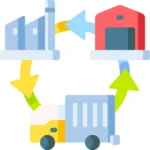
Supply Chain & Logistics
Supply chains don’t usually fall apart all at once; they break down slowly because of delays that no one saw coming. Our ERP helps with demand planning, coordinating suppliers, tracking shipments, and making logistics more visible, all to avoid disruptions. If vendors don’t do their jobs on time or if timelines slip, the system shows the effects downstream instead of hiding them. That visibility gives teams time to act instead of just reporting damage after it happens.

Customer Relationship Management (CRM)
Our ERP-based CRM keeps track of customer history in a way that makes sense to people: conversations, commitments, complaints, and context. It works for more than just one-time sales. It works for repeat customers, negotiated prices, and relationships that need a lot of service. When someone answers a phone call or an email, they are stepping into a story that is already clear.
Project Management
Projects don’t go off track because no one planned; they go off track because things change. Our ERP project management modules keep track of budgets, timelines, resources, and dependencies, and they let you make changes along the way. The system doesn’t break when there are shared resources, missed deadlines, or scope creep; they are recorded and reflected. Instead of finding out about it after costs have already gone up, teams can see what’s drifting early.

Reporting & Business Intelligence
Most reporting tools look good, but don’t answer the right questions. We use Enterprise Resource Planning reporting to make things clearer about operations, like where cash is stuck, which process is slowing things down, and what’s going off plan. Business intelligence uses live transactional data, not exports that are put together at the end of the month. The system doesn’t stop working when leaders ask “why.”
IT & System Administration
Most of the time, IT teams have to take care of systems that weren’t built to last. Our ERP has realistic role-based access, audit logs, integrations, and system controls that are easy to keep up with. We think about upgrades, permissions creep, and user mistakes ahead of time. As a result, the platform stays stable over time instead of getting weaker with each new request. IT teams spend less time repairing and more time making systems that can grow with the business.
Manufacturing & Production
Our ERP can help with scheduling, planning production, BOMs, and work orders, taking into account downtime, rework, and material changes. Instead of making teams work around it, the system changes when something goes wrong. Manufacturing can still be flexible without losing the ability to track things. Instead of using spreadsheets and making guesses at the last minute, planners and operators stay on the same page with real-time data.

Quality Management & Assurance
Quality management isn’t just about finding problems at the end; it’s also about knowing where they start. In context, our ERP keeps track of inspections, non-conformances, corrective actions, and compliance paperwork. Quality teams can find out where problems came from without having to search through systems that aren’t connected. There is already proof when audits happen. Quality is no longer just something that happens when there are problems or audits; it is now part of everyday work.
Our Enterprise Resource Planning Software Solutions are Feature Rich
Integrated Central Database

Modular Architecture
Real-Time Data Processing

Financial Management & Accounting
Human Resource Management
Supply Chain Management

Inventory Management
Manufacturing Resource Planning

Customer Relationship Management

Procurement & Vendor Management

Business Intelligence & Analytics
Workflow Automation
Role-Based Access Control
Multi-Branch Support
Multi-Language Support

Compliance & Regulatory Management

Document Management System
Project Management

Asset Management
Mobile ERP Access
Cloud & On-Premise Deployment

Scalability

Customization & Configuration
Integration APIs

Quality Management

Demand Forecasting

Lot & Serial Number Tracking
Time & Expense Management

Alerts & Notifications

Audit Logs & Activity Tracking
Industries That We Provide Our Services To

Information Technology (IT)

Healthcare

Education

Finance & Banking

Manufacturing

Construction

Agriculture

Real Estate

Retail

Transportation & Logistics

Telecommunications

Energy & Utilities

Automotive

Aerospace & Defense

Media & Entertainment

Hospitality & Tourism

Food & Beverage
Pharmaceuticals

Insurance

E-commerce
We Follow a Step-by-Step ERP Software Development ProcessStep 1: Requirements Analysis & Planning
We begin by listening carefully. Most ERP failures happen because of early assumptions. Our requirements analysis looks deeper than just feature lists and vendor presentations; we focus on how your teams really function during tough times, like month-end rushes and frustrating workarounds. We ask important questions about old data, manual fixes, and hidden spreadsheets. For us, planning means outlining real workflows, regulatory requirements, and future growth without making things overly complicated. If something seems risky, we tell you right away, no sugarcoating. This initial phase is crucial for a successful ERP implementation, not a rushed one.
Step 2: System Design & Architecture
Once the ground is clear, we create an ERP system architecture that can handle your business as it grows or changes. We prioritize scalability, role-based access, and fixing performance issues, along with long-term maintenance, not just what looks good on paper. Our ERP design considers cloud versus on-premise options, security measures, API connections, and useful reporting structures. We understand the problems that arise when architecture is an afterthought, so we avoid those mistakes. Our focus is on ensuring stability, clarity, and flexibility, without any shortcuts.
Step 3: ERP Module Development
We develop ERP modules, like finance, inventory, HR, CRM, and supply chain, step by step. Instead of delivering everything at once, we check in regularly to keep you updated. Each module fits your business processes, not the other way around. If your procurement flow is complicated or your approval chains are not straightforward, we adjust to your needs instead of forcing you into a fixed system. Custom ERP development should work for your business without making everyone change overnight. We also document everything as we build, so you have the needed context for the future.
Step 4: Integration & Data Migration
Many projects stumble during ERP integration and data migration, especially if previous vendors rushed the process. We handle your existing systems, like accounting software, CRMs, old ERPs, and third-party tools, with care. We clean, validate, and map data carefully instead of dumping it all and fixing it later. We design integrations based on how you use the systems, not just what is technically possible. If we find gaps or inconsistencies in historical data, we point them out early instead of ignoring them. This phase takes time because accuracy is more important than speed.
Step 5: Testing & Quality Assurance
We believe testing is more than just a formality; it’s a crucial part of building trust. We conduct various tests, including functional, integration, performance, and user acceptance testing, using scenarios that reflect your day-to-day operations. We take particular care to address edge cases, permission conflicts, and report discrepancies. We actually encourage your team to push the system and try to break it while we’re still in a controlled environment. Every bug is logged, openly discussed, and resolved together. We understand that a reliable ERP system is created through rigorous testing and real-world pressure, not just wishful thinking.
Step 6: Deployment & User Training
When it’s time to go live, we approach the situation with caution and mindfulness. Our ERP deployment fits around your business’s unique timetable; after all, launching during audits or peak sales periods isn’t ideal for anyone. If jumping in all at once feels overwhelming, we’re happy to offer phased rollouts to ease the transition. When it comes to user training, we focus on what really matters: real tasks instead of generic slides that don’t resonate. Our goal is to encourage genuine adoption of the system, not just access. We understand that if users don’t trust the system, they won’t use it, and we take that concern to heart. Your team’s confidence is our priority.
Step 7: Maintenance, Support & Optimization
ERP software needs ongoing attention even after it’s launched. It can change, improve, and sometimes cause issues. As a leading ERP software development company, our support and maintenance services include tuning performance, updating security, fixing bugs, and refining features as your business evolves. We track how you use the system, what you ignore, and what causes slowdowns. We base our optimization on data and your feedback, not on guesses. Clients who have had bad experiences in the past often want reassurance from someone who will be there and take responsibility. That’s exactly what we offer.
Step 1: Requirements Analysis & Planning
We begin by listening carefully. Most ERP failures happen because of early assumptions. Our requirements analysis looks deeper than just feature lists and vendor presentations; we focus on how your teams really function during tough times, like month-end rushes and frustrating workarounds. We ask important questions about old data, manual fixes, and hidden spreadsheets. For us, planning means outlining real workflows, regulatory requirements, and future growth without making things overly complicated. If something seems risky, we tell you right away, no sugarcoating. This initial phase is crucial for a successful ERP implementation, not a rushed one.
Step 2: System Design & Architecture
Once the ground is clear, we create an ERP system architecture that can handle your business as it grows or changes. We prioritize scalability, role-based access, and fixing performance issues, along with long-term maintenance, not just what looks good on paper. Our ERP design considers cloud versus on-premise options, security measures, API connections, and useful reporting structures. We understand the problems that arise when architecture is an afterthought, so we avoid those mistakes. Our focus is on ensuring stability, clarity, and flexibility, without any shortcuts.
Step 3: ERP Module Development
We develop ERP modules, like finance, inventory, HR, CRM, and supply chain, step by step. Instead of delivering everything at once, we check in regularly to keep you updated. Each module fits your business processes, not the other way around. If your procurement flow is complicated or your approval chains are not straightforward, we adjust to your needs instead of forcing you into a fixed system. Custom ERP development should work for your business without making everyone change overnight. We also document everything as we build, so you have the needed context for the future.
Step 4: Integration & Data Migration
Many projects stumble during ERP integration and data migration, especially if previous vendors rushed the process. We handle your existing systems, like accounting software, CRMs, old ERPs, and third-party tools, with care. We clean, validate, and map data carefully instead of dumping it all and fixing it later. We design integrations based on how you use the systems, not just what is technically possible. If we find gaps or inconsistencies in historical data, we point them out early instead of ignoring them. This phase takes time because accuracy is more important than speed.
Step 5: Testing & Quality Assurance
We believe testing is more than just a formality; it’s a crucial part of building trust. We conduct various tests, including functional, integration, performance, and user acceptance testing, using scenarios that reflect your day-to-day operations. We take particular care to address edge cases, permission conflicts, and report discrepancies. We actually encourage your team to push the system and try to break it while we’re still in a controlled environment. Every bug is logged, openly discussed, and resolved together. We understand that a reliable ERP system is created through rigorous testing and real-world pressure, not just wishful thinking.
Step 6: Deployment & User Training
When it’s time to go live, we approach the situation with caution and mindfulness. Our ERP deployment fits around your business’s unique timetable; after all, launching during audits or peak sales periods isn’t ideal for anyone. If jumping in all at once feels overwhelming, we’re happy to offer phased rollouts to ease the transition. When it comes to user training, we focus on what really matters: real tasks instead of generic slides that don’t resonate. Our goal is to encourage genuine adoption of the system, not just access. We understand that if users don’t trust the system, they won’t use it, and we take that concern to heart. Your team’s confidence is our priority.
Step 7: Maintenance, Support & Optimization
ERP software needs ongoing attention even after it’s launched. It can change, improve, and sometimes cause issues. As a leading ERP software development company, our support and maintenance services include tuning performance, updating security, fixing bugs, and refining features as your business evolves. We track how you use the system, what you ignore, and what causes slowdowns. We base our optimization on data and your feedback, not on guesses. Clients who have had bad experiences in the past often want reassurance from someone who will be there and take responsibility. That’s exactly what we offer.
Technology Stack That We Use
Frontend Development
 HTML5/ CSS3
 JavaScript
 React
React Angular
 Next.js
 Tailwind
 Bootstrap
 Material UI
 Vite
Vite TypeScript
 Vue.js
 Svelte
 Redux
Redux Zustand
Backend Development
 Node.js
 Express.js
 NestJS
 Fastify
 Python
 Django
 Flask
Flask FastAPI
 Rails
Rails PHP
PHP Java
Java Spring
 .NET Core
 Go (Golang)
 Rust
Rust C#
C# Laravel
Databases
 Postgres
 MySQL
MySQL SQLite
 MongoDB
 Redis
Redis Cassandra
 CouchDB
 Firebase
 Elasticsearch
 DynamoDB
 Realm
RealmDevOps / Deployment
 Docker
 K8s
K8s Nginx
Nginx GitHub CI
 Jenkins
 Terraform
 Ansible
GitLab CI
 Prometheus
 Grafana
Hosting / Cloud
 AWS
AWS GCP
GCP Azure
Azure DigitalOcean
 Vercel
 Heroku
 Netlify
 Linode
APIs & Communication
 REST
REST GraphQL
 gRPC
gRPC WebSockets
 Apache Kafka
 RabbitMQ
 MQTT
MQTT Stripe
 PayPal
Authentication & Security
 JWT
JWT OAuth 2.0
 Auth0
Auth0 Firebase
 Passport
 Okta
Okta Cognito
 OpenID Connect
Testing
 Jest
Jest Mocha
Mocha Cypress
 Playwright
 PHPUnit
 PyTest
 Selenium
 Appium
 JUnit
JUnitMobile App Development
 React Native
 Flutter
 Swift
Swift Kotlin
 iOS SDK
 Ionic
IonicCore Languages & General Tools
 C++
C++ Git
Git Postman
 Jira
Jira Figma
Figma Electron
 Linux
Linux Bash
BashReviews by Our Clients

Client 1: Linda Chavez
Director of Operations“We were losing time and money because our systems were not connected. Our inventory numbers didn’t match what was actually on the floor, production schedules were in spreadsheets, and every delay led to blame. What impressed us was that they didn’t try to sell us a new system right away. Instead, they worked with our team, observed how orders moved, and improved the ERP to fit our needs. Four months later, our inventory accuracy exceeded 98%, rush orders dropped by 40%, and we stopped guessing during production planning.”

Client 2: Olivia Martinez
Chef Finance Officer“We had already experienced a setback. Our previous ERP system looked good on paper, but didn’t work well for billing. Month-end closing took almost two weeks, and it became hard to track lost revenue. This team examined the tricky details, edge cases, exceptions, and compliance issues. After we implemented the new system, our closing time dropped from 12 days to 4 days, and billing mistakes decreased by over 60% in the first quarter. For the first time in years, the finance team felt in control instead of just reacting to problems.”

Client 3: Thomas Foster
IT Manager“Our old ERP system had issues that slowed us down. Making routing changes was difficult, and we often faced sync failures and downtime during busy times. The new system focuses on reliability; it can handle partial failures, bad data, and heavy workloads. Since launching, we have reduced dispatch planning time by 30%, and we went through the peak season without any system outages. It’s not flashy, but it performs well when things get busy.”
Why Clients Trust Next Olive With Their ERP Projects

Cost-Effective Solutions
We’ve worked with many teams who were promised a simple ERP but ended up with a complicated system they hardly use. We don’t start with features; we begin by identifying what’s wrong in your daily operations. Sometimes, the best option is to roll out fewer features, use fewer licenses, or wait on customizations until everything works smoothly. This honesty helps you save money upfront and prevents costly fixes later.

On-Time Project Delivery
Deadlines become more important when your finance team is busy with the end of the quarter or your operations team is dealing with manual workarounds. We make plans considering these challenges, not just perfect scenarios. If something might delay the schedule, we flag it early and make changes before it turns into a crisis. Our aim isn’t just to appear quick; it’s to launch when you are genuinely ready, without the rush or unexpected issues.

Clear Communication
ERP projects can fail when updates are unclear or hidden in long reports that no one reads. We keep things straightforward. You will know what is completed, what is stuck, and what you need to address, without having to track us down. If something is confusing, we take time to discuss it. There are no buzzwords or vague promises that leave you wondering.

Long-Term Support
Go-live isn’t the end; it’s when real questions begin. We continue to help when users encounter unexpected issues, when reports don’t match what they expect, or when workflows feel too complicated. Our support goes beyond just logging and closing tickets; we focus on understanding how you actually use the system. Over time, this makes your ERP a helpful tool, not a burden.

Teams That Actually Listen
Many clients contact us after feeling dismissed by consultants who already have solutions in mind. We do things differently. We listen to the difficult parts, like poorly working processes, makeshift spreadsheets, and issues people hesitate to bring up in meetings. These details lead to better decisions. When your team feels heard, it’s easier for everyone to accept changes.

Clear Ownership
ERP projects can become risky when people think someone else is in charge. We make it clear who is responsible right from the start. You will always know who to talk to, who makes decisions, and who is accountable if something goes wrong. This clarity helps avoid confusion and blame. It also builds trust, especially if you have had bad experiences in the past. If a problem arises, we take responsibility for it until we fix it.
Frequently Asked Questions
Which is the best ERP software development company in USA?
If you are looking for the best ERP software development company, Next Olive is a reliable choice. We focus on delivering real results rather than just making promises. Clients connected with us after experiencing ERP software development services that sounded good but did not work well in practice. Our approach is practical and clear. We prioritize ownership, honest timelines, and ERP solutions that teams can count on every day.
How much does it cost to develop ERP software?
The cost of developing ERP software depends on factors such as system complexity, needed integrations, and the number of teams involved. Custom ERP projects usually start at around $25,000 and can increase based on the project’s size. We provide clear cost breakdowns from the beginning, so you know what is included and can make informed decisions without worrying about hidden fees later.
How long does it take to develop ERP software?
Most ERP systems take three to six months to set up. The time frame depends on how clearly we define your needs and how quickly we make decisions. Delays often come from unclear workflows rather than the actual development. That’s why we spend time at the beginning to understand how your business operates.
Can you build ERP software around our existing workflows?
We can create ERP software that fits your current workflows, but we first need to review those workflows. Some processes work well as they are, while others may be outdated due to limitations of older systems. We aim to keep what works effectively without adding any inefficiencies to the new system.
What if our ERP requirements are not clearly defined yet?
Many growing organizations face operational issues without clear requirements. We help you through a discovery phase to turn these challenges into well-defined ERP requirements before we start development.
Can the ERP system integrate with our existing software?
We regularly integrate ERP systems with accounting software, CRMs, inventory tools, and older systems. We plan these integrations early and test them thoroughly to make sure the data is accurate and the systems are stable.
What support do you provide after the ERP system goes live?
After we launch the ERP system, we will provide ongoing support as it goes into daily use. This support includes fixing specific problems, improving workflows, and making changes based on user feedback to ensure it remains reliable over time.
Why should we choose Next Olive for ERP software development?
Clients choose Next Olive because we offer a straightforward approach. We prioritize clear communication and set realistic timelines. We deliver reliable ERP systems that teams can trust, especially for clients who have faced challenges with ERP projects in the past.


