
Native vs Hybrid App Development in 2026: Performance, Cost, Scalability & ROI Explained
Choosing between native app development and hybrid app development is one of the most important technical decisions for any startup or enterprise planning a mobile product in 2026.
This decision affects:
- App performance and speed
- Development cost
- Time to market
- User experience (UX)
- Security and hardware access
- Long-term scalability
At Next Olive Technologies, we help businesses evaluate the real tradeoffs behind native vs hybrid mobile app development before they invest months of budget into the wrong architecture.
Let’s break this down strategically.
What Is Native App Development?
Native apps are built specifically for one platform:
- iOS (Swift / Objective-C)
- Android (Kotlin / Java)
They use official SDKs and have direct access to device hardware.
SEO Keywords Targeted:
native mobile app development, iOS app development company, Android app development services, high-performance mobile apps
What Is Hybrid App Development?
Hybrid (or cross-platform) apps use a single shared codebase that works across iOS and Android using frameworks like:
- React Native
- Flutter
- Ionic
They reduce development duplication while maintaining broad device coverage.
SEO Keywords Targeted:
hybrid app development company, cross-platform app development, cost-effective mobile app development, MVP mobile app development
Native vs Hybrid: Performance Comparison
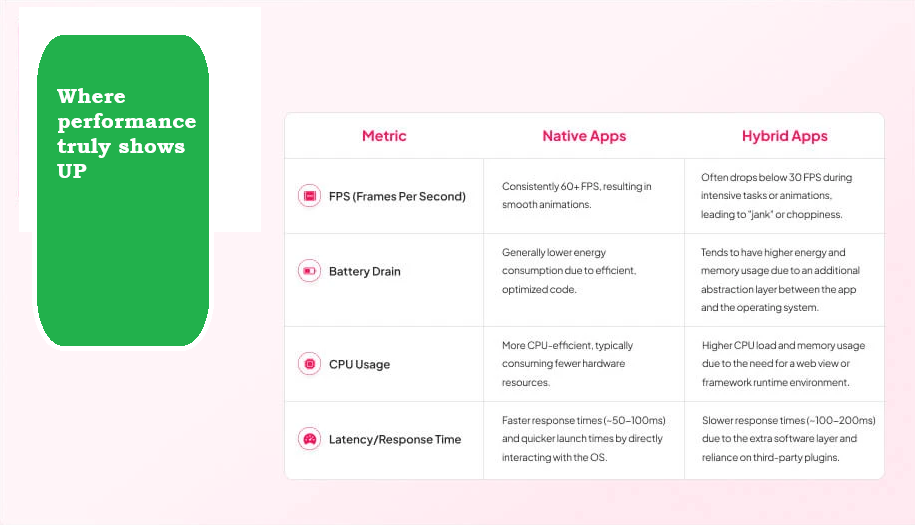
Performance is often the first visible difference.
Native App Performance Advantages
- Faster load times
- Smoother animations
- Higher frame stability (60–120 FPS)
- Better real-time processing
- Lower latency for camera and sensor interactions
Native apps are ideal for:
- Fintech apps
- Health and fitness apps
- Gaming applications
- AR/VR solutions
- Streaming platforms
- AI-powered apps
If performance directly impacts retention or revenue, native is usually the safer choice.
Hybrid App Performance Considerations
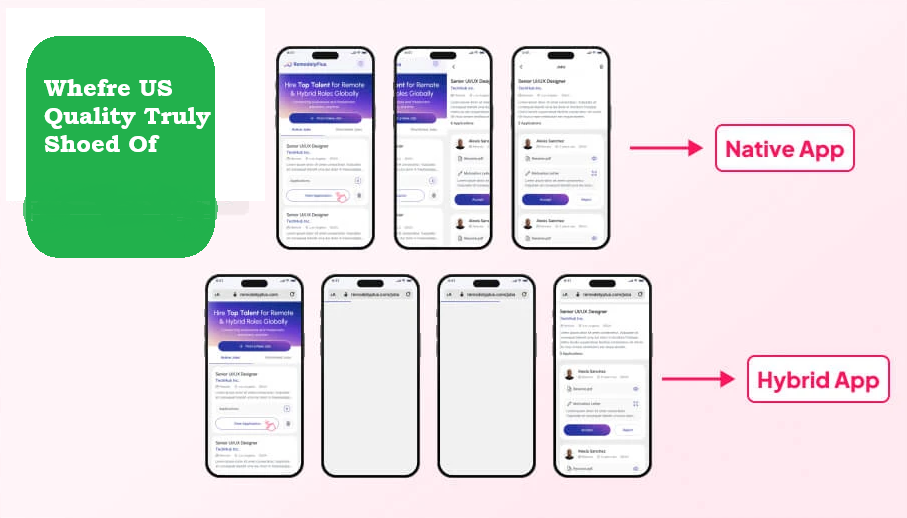
Hybrid apps use a bridge layer between code and device hardware. While modern frameworks are powerful, under heavy load you may experience:
- Slight interaction delays
- Higher CPU usage
- Plugin-related limitations
- Delayed access to new OS features
For:
- Business apps
- Marketplace apps
- Booking platforms
- Content-driven apps
- Startup MVPs
Hybrid performance is often more than sufficient.
At Next Olive Technologies, we conduct architecture audits before recommending native or hybrid, ensuring scalability from day one.
Cost Comparison: Native vs Hybrid App Development
One of the top-ranking search queries in 2026:
“How much does native vs hybrid app development cost?”
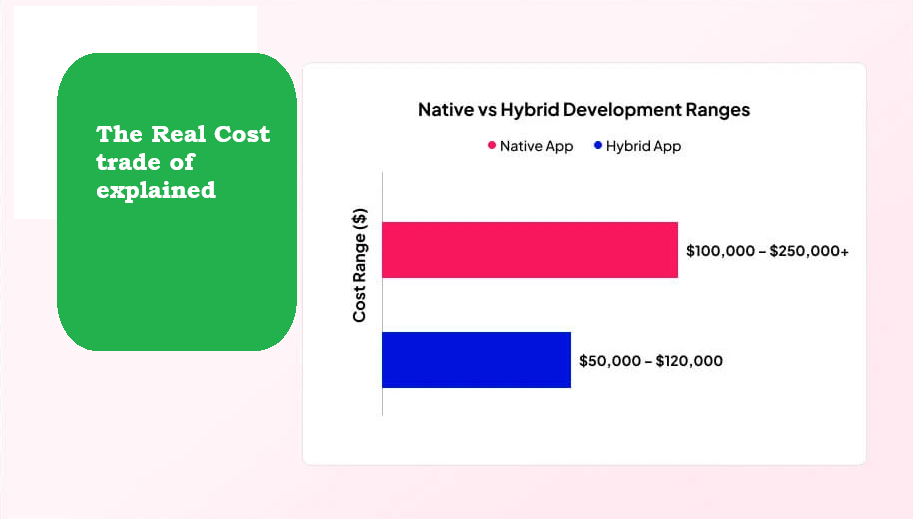
Native App Development Cost
Because native requires separate iOS and Android builds:
- Higher development cost
- Dual testing cycles
- Independent updates
- Larger team requirement
Best for long-term products with funding runway.
Hybrid App Development Cost
Hybrid offers:
- 30–40% lower development cost
- Single codebase maintenance
- Faster updates
- Reduced QA complexity
Ideal for:
- Startups
- Early-stage products
- Businesses testing new markets
- Companies needing faster ROI
User Experience (UX): Native vs Hybrid Apps
User experience directly impacts:
- App store ratings
- Retention rate
- Conversion rate
- Subscription growth
Native UX Strengths
- Platform-specific design consistency
- Smooth gestures and animations
- Better haptic feedback
- Seamless hardware integration
Hybrid UX Tradeoffs
- Slightly less fluid transitions
- Extra effort needed for deep gesture control
- Dependence on framework optimization
If UX is your core differentiator, native development may justify the investment.
Hardware & Security Considerations
When comparing native vs hybrid app development, hardware access is a major ranking keyword.
Native Advantages
- Direct SDK access
- Immediate support for new OS updates
- Stronger encryption via Keychain/Keystore
- Better biometric authentication
- Advanced sensor control
Hybrid Considerations
- Plugin dependency
- Potential delays in OS feature support
- Larger dependency footprint
For fintech, health tech, IoT, or enterprise-grade apps, native offers more control and predictability.
Long-Term Scalability & Maintenance
Many businesses search:
“Is hybrid app development good for long-term scalability?”
Here’s the practical answer:
Native Scalability
- Better performance headroom
- Stronger long-term reliability
- Higher maintenance cost
- More predictable SDK updates
Hybrid Scalability
- Faster feature iteration
- Lower maintenance overhead
- Risk tied to plugin ecosystem
At Next Olive Technologies, we design architecture roadmaps that allow hybrid-to-native transitions if performance demands increase later.
Native vs Hybrid App Development: Quick Decision Framework
| Factor | Choose Native | Choose Hybrid |
|---|---|---|
| Performance Critical | ✔ | |
| Budget Sensitive | ✔ | |
| Fast MVP Needed | ✔ | |
| Heavy Hardware Usage | ✔ | |
| Long-Term Enterprise Product | ✔ | |
| Simple Business App | ✔ |
Why Choose Next Olive Technologies for Mobile App Development?
We specialize in:
- Native iOS & Android app development
- Hybrid app development (React Native / Flutter)
- Scalable app architecture
- Startup MVP builds
- Enterprise mobile solutions
We don’t push one solution.
We recommend what aligns with your budget, performance goals, and scalability needs.
Let’s Build the Right App Architecture
Planning a mobile app in 2026?
Let’s evaluate your requirements before you commit to development.
Next Olive Technologies
📧 sales@nextolive.com
📱 WhatsApp: +91-8840150392
We help startups and enterprises build secure, scalable, and high-performance mobile applications.
FAQ Section (SEO-Optimized for Featured Snippets)
1. Which is better: native or hybrid app development?
Native app development is better for high-performance, hardware-intensive, or UX-driven applications. Hybrid app development is better for cost efficiency, faster time-to-market, and MVP launches.
2. Is hybrid app development cheaper than native?
Yes. Hybrid app development typically costs 30–40% less than native because it uses a single codebase for both iOS and Android.
3. Are hybrid apps slower than native apps?
Hybrid apps can be slightly slower in high-performance scenarios due to bridge layers. For content or business apps, the difference is often minimal.
4. Can a hybrid app be converted to native later?
Yes. Many businesses start with hybrid for validation and later introduce native modules or fully migrate if performance demands increase.
5. Which is better for startups in 2026?
For most startups validating an idea, hybrid development is more cost-effective. For funded startups building performance-critical products, native may be the better long-term investment.