
Dating App Onboarding 2026 The Secret to Retention
How Can Dating App Onboarding in 2026 Dramatically Increase Your Long-Term User Retention
High-retention onboarding in 2026 ditches the digital interrogation in favour of Contextual Profiling, where personality emerges through Progressive Disclosure rather than massive data dumps. Integrating Liveness Detection and Social Graph API syncing during setup builds immediate trust without the friction of a security checkpoint. When the Matchmaking Algorithm responds to a “messy” niche preference, such as specific dietary habits or rare hobbies, it proves that the app actually “gets” the user. Addressing real-world friction, such as busy professional schedules through Smart Availability toggles, moves away from choice burnout toward Curated Discovery. These micro-moments utilise Behavioural Analytics to identify “churn triggers” early, drastically increasing Customer Lifetime Value (CLV). By prioritising Identity Verification and faster profile rendering via Edge Computing, the platform shifts from a simple app into a reliable tool for human connection.
Why Onboarding Is the Key to Dating App Success in 2026
High-intent users in 2026 aren’t looking for endless swipes; they want a user flow that understands their specific lifestyle quirks right from the jump. It’s the onboarding sequence that stops the “three-minute churn” by replacing generic forms with meaningful intent signals and identity verification. Success now looks like a frictionless path where behavioural data meets genuine trust and safety, proving the platform is reliable enough to handle messy, real-world preferences.
First Impressions and User Drop-Off Psychology
The 5-Second Rule in Mobile UX
On mobile, five seconds is generous. Most users give you less, especially if they came from a very specific search like “fix slow checkout on Android” or “why is my cart button not working.” If your top section doesn’t instantly reflect that intent, clear headline, visible solution, no friction, they’ll assume it’s not for them. Tiny things matter here: font size, button placement, even whether the first sentence feels human or stiff.
Emotional Hooks That Keep Users Engaged
Logic gets the click, but emotion keeps the scroll going. A line that feels relatable (“this happens more often than you think”) or a small nod to their frustration can do more than a perfectly structured paragraph. People stay when they feel understood, not just informed. And honestly, it doesn’t have to be perfect, just real enough that it doesn’t sound like it was written for everyone at once.
Retention Metrics That Matter
It’s easy to get distracted by big, shiny numbers, but retention tells the real story: who’s actually sticking around when the novelty wears off. I usually keep an eye on repeat usage patterns first; if people come back without reminders, you’re doing something right. Then there’s churn, which can feel a bit brutal, but it often reveals small friction points you didn’t notice earlier. Cohort tracking helps too, especially when different user groups behave… oddly differently. And honestly, don’t ignore quiet signals like feature drop-offs; they often hint at where users lose interest.
Activation Rate vs Retention Rate
This one trips people up more than it should. Activation rate is that first “aha” moment, when someone finally gets value. Retention rate, though, is about whether that value holds up over time. You can have strong activation and still lose people a week later (it happens more than anyone admits). The gap between the two is where most of the real work lives, onboarding tweaks, timing, and even small UX annoyances that don’t show up in dashboards right away.
Core Elements of High-Converting Onboarding
High-converting onboarding isn’t about perfection; it’s about removing friction where users actually struggle. Clear value cues, simple UX onboarding flows, and timely prompts make the experience feel easy rather than overwhelming. Small details like microcopy, checklists, and contextual guidance often prevent drop-offs more than big feature showcases. Strong SaaS onboarding adapts to different user intents instead of forcing a fixed path. In the end, it’s less about impressing and more about making each next step obvious and comfortable.
Frictionless Signup Experience
Social Login vs Phone Authentication
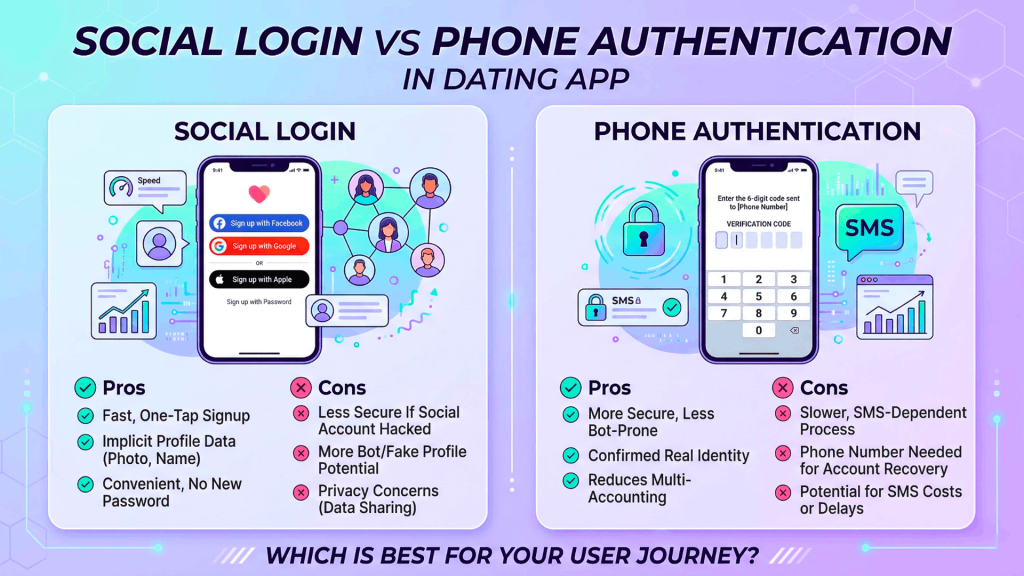
Choosing between these two usually depends on where your users are hanging out. If you’re building something for a mobile-first crowd or a region where data is pricey, Phone Authentication is a lifesaver because it skips the “wait for a confirmation email” dance that breaks the flow. On the flip side, Social Login is the king of convenience for desktop browsing; a single click, and they’re in. I’ve found that offering both is great, but don’t overwhelm them, just pick the one that matches how they’re likely accessing your site at that moment.
Reducing Form Fields
Honestly, do you really need their middle name and ZIP code just to let them see a dashboard? Every extra box you add is another chance for someone to get annoyed and close the tab. By Reducing Form Fields to the absolute bare essentials, think just an email or a handle, you lower the mental tax of joining. You can always ask for the “nice-to-have” details later once they’ve actually fallen in love with what you’ve built.
Profile Creation Optimisation
A well-optimised profile isn’t just filled out; it’s carefully refined to match how people actually search and judge credibility. Profile Creation Optimisation focuses on clear headlines, smart keyword use, and platform-specific tweaks that are often overlooked. Many profiles look decent but miss intent signals or feel too generic. The goal is simple: make it easy to find, quick to understand, and reliable enough to trust.
Smart Defaults and Auto-Fill
I’ve noticed that the best apps don’t ask for data they can already guess. If you’ve got a user’s location or basic device info, use it to pre-populate those boring fields. Implementing Smart Defaults and Auto-Fill isn’t just a “nice to have” anymore; it’s how you stop users from feeling like they’re doing data entry for a living. It’s those small wins, like having the country code already there, that keep the momentum going.
AI-Based Photo Suggestions
Then there’s the gallery hunt. We’ve all spent ten minutes scrolling past screenshots and old memes just to find one professional-looking photo. By integrating AI-Based Photo Suggestions, the system can subtly highlight images that actually fit the profile dimensions and look high-quality. It takes the guesswork out of “is this too blurry?” and gets that profile picture uploaded in seconds rather than minutes.
First Match Time (FMT)
Ultimately, the metric that actually matters for a new user is their First Match Time (FMT). This isn’t just about speed; it’s about how quickly the platform delivers on its promise, whether that’s finding a teammate, a date, or a service provider. If the optimisation works, that first “ping” of success happens before the user even has a chance to get bored and close the tab.
What Are the Key Personalisation Trends Shaping App Onboarding Success This Year
Forget the generic “Welcome” screens that users just swipe past. Modern app onboarding success this year is defined by intent-based architecture, where the interface adapts instantly to a person’s specific goals. Instead of a long, exhausting survey, progressive profiling gathers bits of context over time, keeping the experience lean and focused. It’s about building user-centric reliability through context-aware dashboards that prioritise actual utility over flashy animations. Reliability now means solving niche technical frictions, like offline-first data syncing or multi-tenant role management, right from the first interaction. Successful flows move away from the “one-size-fits-all” model toward hyper-localisation and predictive UX. By focusing on frictionless API integrations and behavioural triggers, an app stops being a manual and starts being a tool that just works.
What Are the Best Technical Frameworks for Building Low-Latency Onboarding Experiences?
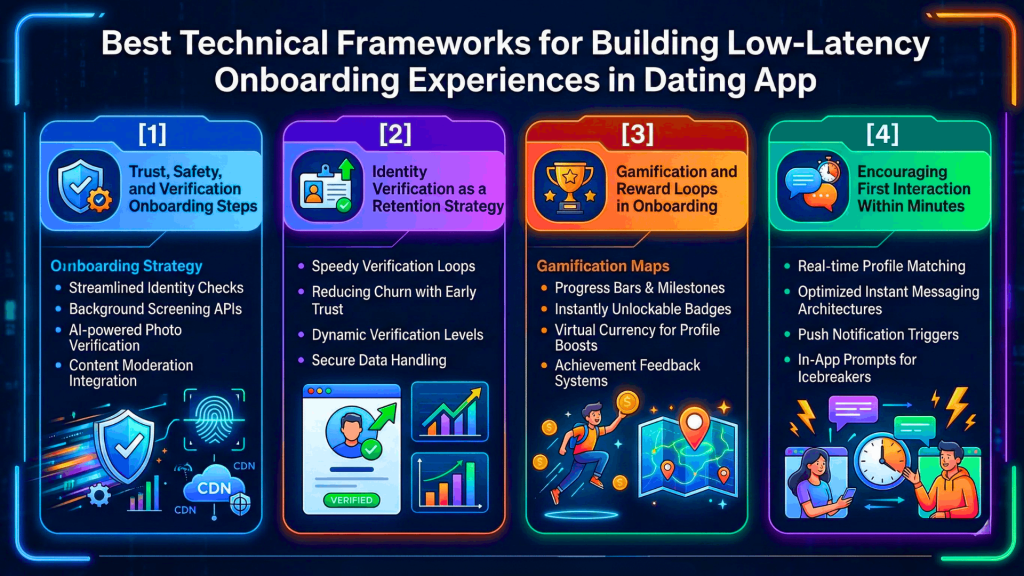
First impressions in software aren’t about flashy graphics anymore; they are about how fast a user can go from “Sign Up” to “Value Realised.” When an onboarding flow stutters or hangs on a loading spinner, trust evaporates. Building a seamless, low-latency entry point requires moving away from heavy, monolithic architectures and embracing a stack that prioritises edge execution and asynchronous data handling.
Trust, Safety, and Verification Onboarding Steps
Trust, safety, and verification onboarding is handled through layered checks like KYC, OTP authentication, and document validation. Even in messy cases, blurred IDs or mismatched details, manual review steps help avoid unnecessary rejections. The focus stays on building genuine, secure, and traceable accounts rather than rushing approvals.
Identity Verification as a Retention Strategy
Identity verification (KYC, AML checks, ID and selfie matching) often decides whether users stay after signing up or quietly drop off. When the process feels clear and not overly repetitive, users tend to trust the platform a bit more, even if they pause during upload or document steps. Confusion, like unclear instructions or repeated rejections, usually does more damage than the verification itself. But when onboarding is handled smoothly, even edge cases like mismatched addresses or older IDs don’t break the flow, and that small sense of reliability often brings users back.
Gamification and Reward Loops in Onboarding
Gamification in onboarding works best when it feels natural, with quiet progress cues, small rewards, and timely nudges. Users don’t follow a perfect path, so reward loops should adapt to real behaviour, not force it. Simple things like milestone incentives and micro-interactions can guide actions without adding friction. The goal isn’t flashy badges, but steady, reliable engagement that keeps users moving forward.
Encouraging First Interaction Within Minutes
Getting a user to take their first action quickly often decides whether they stay or leave. A simple task, a light progress cue, or instant feedback after a click helps remove hesitation and creates early momentum. Gamification here stays subtle, more about small wins than visible rewards everywhere. When that first interaction feels easy and responsive, users tend to naturally continue exploring without needing much push.
How Next Olive can help in developing your dream application/project
Turning an idea into a working app isn’t always straightforward. Next Olive handles everything from web and mobile development to API integration and scalable backends, focusing on reliability over flashy features. Real-world issues like cross-platform quirks, database slowdowns, or evolving project needs are met with practical, tailored solutions. Clean code, maintainable architecture, and performance optimisation ensure clients get a system they can trust and actually use.
What Is the Estimated Cost and Budget Required to Develop a High-Retention Dating App in 2026
Building a high-retention dating app in 2026 starts with a realistic $65,000 MVP budget to handle Geofencing APIs and real-time messaging without the usual Day 1 crashes. Reliability beats flashy UI every time; users leave when the matching algorithm lags, or the AWS server costs aren’t optimised for peak-hour concurrency. Success depends on stable, low-latency infrastructure and enough overhead for automated moderation to keep the community safe. It isn’t just about the initial build, but the technical resilience that prevents friction and earns long-term user trust.
The Future of AI-Driven Dating Experiences
The future of AI-driven dating experiences is already shaping how people match, swipe, and interpret intent in ways that feel less random than before. AI-powered matchmaking quietly reads patterns in behaviour, even when profiles are incomplete or unclear, helping sort out mismatched signals and niche preferences. It doesn’t fix dating, but it does make the process a bit more grounded, with safety checks and compatibility cues playing a bigger role. The experience still feels imperfect and human, just slightly less chaotic than it used to be.
Conclusion: What Is the Final Secret to Mastering Dating App Retention in 2026
The real secret isn’t flashy features, it’s reliability and thoughtful experience. Users stick around when apps anticipate their needs without being intrusive, from smoother onboarding to subtle reminders of unfinished conversations. Personalisation that feels earned, fast performance, and clear privacy practices quietly build trust. Even small, niche improvements like mood-based matching or better filters can keep engagement steady. Retention isn’t magic; it’s creating a consistent, trustworthy space where users feel understood.
Frequently Asked Questions
In 2026, dating apps will keep onboarding very simply, with quick login, basic profile steps, and early matching based on user behaviour rather than a full setup. Verification and preferences are added gradually to avoid overwhelming users. Next Olive Technologies builds such smooth, low-friction onboarding flows to improve retention and first-time user experience.
AI now shapes matches based on behaviour patterns like swipes, pauses, and engagement style. The experience feels less random and more aligned over time. Users tend to stay longer when suggestions feel naturally relevant. It quietly improves match quality without forcing users to put in extra effort.
Small animations, vibrations, and instant feedback make onboarding feel responsive. Without them, the process feels flat and mechanical. With them, every step feels acknowledged in real time. These subtle cues help users stay engaged without thinking too much about it.
Progressive profiling works well because it avoids overwhelming users up front. Information is collected step by step as users interact with the app. This often leads to more honest responses and better completion rates. It keeps onboarding smoothly without demanding too much too early.
Gamification adds small incentives like streaks, badges, or daily limits. It gives users gentle reasons to return without feeling forced. When done subtly, it improves consistency in usage. Overdoing it can feel artificial, so balance matters.
Key signals include profile completion rate, time first to swipe or message, and early return visits. Hesitation before interactions also reveals user comfort levels. These early behaviours often predict whether users will stay. Strong early engagement usually leads to better long-term retention.
Features like verification, visibility controls, and blocking options build trust quickly. Users stay longer when they feel in control of their data and interactions. Unclear privacy policies can push them away early. Trust plays a direct role in retention.
Onboarding is shifting toward voice input, behavioural AI, and adaptive question flows. Some platforms are testing AR and biometric-based signals for a smoother setup. The goal is less manual effort and more natural profile building. Everything is moving toward invisible, low-friction onboarding.