
Patient Access App Development Cost Guide 2026
What Is a Patient Access App and Why Is It Important in 2026?
A patient access app is a mobile or web platform that centralizes healthcare interactions, from scheduling and bill pay to telemedicine and record access. In 2026, it is critical infrastructure because 99% of hospitals offer digital tools, yet patient engagement remains low at just 14/100, making streamlined access a key competitive differentiator.
In 2026, the healthcare landscape has shifted from a “wait-and-see” approach to a “digital-first” mandate. A patient access app acts as the Digital Front Door for healthcare systems. It is not merely a version of a patient portal on a phone; it is a comprehensive ecosystem that unifies administrative and clinical workflows.
Historically, patients had to log into separate portals to view records, call a hotline to book an appointment, and use a third-party app for a telehealth visit. This fragmentation causes friction. In 2026, a modern patient access app solves this by integrating directly with Electronic Health Records (EHR) and Practice Management (PM) systems.
The importance of these apps is highlighted by stark market realities. The global interactive patient engagement solutions market is projected to grow from $17.10 billion in 2026 to $26.90 billion by 2032. However, despite this growth, the median Patient Digital Engagement Index (PDEI) score is only 14 out of 100. This gap represents a massive opportunity for healthcare providers. Investing in a high-quality access app is no longer a luxury; it is a strategic necessity to capture patient loyalty, reduce administrative overhead, and improve health outcomes by ensuring patients can easily interact with their care teams.
How Much Does It Cost to Develop a Patient Access App in 2026?
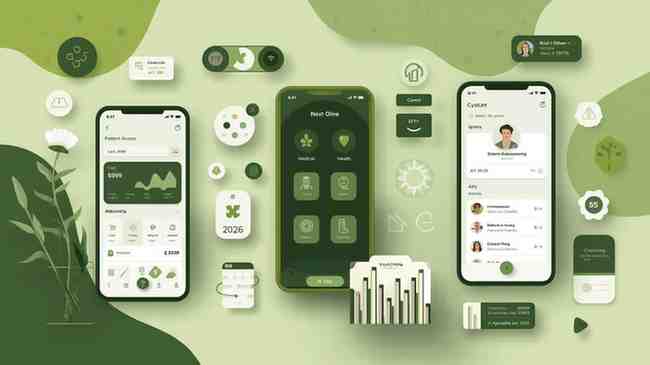
The cost to develop a patient access app in 2026 ranges from $40,000 to $400,000+. A basic patient portal with scheduling costs $40k–$90k, while a complex enterprise app integrated with AI and EHR systems costs $200k–$400k+.
When budgeting for healthcare software, one must look beyond standard mobile app development. The price tag for a consumer app like a fitness tracker is vastly different from a HIPAA-compliant clinical tool. The primary drivers of cost are compliance, integration complexity, and feature depth.
To give you a clear picture, the industry standard pricing for 2026 breaks down as follows, based on project scope and complexity :
| App Type / Complexity | Estimated Cost (USD) | Timeline | Typical Users |
|---|---|---|---|
| Basic Patient Portal | $40,000 – $90,000 | 3 – 5 months | Small clinics, individual practices focusing on scheduling/basic records. |
| Telehealth-Focused App | $90,000 – $200,000 | 5 – 8 months | Mid-sized practices requiring video visits and e-prescriptions. |
| Full-Featured (EHR Integrated) | $150,000 – $350,000 | 7 – 12 months | Large health systems require AI, analytics, and multi-facility support. |
| Enterprise / Custom Platform | $350,000 – $600,000+ | 12 – 18 months | Large health systems requiring AI, analytics, and multi-facility support. |
It is crucial to note that these figures represent the initial development investment. In healthcare, “going live” is just the beginning.
What Features Define a Modern Patient Access App?
Modern patient access apps are defined by a shift from passive data viewing to active care facilitation. The “killer features” of 2026 revolve around AI-driven automation, interoperability, and omnichannel communication. A static list of “FAQs” is obsolete; users now expect conversational AI and proactive alerts.
Do Patient Access Apps Include Telehealth, EHR Integration, and Scheduling?
Yes, absolutely. These three pillars constitute the minimum viable product (MVP) for a competitive 2026 app. Scheduling reduces admin calls, Telehealth expands access, and EHR Integration (using HL7 FHIR standards) ensures the app is a true extension of the clinical record rather than a siloed tool.
The magic of a modern app lies in how these features interact. For example, a patient uses the Scheduling feature to book a visit. The app checks EHR availability in real-time. Upon booking, an automated reminder is sent. When the appointment occurs, the Telehealth module launches directly from the appointment screen, and the visit notes are automatically written back to the EHR. Without these integrations, the app is just a calendar.
How Do Patient Portals Improve Healthcare Accessibility?
Patient portals improve accessibility by breaking down the barriers of time, location, and literacy. They provide 24/7 access to lab results, clinical notes, and provider messaging, which is critical for managing chronic conditions and ensuring continuity of care.
Accessibility is not just about convenience; it is about health equity. In 2026, advanced portals utilize video microlearning and AI translation to explain complex discharge instructions or medication regimens to patients with low health literacy or language barriers. By providing on-demand access to educational content and seamless communication channels, portals empower patients to take ownership of their health, moving them from passive recipients to active participants in the medical process.
Why Are Healthcare Providers Investing in Patient Access Apps?
Providers are investing in these apps because the financial ROI is now quantifiable. Beyond patient satisfaction, these apps drive revenue by filling schedules, reducing no-shows, and ensuring faster bill collection. They have shifted from “nice-to-have” marketing tools to core operational assets.
Is Digital Patient Engagement Becoming a Necessity in 2026?
Yes, it is a necessity. Research shows that a one-point increase in the Patient Digital Engagement Index (PDEI) correlates with a one-point increase in the proportion of patient charges paid within one year. With 60% of US adults using AI for health queries, providers must meet patients in the digital space to stay relevant.
Furthermore, staffing shortages continue to plague the healthcare industry. Digital engagement tools act as a force multiplier. AI receptionists and automated triage can handle the 24/7 influx of basic patient questions, routing only complex issues to human staff. This allows clinical teams to focus on high-acuity care rather than appointment confirmations or prescription refill requests. By 2026, a provider without a robust digital engagement strategy is essentially operating with one hand tied behind their back regarding operational efficiency.
How Do These Apps Improve Patient Satisfaction and Retention?
They improve satisfaction by eliminating friction. Features like digital check-in (skipping waiting room clipboards), real-time wait times, and direct provider messaging respect the patient’s time. Retention improves because switching providers is costly for patients; once a patient is integrated into a health system’s digital ecosystem, they are 33% more likely to return.
Loyalty in healthcare is notoriously difficult to measure, but mobile analytics provide concrete data. When a patient uses an app for navigation, check-in, and bill pay, the switching costs become high. They become accustomed to the convenience of the “Uber-like” experience. Health systems that fail to provide this seamless digital experience will find their patients migrating to competitors like Amazon Clinic, Walmart Health, or local providers who do offer these conveniences.
What Is the Average Cost of Patient Access App Development?
The average cost for a custom, fully compliant patient access app in 2026 is approximately $150,000. This average is pulled up by complex integrations and down by basic portals, but mid-range solutions suitable for most medium-sized hospitals typically land between $120k and $250k.
To understand the average, one must look at the distribution of projects. While enterprise systems can exceed half a million dollars, the market trend in 2026 favors modular development. Many providers are starting with an MVP (Minimum Viable Product) to launch quickly and iterate based on user feedback.
How Much Does a Basic Patient App Cost in 2026?
A basic patient app costs $40,000 to $90,000. This includes user authentication (MFA), medication reminders, basic appointment requests (not real-time booking), and secure messaging. However, this tier often lacks complex EHR integration, meaning data is entered manually or via one-way sync.
This “basic” tier is often suitable for aesthetic clinics, dental offices, or small therapy practices where the risk of complex medical data exchange is low. Development for this tier can be completed in 8–16 weeks, often using cross-platform frameworks like Flutter or React Native to keep costs down by maintaining a single codebase for iOS and Android.
What Is the Cost of Developing a Mid-Level vs Advanced Healthcare App?
A Mid-Level app (Telehealth + EHR view) costs $90,000 to $200,000. An Advanced app (AI diagnostics, complex RPM, full bidirectional EHR) costs $200,000 to $400,000+. The jump is primarily due to FDA certification requirements for AI features and the engineering hours required for real-time data synchronization.
The mid-level app is the sweet spot for 2026. It includes HIPAA-compliant video (Twilio or Vonage SDKs costing ~$15k–$25k to integrate) and HL7 FHIR interfaces to pull lab results and appointment history. Advanced apps introduce Predictive Analytics. For example, an algorithm analyzing patient data to predict a COPD exacerbation before it happens requires data science teams, increasing the budget significantly (often $100k+ just for the AI layer).
What Are the Key Cost Components in Patient Access App Development?
The total cost is an aggregate of several distinct components: design, development, backend infrastructure, third-party integrations, and compliance enforcement. Understanding where the money goes helps in making informed trade-offs.
What Factors Influence the Cost of Patient Access App Development?
How Do Features and Functionalities Affect Development Costs?
Features directly correlate to development hours. A simple form for appointment requests costs less than building a real-time scheduler with payment processing. Complexity is exponential: adding a “video call” feature is not just adding a button; it requires WebRTC server setup, bandwidth scaling, and recording storage.
Does App Platform (iOS, Android, Web) Impact Pricing?
Yes. Native development (separate Swift and Kotlin teams) costs 30-40% more than cross-platform development (React Native/Flutter). In 2026, cross-platform technology has matured significantly, making it the recommended path for 90% of patient access apps without sacrificing performance.
How Does UI/UX Design Complexity Change the Budget?
Healthcare UX requires specific expertise (accessibility, large touch targets for elderly users, and clear data visualization). Standard design costs $5k–$10k, but a custom, patient-centric UI/UX for complex chronic care management can cost $30k–$50k to ensure high adoption rates among seniors.
What Are the Core Development Cost Breakdown Elements?
How Much Do Frontend and Backend Development Cost?
- Frontend (User Interface): $20,000 – $80,000. This is the “face” of the app.
- Backend (Server/Cloud): $30,000 – $120,000+. This is the “brain.” The backend handles user data, server logic, API connections, and security protocols. A robust backend is non-negotiable for handling PHI (Protected Health Information).
What Is the Cost of API Integrations (EHR, Payment, Telemedicine)?
API integration costs are often underestimated. Integrating with Epic, Cerner, or athenahealth via FHIR costs $15,000 to $80,000 per system. Payment gateways (Stripe, PayPal) add $5k–$15k, and Telemedicine SDKs (Twilio, Daily) add $10k–$25k.
How Much Does Compliance and Security Add to the Cost?
What Is the Cost of HIPAA or GDPR Compliance?
HIPAA compliance adds a 15-25% premium to your total development budget. This covers mandatory features like automatic logoff, audit trails, and Business Associate Agreements (BAAs) with vendors. One-time implementation costs range from $10,000 to $50,000, depending on the risk assessment.
How Much Should You Budget for Data Security and Encryption?
Budget $10,000 to $30,000 for security infrastructure, including AES-256 encryption for data at rest and TLS 1.3 for data in transit. Additionally, annual penetration testing and vulnerability scans cost $5,000–$15,000 per year to maintain compliance and security certifications.
What Are the Ongoing Maintenance and Upgrade Costs?
Do not forget maintenance, Healthcare apps require 15-20% of the original development cost annually. For a $200k app, expect to pay $30k–$40k/year for server hosting (which is 2-3x higher than standard hosting due to HIPAA requirements), security patches, OS updates, and bug fixes.
How Next Olive Can Help in Developing Your Dream Application/Project?
Navigating the complexities of HL7 FHIR standards, FDA regulations, and HIPAA audits requires a partner with deep technical and clinical expertise. Next Olive stands at the intersection of cutting-edge technology and rigorous healthcare compliance, ensuring your app is not only functional but also market-ready and secure.
Why Choose Next Olive for Patient Access App Development?
Next Olive differentiates itself by offering end-to-end transparency and a compliance-first architecture. Unlike generalist firms, Next Olive’s development process begins with a mandatory security blueprint. They utilize pre-validated HIPAA-compliant frameworks (such as AWS HealthLake) to reduce infrastructure costs by up to 30%, savings that are passed directly to the client.
Furthermore, Next Olive excels in Legacy System Integration. Many healthcare providers are stuck with outdated EHRs. Next Olive’s engineering team specializes in building middleware that allows modern React Native or Flutter apps to speak to legacy on-premise databases. By choosing Next Olive, clients gain a strategic partner who prioritizes scalability, meaning the app built today will seamlessly accommodate the AI-driven diagnostic tools of tomorrow.
Conclusion: Is Investing in a Patient Access App Worth It in 2026?
While the upfront cost. Ranging from $40,000 to $400,000, is substantial, the cost of not investing is substantial. In 2026, patients view digital access as a standard utility, not a luxury. Investing in a patient access app reduces administrative overhead (automating millions of calls), improves clinical outcomes (through remote monitoring and medication adherence), and secures a steady revenue stream by improving patient retention rates.
The data is clear: hospitals with high Patient Digital Engagement Index scores see faster payments and higher patient loyalty. By leveraging modern development strategies, such as cross-platform coding and SMART on FHIR integrations, providers can achieve a high ROI within 12-18 months post-launch. The future of healthcare is digital, and the access app is the key to the front door.
Frequently Asked Questions
Q: How long does it take to develop a patient access app?
A: A basic patient portal typically takes 4 to 6 months to develop. A complex, enterprise-grade app with full EHR integration and AI features can take 9 to 18 months from concept to launch, including compliance validation and testing phases.
Q: Can I build a patient access app without HIPAA compliance?
A: No. If your app handles any Protected Health Information (PHI)—including names, dates of service, or medical records—HIPAA compliance is mandatory in the US. Failure to comply results in fines ranging from $100 to $50,000 per violation.
Q: What is the difference between a Patient Portal and a Patient Access App?
A: A patient portal is usually a web-based browser interface tethered to a specific clinic visit. A Patient Access App is a mobile-native experience that aggregates data across different providers, offering features like geolocation for wayfinding, push notifications, and biometric login (FaceID/TouchID) .
Q: How much does it cost to integrate with Epic MyChart?
A: Integrating a custom app with Epic via SMART on FHIR typically costs between $15,000 and $40,000. This cost covers API setup, authentication, and testing to ensure the app can read/write data securely within the Epic ecosystem.
Q: What are the hidden costs of healthcare app development?
A: The most common hidden costs are annual maintenance (15-20% of build cost), server hosting ($500–$5,000/month for HIPAA-compliant cloud services), and third-party API fees (per-minute charges for video calls or per-transaction fees for e-prescriptions).