
How to Build a Calorie Counting App in 2026: Step-by-Step
How Do You Build a High-Performance Calorie Counting App in 2026? A Complete Step-by-Step Guide
The digital health landscape of 2026 is no longer just about tracking steps or logging meals; it is about metabolic intelligence. As users move away from manual data entry toward automated, AI-driven insights, building a calorie-counting app requires a sophisticated blend of computer vision, real-time wearable integration, and hyper-personalized nutritional science. In this guide, developers and entrepreneurs will discover the strategic roadmap to creating a market-leading health application that thrives in an era of GLP-1 medications and smart-ring dominance.
Why is building a calorie-counting app a Profitable Business Opportunity in 2026?
Building a calorie-counting app in 2026 is highly profitable due to a projected 13.5% CAGR in the fitness app market, reaching over $40 billion by 2034. Success is driven by the global rise in obesity, the mass adoption of GLP-1 weight-loss drugs, and a shift toward preventative, AI-powered metabolic health tracking.
The health and fitness industry has undergone a radical transformation over the last few years. In 2026, the “wellness-to-wealth” pipeline is stronger than ever. Consumers are no longer satisfied with static calorie targets; they demand dynamic ecosystems that understand their unique biology. This shift has created a massive vacuum for next-generation apps that can bridge the gap between medical-grade data and daily lifestyle choices.
What are the current market trends for health and fitness apps?
In 2026, the market is defined by convergence. We are seeing the intersection of traditional fitness tracking with clinical diagnostics. Users now expect their nutrition apps to sync with clinical data, provide real-time feedback on blood glucose levels, and even suggest meal adjustments based on their previous night’s sleep quality.
The rise of the “quantified self” has moved from a niche hobby to a mainstream necessity. The market is increasingly dominated by apps that offer preventative health solutions. With non-communicable diseases (NCDs) accounting for tens of millions of deaths annually, governments and insurance providers are increasingly subsidizing the use of high-quality nutrition and weight-management apps to lower long-term healthcare costs.
How has the rise of GLP-1 medications changed the nutrition app market?
The explosion of GLP-1 agonists like semaglutide and tirzepatide has fundamentally altered user behavior. In 2026, a significant portion of the target audience is using these medications to manage weight and diabetes. However, these drugs come with a specific set of nutritional challenges: the risk of muscle mass loss and the need for high-protein, nutrient-dense diets.
Modern apps must now include “GLP-1 Companion Modes.” These features focus less on restriction and more on muscle preservation. For a deeper look at how these medications are reshaping the industry, industry analysts at J.P. Morgan highlight that the GLP-1 market’s expansion is a primary driver for the next decade of digital health innovation. Apps that fail to provide protein-tracking alerts or lean mass monitoring for this demographic are missing the largest growth sector of the decade.
Why is hyper-personalization the leading trend in 2026?
The era of “one size fits all” is dead. In 2026, hyper-personalization means the app adapts to the user’s circadian rhythm, gut microbiome data, and real-time stress levels. AI algorithms now calculate daily caloric needs not just based on a static BMR (Basal Metabolic Rate), but on fluctuating TDEE (Total Daily Energy Expenditure) pulled from multi-sensor wearables.
Hyper-personalization also extends to cultural and dietary inclusivity. An app built today must recognize thousands of regional cuisines through AI and provide meal plans that respect vegan, keto, halal, or low-FODMAP requirements without requiring manual configuration. This level of “invisible” personalization is what keeps users coming back.
Who is the target audience for a modern calorie-tracking application?
Understanding the 2026 user persona is critical for UX design and feature prioritization. The audience has matured and is now more “health-literate” than ever before.
How do busy professionals use nutrition apps for biohacking?
For the high-performing professional, nutrition is a lever for cognitive optimization. These users aren’t just looking to lose weight; they are looking to avoid “afternoon slumps” and maximize mental clarity. They utilize nutrition apps to track micronutrients that support brain health (like Omega-3s and B vitamins) and integrate with n-of-1 trial platforms to see how specific foods affect their focus.
What do competitive athletes look for in a macro-tracking tool?
Athletes in 2026 demand granularity and speed. They need to track “refeeding” windows, electrolyte balance, and glycogen depletion. An MVP for this group must include high-speed food logging, where a photo of a meal is analyzed for macro-ratios in under two seconds, and integration with recovery tools like Whoop or Oura to suggest “high-carb” or “low-carb” days based on training load.
How can apps cater to the growing aging population’s nutritional needs?
The “Silver Tsunami” represents a massive, underserved market. Older adults use calorie counters to combat sarcopenia (age-related muscle loss) and manage bone density through calcium and Vitamin D tracking. Accessibility is key here: larger font sizes, voice-activated logging, and simple “green-light/red-light” nutritional feedback are essential features for this demographic.
What are the primary challenges of entering the fitness app industry today?
While the opportunity is vast, the barriers to entry have shifted from “building the tech” to “owning the trust.”
How do you differentiate your app from giants like MyFitnessPal?
Giant legacy apps often suffer from “feature bloat” and antiquated UI. To compete, a new app must win on frictionless logging. While MyFitnessPal relies heavily on a manual database, a 2026 challenger wins by using Generative AI to handle complex, unstructured data. If a user says, “I had a handful of almonds and a medium latte,” the AI should log that instantly without the user ever touching a search bar.
What are the common reasons why nutrition apps fail in their first year?
Most nutrition apps fail because of “logging fatigue.” Users typically drop off after 14 to 21 days because the manual effort exceeds the perceived benefit. Failure also stems from poor data accuracy; if a user scans a barcode and gets the wrong macronutrient profile three times in a row, they lose trust and delete the app. High-performance apps in 2026 prioritize 99% data accuracy through verified API integrations.
What Core Features and AI Technologies are Essential for a Calorie Counting App in 2026?
Essential 2026 features include AI-powered multimodal food recognition (vision + voice), real-time metabolic syncing (CGMs/Smart Rings), and Generative AI for portion estimation. A successful app must also prioritize HIPAA-compliant data security and gamified social loops to maintain a high User Lifetime Value (LTV).
The “engine” of a 2026 calorie app is its AI stack. We have moved past simple barcode scanners into the realm of ambient sensing.
How does AI-powered food recognition work in 2026?
In 2026, food recognition is multimodal. It doesn’t just look at a photo; it interprets context. If a user takes a photo of a plate at a known Italian restaurant (via GPS), the AI cross-references the restaurant’s menu with the visual pixels to identify exactly what is on the plate, including “hidden” ingredients like olive oil or butter.
Which computer vision libraries are best for instant plate scanning?
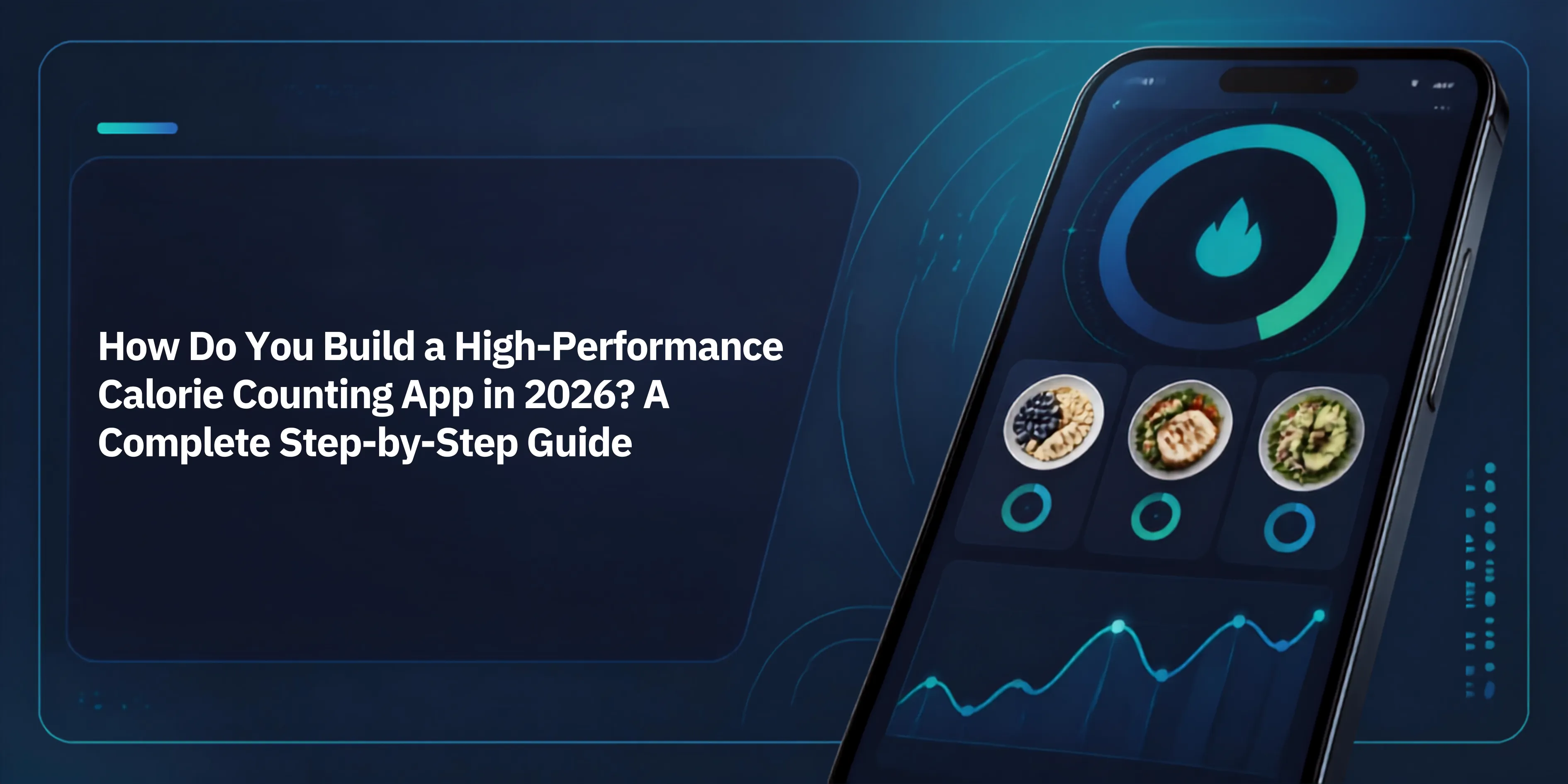
Developers today lean heavily on TensorFlow 3.x and PyTorch Mobile for on-device inference. To achieve sub-second latency, “Edge AI” is used, where the image is processed directly on the smartphone’s NPU (Neural Processing Unit) rather than being sent to a cloud server. This also enhances privacy, a major selling point for health-conscious users.
How can Generative AI estimate portion sizes from a single 2D image?
Through a process called Monocular Depth Estimation, GenAI models can now reconstruct a 3D volume of a food item from a standard 2D smartphone photo. By comparing the food’s size to known reference objects in the frame (like a fork or the diameter of a standard plate), the AI can estimate the weight of the food within a 5-10% margin of error, which is significantly more accurate than human estimation.
Can AI identify complex multi-ingredient recipes accurately?
Yes, thanks to Vision-Language Models (VLMs). These models are trained on millions of recipe-image pairs. When shown a bowl of “Chipotle Chicken Salad,” the AI identifies the grilled chicken, black beans, corn salsa, and dressing separately. It then applies “probabilistic cooking logic” to estimate the hidden oils used in the preparation, providing a much truer calorie count than a simple “salad” entry.
What are the must-have features for a Minimum Viable Product (MVP)?
When launching an MVP in 2026, the focus should be on the “Zero-Friction” experience.
How do you integrate a global food database API with 99% accuracy?
Relying on a single source is a mistake. Top-tier apps use an “Aggregator Model,” pulling data from Nutritionix, FatSecret, and Open Food Facts. However, the real “secret sauce” is the AI cleaning layer that sits on top of these APIs, which flags and corrects community-entered data that looks anomalous (e.g., a “zero-calorie” pizza entry).
What is the best way to implement automated barcode and QR code scanning?
Using the Google ML Kit or Apple’s Vision Framework allows for lightning-fast scanning even in low-light conditions. In 2026, QR codes on restaurant menus are also used to pull direct nutritional data from the establishment’s backend, a feature that has become mandatory in many urban markets due to transparency laws.
How do you build a seamless daily log interface for maximum retention?
The interface should support “Micro-Logging.” This means users can log a meal via:
- A dedicated Lock Screen widget.
- Voice command (Siri/Google Assistant).
- A quick photo “snap” that processes in the background.
The goal is to keep the user inside the app for less than 60 seconds a day while still capturing 100% of their intake.
What role does wearable device synchronization play in calorie tracking?
A calorie counter that doesn’t talk to a wearable is obsolete.
How do you sync real-time metabolic data from smart rings and glucose monitors?
The 2026 standard is the integration of Continuous Glucose Monitors (CGM). By seeing how a specific meal spikes blood sugar, the app can provide “Metabolic Scores.” If a user eats a bowl of pasta, the app might suggest a 10-minute walk immediately after to flatten the glucose curve. This real-time coaching turns a static tracker into a live health advisor.
What are the best APIs for Apple HealthKit and Google Health Connect integration?
Apple HealthKit and Google Health Connect (which has superseded the old Google Fit) are the primary pipelines. These APIs allow your app to pull “Active Calories Burned” directly, ensuring the user’s “Net Calorie” count is always accurate without them having to log workouts manually.
How do you ensure data privacy and HIPAA compliance in health apps?
As apps collect more biological data, the legal and ethical stakes rise.
What are the latest encryption standards for personal health information (PHI)?
In 2026, AES-256-GCM is the standard for data at rest, while TLS 1.3 is used for data in transit. For apps operating in the US, HIPAA compliance is non-negotiable. This involves more than just tech; it requires Business Associate Agreements (BAAs) with cloud providers like AWS or Google Cloud and rigorous audit trails.
How do you handle user consent for AI data processing?
Transparency is a competitive advantage. Apps should use “Layered Consent”, asking for permission specifically for AI training, third-party sharing, and clinical research. Giving users a “Kill Switch” to delete their entire biological profile with one click builds the trust necessary for long-term retention.
How can gamification increase user engagement in nutrition apps?
Psychology is just as important as technology.
What reward systems are most effective for long-term weight loss goals?
The most effective rewards in 2026 are “Progressive Streaks” and “Loot Boxes” containing real-world value, such as discounts on healthy meal delivery services or supplement brands. Avoid shaming “broken” streaks; instead, use AI to offer “Grace Days” to keep the user from quitting entirely after one bad meal.
How do social challenges and community features impact user LTV?
Humans are social animals. Features like “Community Potluck Challenges” or “Team Step Counts” increase Lifetime Value (LTV) by creating a sense of accountability. When a user feels like part of a tribe, the cost of switching to a competitor’s app becomes much higher.
How Do You Develop and Monetize Your Calorie Counting App Effectively?
Efficient development in 2026 relies on cross-platform frameworks like Flutter or React Native to minimize costs while maintaining high performance. Monetization has shifted toward a “Hybrid Model”, combining a low-cost subscription with high-ticket human-in-the-loop coaching and integrated e-commerce sales.
Development is no longer about just coding; it’s about building a scalable architecture that can handle millions of real-time AI requests without breaking the bank.
What is the step-by-step development process for a fitness application?
- Discovery & Strategy: Define the unique value proposition (e.g., “The only app for GLP-1 users”).
- UI/UX Design: Create high-fidelity prototypes focused on “Speed-to-Log.”
- Core Engineering: Build the AI vision engine and database integrations.
- Testing: Conduct rigorous QA, focusing on data accuracy across different lighting conditions and food types.
- Deployment & Optimization: Launch an MVP and use analytics to prune unused features.
How do you choose between Flutter, React Native, or Native development in 2026?
| Feature | Native (Swift/Kotlin) | Flutter 4.x (Cross-Platform) | React Native (Cross-Platform) |
| Performance | Highest (Best for AI) | Very High | High |
| Development Cost | High (Two teams) | Low (Single codebase) | Medium |
| Time to Market | Slow | Fastest | Fast |
| Hardware Access | Perfect | Excellent | Good |
| Maintenance | Complex | Simple | Moderate |
In 2026, Flutter is often the preferred choice for startups due to its superior rendering engine and the ability to share nearly 100% of the code between iOS and Android without sacrificing the “feel” of a premium app.
What does a scalable backend architecture for health apps look like?
A modern backend uses Microservices. One service handles user authentication, another manages the food database, and a third, the “AI Orchestrator”, manages calls to LLMs and computer vision models. This ensures that if the AI service experiences high traffic, the rest of the app remains functional. Using Serverless functions (AWS Lambda) allows the app to scale its costs dynamically based on the number of active users.
How do you conduct beta testing with real users for UI/UX refinement?
Beta testing in 2026 involves “Bio-Feedback Testing.” Beyond just looking at where users click, developers use gaze-tracking (via front-facing cameras) to see where users get confused during the logging process. Testing with a diverse group of users, varying in age, technical literacy, and dietary goals, is essential to catch “edge cases” before the global launch.
What is the average cost to build a calorie-counting app in 2026?
The budget depends entirely on the level of AI integration and the complexity of the “Bio-Sync” ecosystem.
How does geographic location affect the hourly rates of app developers?
While North American developers may charge $150–$250/hour, highly skilled teams in hubs like India (specifically Lucknow and Bangalore) offer world-class expertise in AI and mobile dev for $40–$80/hour. This price difference allows startups to invest more of their budget into high-quality food data and marketing.
What are the hidden costs of maintenance and API subscriptions?
The “hidden” costs are often the most dangerous. Subscription fees for high-accuracy food databases (like Nutritionix) can cost thousands per month as your user base grows. Furthermore, Generative AI API costs (like GPT-5 or Claude 4 Vision) must be carefully monitored to ensure they don’t eat into the profit margins of your “Free” tier.
What are the best monetization models for nutrition apps today?
Revenue in 2026 is about diversification.
Should you use a freemium model or a high-ticket subscription approach?
The “Freemium” model remains the best for user acquisition. Keep basic calorie and macro tracking free to build a massive user base. Lock “Advanced Metabolic Insights,” CGM syncing, and AI-meal planning behind a Premium Subscription ($9.99–$14.99/month).
How does in-app coaching and “human-in-the-loop” services increase revenue?
High-ticket users are willing to pay $50–$200/month for a “Human-in-the-Loop” service. Here, an AI does the daily heavy lifting, but a certified nutritionist reviews the data weekly and provides a 15-minute video consultation. This hybrid approach offers the scalability of software with the premium feel of a concierge service.
Can integrated e-commerce and supplement sales boost your profit margins?
Absolutely. If the app detects that a user is consistently low on Magnesium or Vitamin D based on their food logs, it can offer a “One-Click Purchase” for a high-quality supplement. In 2026, affiliate revenue and direct e-commerce integration often account for 20-30% of an app’s total revenue.
How Next Olive can help in developing your dream application/project
Building a world-class health app requires more than just code; it requires a partner who understands the intersection of AI and human wellness.
How does Next Olive utilize cutting-edge AI to build smarter health solutions?
Next Olive has been a pioneer in AI development since 2011. They specialize in fine-tuning Large Language Models (LLMs) and building custom Computer Vision pipelines that allow apps to “see” and “understand” nutrition like a human expert. Their expertise in Generative AI ensures that your app isn’t just a tracker, but a proactive health advisor.
Why is Next Olive the preferred partner for scalable mobile app development?
With a team of over 250 experienced developers and a portfolio of 2,000+ successful applications, Next Olive understands how to scale. They specialize in Flutter and React Native, providing the best cost-to-performance ratio in the industry. Their “security-first” approach ensures that your app is HIPAA-compliant from day one, protecting both your users and your business.
Conclusion: What is the Future of Calorie Counting Technology?
The future of calorie counting is invisible. By 2030, we expect the “app” to fade into the background, operating through ambient voice sensors in kitchens and smart glasses that overlay nutritional data directly onto your field of vision. For developers in 2026, the goal is to build the foundational “Metabolic Brain” that will power these future interfaces. By focusing on AI accuracy, wearable integration, and user trust, you can create a tool that doesn’t just track calories but fundamentally extends human healthspan.
Frequently Asked Questions
1. How long does it take to build a basic calorie-counting app?
A basic MVP (Minimum Viable Product) typically takes 3 to 4 months to develop. This includes core features like food logging, a basic database, and user profiles. A full-featured AI-driven app usually requires 6 to 9 months.
2. Is HIPAA compliance required for all nutrition apps?
If your app stores or transmits Protected Health Information (PHI) and shares it with “covered entities” like doctors or hospitals, HIPAA compliance is mandatory. Even if not legally required, following HIPAA standards is a best practice for building user trust.
3. Can AI really identify calories in a homemade meal?
While no AI is 100% perfect, 2026 models can estimate homemade meal calories with high accuracy by identifying ingredients and using volume estimation. The margin of error is usually comparable to, or better than, manual user estimation.
4. What is the most expensive part of building a fitness app?
The AI vision engine and third-party API integrations (for food databases and wearables) are typically the highest ongoing costs. High-quality developers who understand these complex integrations are also a major upfront investment.
5. How do I compete with free apps like FatSecret?
Compete on experience and insight. Free apps often have clunky UIs and lack “actionable” advice. If your app tells a user why they are tired (e.g., “Your sugar spike from lunch is causing this slump”), they will pay for that value.
6. Do I need to build a separate app for iOS and Android?
No. In 2026, frameworks like Flutter allow you to build one codebase that runs natively on both platforms, saving up to 40% in development costs while maintaining a premium user experience.
7. How do apps handle foods that don’t have barcodes?
This is where Computer Vision is essential. For produce or restaurant meals, the app uses image recognition to identify the item and then searches the database for a “generic” match (e.g., “Large Granny Smith Apple”).
8. Can a calorie app help with muscle gain, not just weight loss?
Yes. Modern apps focus on Macronutrient Ratios. By setting a “Bulking” or “Recomp” goal, the app prioritizes protein intake and tracks “surplus” calories to ensure the user is gaining lean mass rather than just body fat.